



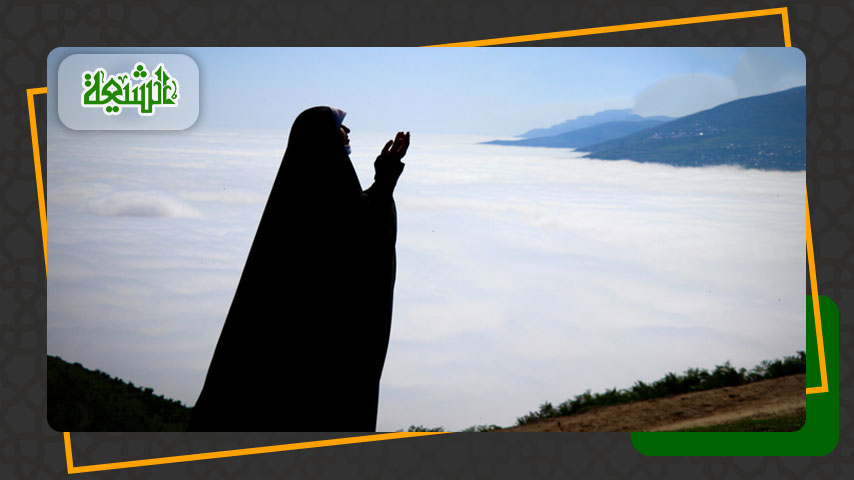
Human beings constantly face choices. Some decisions are straightforward and can be made through ordinary judgment, while others involve uncertainty about consequences that cannot easily be predicted. Decisions concerning marriage, employment, travel, business, education, residence, and other important aspects of life may leave a person uncertain even after careful consideration. Istikhārah in Islam offers a devotional response to this human condition by encouraging believers to combine rational deliberation, consultation, prayer, and reliance upon God.
This article examines the meaning, purpose, legitimacy, methods, conditions, etiquette, and practical significance of istikhārah in Islam, with particular attention to the Shiʿi scholarly tradition.
Understanding the Concept of Istikhārah in Islam
The Arabic term istikhārah is derived from the root kh-y-r (khayr), which denotes goodness, benefit, and that which is preferable or advantageous. Lexically, istikhārah means “seeking what is good” or “asking for the best course of action.” [1] In its religious usage, the term refers to seeking God’s guidance concerning a matter under consideration[2]. In other words, istikhārah means seeking God’s guidance when one intends to undertake a particular course of action, asking Him to guide and grant success in what is best and most beneficial—whether that means proceeding with the action, refraining from it, or being left free to choose between the two[3].
This linguistic meaning provides an important foundation for understanding istikhārah in Islam. Rather than being primarily a means of discovering hidden information or predicting future events, istikhārah is an appeal to God for goodness, guidance, and the choice of what is most beneficial. It reflects the believer’s recognition that God possesses complete knowledge of the consequences of all actions, whereas human knowledge remains limited and incomplete.
Muhammad Hasan al-Najafi, author of Jawāhir al-Kalām, explains istikhārah in two related senses. First, a person may ask God to place goodness in something that he or she has decided to undertake. Second, a person may ask God to guide him or her toward the course that God knows to be most beneficial[4].
This distinction is important because it demonstrates that istikhārah in Islam is broader than the specific procedures commonly associated with it. Its essence is the believer’s turning toward God and seeking His goodness before proceeding with a matter.
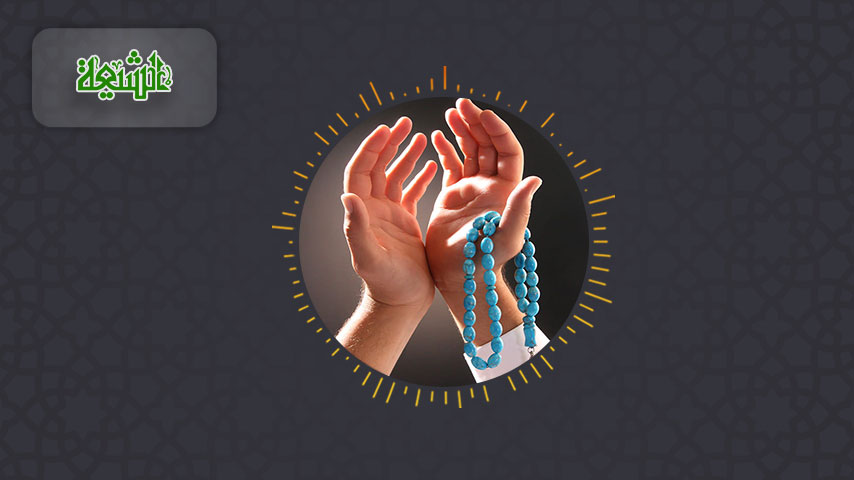
In this broader sense, istikhārah is closely related to supplication. A believer may ask God to facilitate what is beneficial, remove obstacles from the path of goodness, protect against harm, and grant contentment with the outcome.
The Legitimacy of Istikhārah
The legitimacy of istikhārah in Islam has been discussed by Muslim scholars. One issue concerns its possible relationship to the pre-Islamic practice in Arabia known as istiqsām bi’l-azlām[5], which involved the use of arrows to determine whether a particular course of action should be undertaken or avoided[6]. The Qur’an prohibited al-azlām (divination through arrows) in Sūrah al-Mā’idah: “And [forbidden are] that you should divide by raffling with arrows.”[7]
Because of this historical practice, some scholars argued that certain methods of seeking decisions through random means could fall under the Qur’anic prohibition. Shaykh Mahmud Shaltut, a prominent Sunni scholar, regarded istikhārah as falling within this prohibition[8].
Shiʿi scholars who defend the legitimacy of istikhārah in Islam distinguish it fundamentally from istiqsām bi’l-azlām. Ayatollah Lutfullah Safi Gulpāyigānī, for example, argued that the pre-Islamic practice prohibited by the Qur’an and the Islamic practice of istikhārah are not identical[9]. The former was associated with pagan divination, whereas the latter is based upon supplication and reports transmitted within the Islamic tradition[10].
The Shiʿi case for the legitimacy of istikhārah in Islam is further supported by narrations concerning the seeking of goodness from God. Therefore, istikhārah is understood as a devotional practice through which a person seeks divine guidance, rather than as a form of divination or occult prediction.
This distinction is crucial. In its legitimate religious sense, istikhārah does not claim that a human being independently possesses knowledge of the unseen. Rather, the believer turns to God and seeks His guidance.
Istikhārah and Human Decision-Making
Understanding istikhārah in Islam requires placing it within the broader Islamic approach to decision-making. Islam does not instruct believers to abandon reason whenever they encounter uncertainty. On the contrary, the Qur’an repeatedly encourages reflection, understanding, and consultation.
One of the clearest principles relevant to this subject appears in the Qur’anic instruction: “Consult them in the affairs, and once you are resolved, put your trust in Allah.”[11] The verse highlights the importance of consultation and reliance upon Allah in decision-making, indicating that both are valued in the sight of God regardless of whether the desired outcome is ultimately achieved[12].
The sequence presented in this verse is significant. Consultation precedes resolution, while reliance upon God follows the decision. This provides an important framework for understanding the relationship between reason, consultation, and reliance upon God.
A person considering marriage, for example, should investigate the character, values, circumstances, and compatibility of the prospective spouse. Someone considering a business partnership should examine its financial, legal, and ethical dimensions. A person choosing employment should evaluate its responsibilities, conditions, financial implications, and long-term prospects. Someone contemplating a journey should consider its purpose, safety, cost, and other relevant factors.
Accordingly, istikhārah in Islam should not normally be the first response to every decision. Careful investigation and consultation remain essential components of responsible Islamic conduct.
Shiʿi sources particularly emphasize that consultation should precede istikhārah when a person is uncertain. If reflection and consultation resolve the matter, there is generally no need to perform an istikhārah. If genuine uncertainty remains despite these efforts, istikhārah may then be used as a means of seeking divine guidance.
This approach avoids two extremes. The first is excessive reliance upon human reasoning, as though divine guidance had no place in decision-making. The second is religious passivity, in which a person refuses to investigate, consult, or think and instead expects an istikhārah to make every decision.
The balanced Islamic approach is therefore to use the means available to human beings while relying upon God for what lies beyond human knowledge and control.
When Should Istikhārah Be Performed?
An important principle concerning istikhārah in Islam is that it should ordinarily concern a permissible matter.
Istikhārah is not a mechanism for determining Islamic law. A person does not perform istikhārah to determine whether an established obligation should be fulfilled or whether a prohibited action should be avoided. Religious obligations and prohibitions are established through the Qur’an, Sunnah, and recognized principles of Islamic jurisprudence.
For example, a person cannot perform an istikhārah to determine whether the five daily prayers are obligatory. Similarly, an unfavorable istikhārah cannot justify abandoning an established obligation, nor can a favorable istikhārah make a prohibited action permissible.
Istikhārah is therefore most appropriately associated with matters in which a person has a legitimate choice between permissible alternatives. Examples include choosing between two lawful employment opportunities, deciding whether to undertake a permissible journey, selecting between two permissible business opportunities, or or making another important decision in which uncertainty remains.
The spiritual foundation of istikhārah in Islam is closely connected with tawakkul, or reliance upon God. Human beings are required to act responsibly, but they do not possess complete knowledge of the future. Even the most careful research and planning cannot eliminate uncertainty. Circumstances may change, unforeseen opportunities may arise, and unexpected difficulties may emerge.
In this context, istikhārah reflects the believer’s recognition of the limits of human knowledge and the completeness of divine knowledge. A person who performs istikhārah acknowledges that, despite using the knowledge and means available to him or her, God knows what human beings do not know and is therefore asked to guide the person toward what is best.
This reliance upon God should not be confused with fatalism. Fatalism implies that human effort is irrelevant because everything is predetermined. Tawakkul, by contrast, combines responsible action with dependence upon God. Thus, istikhārah does not eliminate human agency or replace careful consideration; rather, it places human decision-making within a relationship of reliance upon God.
The relevant question, therefore, is not merely, “Is this a good thing?” but rather, “Among permissible alternatives, which course should I choose when careful consideration has not resolved my uncertainty?” In such circumstances, istikhārah provides a means of seeking God’s guidance while acknowledging that ultimate knowledge of what is truly beneficial belongs to Him.
The Main Forms of Istikhārah
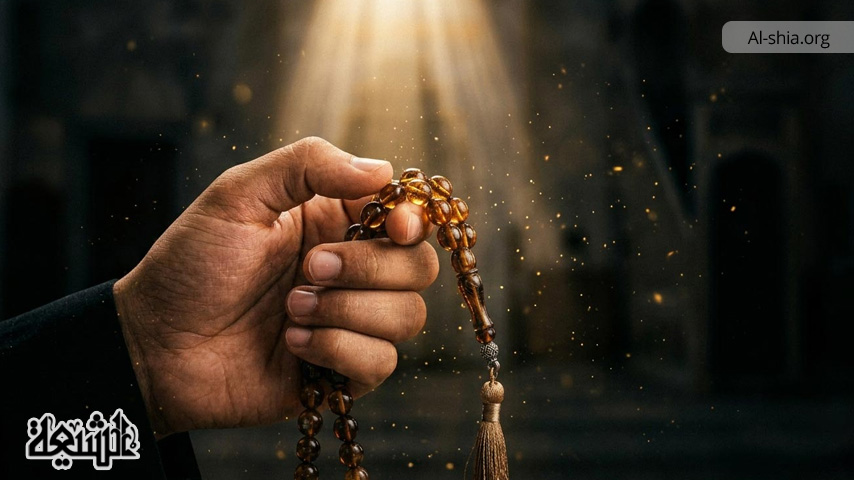
In the Islamic tradition, particularly in Shiʿi sources, several forms of istikhārah have been transmitted. The most prominent include istikhārah through prayer and supplication[13], the Qur’an[14], written slips[15], and a prayer rosary[16]. Although these methods share the common purpose of seeking divine guidance, their textual foundations and scholarly evaluations differ. Some are more firmly supported by transmitted reports, while the authenticity or details of others have been debated by scholars.
The common principle underlying these forms is that istikhārah is an act of turning to God for guidance rather than a means of fortune-telling or predicting the future. The specific method should therefore be understood within its appropriate devotional and scholarly context.
Conditions and Etiquette of Istikhārah
Several conditions and recommended practices should be observed when performing istikhārah:
- Reflection and Consultation: A person should first carefully consider the matter and consult knowledgeable and trustworthy people, resorting to istikhārah only when genuine uncertainty remains.
- Permissible Matters: Istikhārah should ordinarily concern permissible matters involving a genuine choice and should not be used to determine established obligations or prohibitions.
- Sincerity: Istikhārah should be performed sincerely, without seeking merely to confirm a preferred decision or repeatedly performing it until a desired result is obtained.
- Prayer, Qur’anic Recitation, and Ṣalawāt: Depending on the method used, istikhārah may be preceded by prayer[17], Qur’anic recitation[18], supplication, and sending blessings upon the Prophet and his family[19].
- Performing Istikhārah for Oneself: Some scholars, including ʿAllāmah Muḥammad Bāqir al-Majlisī, considered it preferable for a person to perform istikhārah for himself, while Sayyid Ibn Ṭāwūs permitted performing it on behalf of another person[20].
- Time and Place: Some scholars have recommended performing istikhārah in places such as mosques or sacred shrines and at certain times[21]. There is no specific time prescribed for istikhārah through prayer. Some sources mention performing Qur’anic istikhārah at the time of prayer, while the specific hours recommended by Fayḍ al-Kāshānī for each day of the week are reported as customary among believers rather than times established by hadith[22].
Should One Always Follow the Result?
An important practical question concerning istikhārah in Islam is whether a person is religiously obligated to follow its result.
According to the juristic position, following the result of istikhārah is not legally obligatory, and opposing it is not intrinsically forbidden[23]. Nevertheless, some scholars have regarded it as preferable not to oppose the result after deliberately seeking divine guidance.
Ayatollah Musa Shubayri Zanjani has expressed a cautious position, maintaining that because disregarding an istikhārah may involve the possibility of harm, precaution favors not acting contrary to it[24].
The distinction between legal obligation and spiritual recommendation is therefore essential.
An istikhārah does not create a new rule of Islamic law. A person cannot claim that an otherwise permissible act has become obligatory because of an istikhārah, nor can an istikhārah make an unlawful action permissible. Rather, istikhārah in Islam functions as a means of choosing among legitimate alternatives.
A Practical and Balanced Approach to Istikhārah in Islam
For ordinary Muslims, istikhārah in Islam can be understood as part of a balanced process of decision-making that combines Islamic guidance, careful consideration, consultation, prayer, and reliance upon God. The following sequence provides a practical framework for approaching istikhārah in Islam responsibly.
First, determine whether the matter is religiously permissible. If Islamic law establishes that an action is obligatory or prohibited, there is no need for istikhārah in Islam to determine whether it should be performed.
Second, gather relevant information. Obtain sufficient knowledge about the matter and the available alternatives before seeking istikhārah in Islam.
Third, exercise sound judgment. Carefully consider the benefits, disadvantages, risks, responsibilities, and likely consequences of each option, since istikhārah in Islam is not intended to replace rational deliberation.
Fourth, seek consultation. Consult trustworthy and knowledgeable people whose experience and judgment may help clarify the matter. This is an important part of the balanced approach encouraged by istikhārah in Islam.
Fifth, turn to God in prayer. Ask Him for guidance and to grant what is best and most beneficial, thereby expressing the reliance upon God that lies at the heart of istikhārah in Islam.
Sixth, perform istikhārah if genuine uncertainty remains. If careful consideration and consultation do not resolve the matter, an appropriate form of istikhārah in Islam may be performed.
Seventh, make the decision and rely upon God. After following the appropriate process, one should proceed with confidence and entrust the outcome to God rather than remaining excessively hesitant. In this way, istikhārah in Islam complements human effort without undermining personal responsibility.
This approach maintains a proper balance between human effort and divine reliance, allowing istikhārah in Islam to serve as a means of seeking God’s guidance without replacing reason, consultation, or responsible decision-making.
Conclusion
Istikhārah in Islam is a devotional practice of seeking God’s goodness and guidance when facing uncertainty in a permissible matter. It does not replace reason, careful consideration, consultation, or personal responsibility; rather, istikhārah in Islam complements these means by expressing reliance upon God when human judgment alone does not resolve the matter.
The various forms of istikhārah in Islam, including prayer and supplication, Qur’anic istikhārah, written slips, and prayer rosary, differ in their textual foundations and scholarly evaluation. They should therefore be approached with an awareness of their respective evidentiary status.
Most importantly, istikhārah in Islam should not be understood as fortune-telling or a means of obtaining certain knowledge of the future. Its deeper purpose is to cultivate trust in God while accepting the limitations of human knowledge.
Thus, istikhārah in Islam represents a balanced relationship between responsible human effort and sincere reliance upon God: one thinks, consults, prays, decides, and entrusts the outcome to Him.
Notes:
[1] . Ibn Manẓūr, Lisān al-ʿArab, vol. 4, p. 259, s.v. “Khayr.”
[2] . Markaz-i Dāʾirat al-Maʿārif-i Fiqh-i Islāmī, Farhang-i Fiqh-i Fārsī. vol. 1, p. 429.
[3] . Ibid, pp. 429-430.
[4] . Najafī, Jawāhir al-Kalām fī Sharḥ Sharāʾiʿ al-Islām, vol. 12, p. 162.
[5] . Ibn Ḥabīb, al-Muḥabbar, p. 196.
[6] . Jaṣṣāṣ, Aḥkām al-Qurʾān, 1405 AH, vol. 3, p. 306.
[7] . Qur’an 5:3.
[8] . ʿAbbāsī-Muqaddam, “Barresī-ye Mabānī va Māhiyyat-e Istikhārah,” p. 32.
[9] . Gulpāyigānī, Buḥūth Ḥawla al-Istisqām (Mashrūʿiyyat al-Istikhārah), pp. 1–8.
[10] . Ibid, pp. 7–9.
[11] . Qur’an 3:159.
[12] . See: Faqīh Imānī, An Enlightening Commentary into the Light of the Holy Qur’an, vol. 3, p. 333.
[13] . Ibn Idrīs, al-Sarāʾir, vol. 1, p. 314.
[14] . Ibn Ṭāwūs, Fatḥ al-Abwāb, 1409 AH, pp. 277–279.
[15] . Kulaynī, al-Kāfī, 1407 AH, vol. 3, p. 473.
[16] . Najafī, Jawāhir al-Kalām, vol. 12, p. 173.
[17] . Kulaynī, al-Kāfī, 1407 AH, vol. 3, p. 473.
[18] . Shahīd al-Awwal, Dhikrā al-Shīʿah, 1419 AH, vol. 4, pp. 269-270.
[19] . Kulaynī, al-Kāfī, 1407 AH, vol. 3, p. 472.
[20] . Majlisī, Biḥār al-Anwār, vol. 88, p. 285.
[21] . Shahīd al-Awwal, Dhikrā al-Shīʿah, 1419 AH, vol. 4, p. 267.
[22] . Fayḍ Kāshānī, Taqwīm al-Muḥsinīn, pp. 58–59.
[23] . https://www.sistani.org/english/qa/01216/
[24] . Shubayrī Zanjānī, Jurʿah-ī az Daryā, vol. 1, p. 505.
References
Holy Qur’an (with the English translation: Qarai, Ali Quli (2005). The Qur’an: With a Phrase-by-Phrase English Translation (2nd edition). London: Islamic College for Advanced Studies (ICAS) Press.
- ʿAbbāsī-Muqaddam, Muṣṭafā. (1387 SH). “Barresī-ye Mabānī va Māhiyyat-e Istikhārah.” Journal of Muṭāliʿāt-e Tārīkhī-ye Qurʾān va Ḥadīth, no. 42.
- Faqīh Imānī, Sayyid Kamal et al. (1997). An Enlightening Commentary into the Holy Qur’an. 1st edition. Translated by Sayyid Abbas Sadr-‘Ameli. Isfahan: Imam Ali Library and Research Centre.
- Fayḍ Kāshānī. (1315 AH). Taqwīm al-Muḥsinīn, in Tawḍīḥ al-Maqāṣid, together with Taqwīm al-Muḥsinīn, by Shaykh Bahāʾī. n.p.: n.p.
- Gulpāyigānī, Luṭf Allāh Ṣāfī. (n.d). Baḥth Ḥawla al-Istisqām (Mashrūʿiyyat al-Istikhārah). Isfahan: The Qāʾimiyyah Centre for Computer Research.
- Ibn Ḥabīb, Muḥammad ibn Ḥabīb. (n.d). al-Muḥabbar. Edited by Ilse Lichtenstädter. Beirut: Dār al-Āfāq al-Jadīdah.
- Ibn Idrīs al-Ḥillī, Muḥammad ibn Manṣūr. (1410 AH). al-Sarāʾir al-Ḥāwī li-Taḥrīr al-Fatāwā. Qom: Daftar-i Intishārāt-i Islāmī, affiliated with the Society of Seminary Teachers of Qom.
- Ibn Manẓūr, Muḥammad ibn Mukarram. (1408 AH). Lisān al-ʿArab. Beirut: Dār Iḥyāʾ al-Turāth al-ʿArabī.
- Ibn Ṭāwūs, ʿAli ibn Mūsā. (1409 AH). Fatḥ al-Abwāb bayna Dhawī al-Albāb wa-Bayna Rabb al-Arbāb. 1st edition. Edited by Ḥāmid Khafāf. Qom: Muʾassasat Āl al-Bayt (ʿa.s).
- Jaṣṣāṣ, Aḥmad ibn ʿAli. (1405 AH). Aḥkām al-Qurʾān. Edited by Muḥammad Ṣādiq Qamḥāwī. Beirut: Dār Iḥyāʾ al-Turāth al-ʿArabī.
- Kulaynī, Muḥammad ibn Yaʿqūb. (1407 AH). Al-Kāfī. Tehran: Dār al-Kutub al-Islāmīyya.
- Majlisī, Muḥammad Bāqir. (1403 AH). Biḥār al-Anwār. Beirut: Dār Iḥyāʾ al-Turāth al-ʿArabī.
- Markaz-i Dāʾirat al-Maʿārif-i Fiqh-i Islāmī bar Madhhab-i Ahl al-Bayt (1385 SH). Farhang-i Fiqh Muṭābiq-i Madhhab-i Ahl al-Bayt (ʿalayhim al-Salām). 2nd edition. Qom: Markaz-i Dāʾirat al-Maʿārif-i Fiqh-i Islāmī bar Madhhab-i Ahl al-Bayt (ʿa.s).
- Najafī, Muḥammad Ḥasan. (1404 AH). Jawāhir al-Kalām fī Sharḥ Sharāʾiʿ al-Islām. Edited by ʿAbbās Qūchānī and ʿAli Ākhūndī. Beirut: Dār Iḥyāʾ al-Turāth al-ʿArabī.
- Shahīd al-Awwal, Muḥammad ibn Makkī. (1419 AH). Dhikrā al-Shīʿah fī Aḥkām al-Sharīʿah. Qom: Muʾassasat Āl al-Bayt (ʿa.s).
- Shubayrī Zanjānī, Sayyid Mūsā. (1389 SH). Jurʿah-ī az Daryā. Qom: Muʾassasat-i Kitābshināsī.
- The Official Website of Grand Ayatollah Sayyid Ali Ibn Husseini Al-Sistani: https://www.sistani.org


![The Event of Ghadir and Imam al-Mahdi [afs]](https://en.al-shia.org/wp-content/uploads/2026/06/17221.jpg)