


Abortion is a sensitive moral, religious, and legal issue concerning the sanctity of human life and the rights of the unborn. While the Qur’an describes human development in the womb, the hadith and Imami fiqh provide detailed rulings on abortion according to the stage of pregnancy, ensoulment, the mother’s health, fetal conditions, and circumstances of necessity.
This article aims to examine the rulings on abortion based on Islamic teachings, with particular attention to the sanctity of the unborn, fetal development, the general prohibition of abortion, and exceptional circumstances of permissibility.
The Sanctity of Human Life in Islam
The foundation for understanding the rulings on abortion is the Islamic conception of the sanctity of human life. The Qur’an repeatedly emphasises that life is a divine gift and that human beings are not entitled to take life unjustly.
Allah says: “Do not kill a soul [whose life] Allah has made inviolable, except with due cause.”[1]
The issue addressed in this verse is the sanctity of human life and the absolute prohibition of murder. Certainly, respect for human life is not a principle confined exclusively to Muslims. Rather, non-Muslims who are not engaged in hostilities against Muslims and who coexist peacefully with them are also covered by this principle. Their lives, property, and families are therefore protected, and any violation of their rights in this regard is prohibited[2].
Similarly, the Qur’an strongly condemns the killing of children because of poverty: “Do not kill your children for the fear of penury: We will provide for them and for you.”[3]
In Sūrah al-Anʿām, God prohibits killing children because of existing poverty: “You shall not kill your children due to penury”[4]. In the present verse, He prohibits killing them out of fear of future poverty: “for the fear of penury”. Accordingly, He says in the former case, “We will provide for you and for them,” while in the latter, “We provide for them and for you.” This difference reflects the nature of the two situations: poverty is an immediate concern, whereas fear of poverty relates to the future. By first assuring parents that their children will be provided for, God seeks to alleviate their anxiety and eliminate any justification for killing their children[5].
These verses were originally addressing practices known in pre-Islamic Arabian society, particularly the killing of children because of economic fears. Nevertheless, they establish an important Islamic principle: fear of poverty or worldly difficulty cannot by itself make the deliberate destruction of innocent life morally acceptable.
The Qur’an also describes the preservation of life as an extraordinarily significant moral act: “whoever saves a life is as though he had saved all mankind.”[6]
The verse emphasises the sanctity of human life and demonstrates that saving a person from death is not merely an individual act of compassion; rather, it reflects a broader commitment to preserving human life. In this context, the rulings on abortion in Islamic law are also grounded in the principle of respecting and protecting human life, particularly as the developing life of the unborn child is regarded as deserving of protection under specific circumstances. Thus, a person who saves another from death out of humanitarian concern demonstrates a broader disposition to protect innocent human life[7].
In discussions of abortion, however, general Qur’anic verses should not be applied mechanically to every specific case. The Qur’an does not contain a separate, detailed chapter setting out every legal circumstance concerning abortion. Rather, the rulings on abortion are derived by jurists through a careful consideration of general Qur’anic principles alongside the Prophetic and Ahl al-Bayt traditions, established jurisprudential principles, and the rules governing necessity and the prevention of harm.
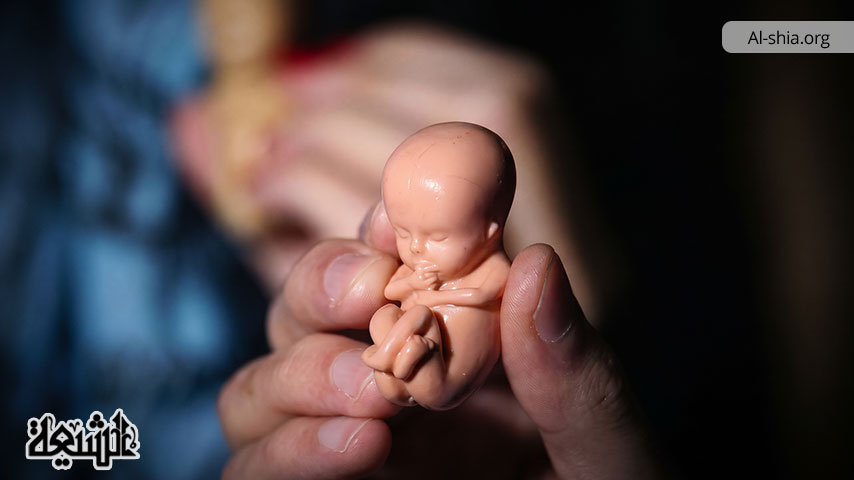
Islam therefore treats pregnancy with particular seriousness. A developing fetus is not regarded as morally insignificant merely because it has not yet been born. Although its legal status and the applicable rulings on abortion may vary according to the stage of fetal development, unborn life is afforded specific legal protection even before the stage of ensoulment. This protection is particularly evident in Islamic laws concerning diyah (financial compensation), which prescribe compensation for causing the loss of a fetus. These principles form an important basis for understanding the rulings on abortion and the legal responsibilities associated with terminating a pregnancy. Thus, the rulings on abortion reflect the broader Islamic concern for protecting developing human life.
The Teachings of the Ahl al-Bayt Concerning the Unborn
Traditions from the Ahl al-Bayt provide important details on fetal development and legal responsibility, particularly narrations on the diyah of the fetus, which help establish the rulings on abortion and the legal consequences of fetal loss.
A tradition of Imam Ali (a.s.) describes the fetal developmental stages and assigns different amounts of diyah to those stages. It mentions the nutfah, ʿalaqah, muḍghah, the formation of bones, and the completion of the fetal form before the entrance of the soul[8].
This tradition demonstrates that Islamic law recognises the fetus as possessing legal value even during the earlier stages of development. It describes a graduated system of compensation: twenty dinars for the nutfah, forty for the ʿalaqah, sixty for the muḍghah, eighty when the bones have formed, and one hundred dinars when the fetus is fully formed before ensoulment[9]. This graduated system provides an important basis for understanding the rulings on abortion and the legal consequences associated with fetal loss.
Other traditions preserved in Wasāʾil al-Shīʿah report cases in which a pregnant woman was struck and consequently lost her fetus. Such reports establish legal liability for causing fetal loss, even when the fetus had not been born[10]. One narration from Imam al-Ṣādiq (a.s.), for example, concerns a man who struck a pregnant woman and caused her to miscarry, resulting in a legal obligation to provide compensation for the fetus[11]. These traditions further illuminate the legal framework underlying the rulings on abortion and demonstrate that causing fetal loss may entail legal consequences even before birth.
Another important report concerns a woman who took medicine with the intention of causing a miscarriage. The tradition discusses the resulting diyah according to the developmental stage of the fetus and establishes legal consequences for the person directly responsible[12].
These narrations are particularly important for understanding the rulings on abortion, as they demonstrate that Islamic law does not regard the fetus as lacking legal protection. Even before ensoulment, the intentional or wrongful destruction of the fetus may entail diyah. Thus, these reports provide further evidence for the legal responsibility associated with fetal loss and the rulings on abortion in Islamic jurisprudence.
The traditions of the Ahl al-Bayt (a.s.) establish two principles relevant to the rulings on abortion: fetal development occurs in distinct stages, and intentionally causing fetal loss may entail legal responsibility. Together, these principles provide a foundation for Imami jurisprudence and clarify the rulings on abortion at different stages of fetal development.
The Rulings on Abortion in Imami Jurisprudence
In Imami jurisprudence, intentionally terminating a pregnancy is generally regarded as prohibited. Abortion by any means, whether through the oral administration or injection of medication, is considered unlawful, regardless of whether the fetus was conceived through a lawful marriage or through fornication[13]. Thus, the rulings on abortion are fundamentally based on the protection accorded to fetal life and the legal consequences associated with deliberately causing its termination.
The prohibition of intentional abortion, except in particular circumstances, has long been recognised in Islamic jurisprudence. Neither the pregnant woman nor another person is generally permitted to terminate a pregnancy without a legally recognised justification. Imam Khomeini maintained that economic difficulties, social problems, having many children, or advanced age do not by themselves justify permanent contraception or abortion[14]. These principles form an important part of the rulings on abortion, demonstrating that personal or social difficulties alone do not ordinarily justify terminating a pregnancy.
The prohibition also extends to cases in which the fetus may have congenital physical, intellectual, or psychological abnormalities, whether these conditions are hereditary or acquired through factors such as medicines, chemicals, X-rays, or other causes. According to Imam Khomeini, the possibility or presence of such abnormalities does not, in itself, make abortion permissible, whether the fetus is less than or more than four months old[15].
Imam Khomeini further explains in Taḥrīr al-Wasīlah that consuming anything harmful to the body is prohibited when it causes death, bodily disorder, impairment of sensory functions, or the loss of certain physical capacities. He specifically includes the case of a pregnant woman consuming something that causes miscarriage among the prohibited examples[16]. This ruling reinforces the principle that deliberately inducing miscarriage through harmful substances falls within the broader prohibition against causing serious bodily harm and is therefore generally inconsistent with the rulings on abortion in Imami jurisprudence.
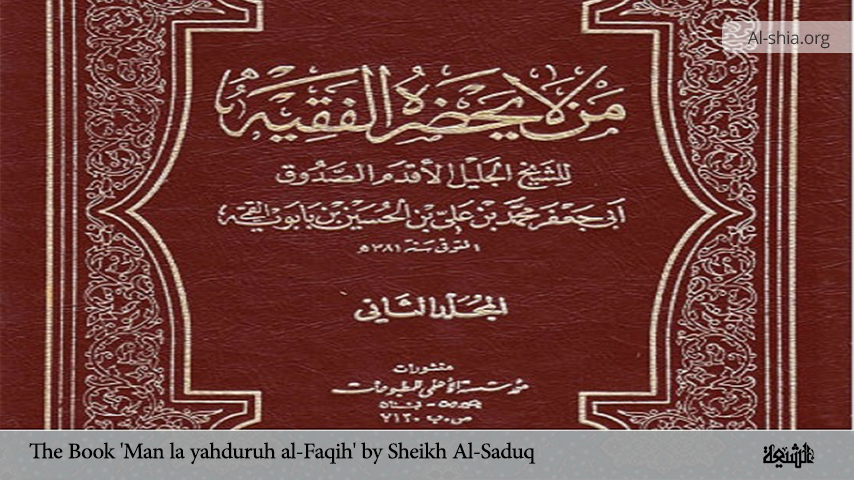
The prohibition of abortion is also reflected in the works of numerous earlier and contemporary Imami scholars. Shaykh al-Ṣadūq discusses the subject in Man Lā Yaḥḍuruhu al-Faqīh, while Muḥammad Taqī al-Majlisī addresses it in Rawḍat al-Muttaqīn. Shaykh al-Ḥurr al-ʿĀmilī likewise records relevant traditions in Wasāʾil al-Shīʿah[17]. These sources provide important textual and juristic foundations for understanding the rulings on abortion in Imami jurisprudence.
A principal argument supporting this position derives from the general prohibition of taking a protected human life. The deliberate termination of a fetus may, in certain circumstances, be legally characterised as killing. Moreover, numerous traditions concerning the diyah (blood compensation) of the fetus establish legal consequences for causing fetal death. These reports are considered sufficiently numerous to constitute istifāḍah and, according to some scholars, even tawātur maʿnawī (mass transmission in meaning). Together, these textual and jurisprudential evidences provide an important basis for the rulings on abortion in Imami jurisprudence.
Taken together, these juristic statements and narrations show that the Imami approach to abortion rests on several principles, including recognition of fetal development, prohibition of intentionally causing fetal death, legal responsibility for wrongful termination, and specific exceptions based on genuine necessity. Accordingly, the rulings on abortion distinguish between the general prohibition of deliberate abortion and exceptional circumstances involving necessity, serious harm, and established principles of Islamic jurisprudence.
Circumstances in Which Abortion May Be Permitted
The general prohibition does not mean that Islamic law ignores circumstances in which continuing pregnancy creates serious danger or extraordinary hardship. Islamic jurisprudence contains recognised principles concerning necessity, harm, and intolerable hardship. These principles play an important role in the exceptional rulings on abortion.
- A) Serious danger to the mother’s life or health: One of the clearest circumstances discussed by contemporary Imami jurists is serious danger to the mother.
According to jurisprudential rulings, if continuation of pregnancy poses a serious danger[18] to the mother’s life is established by a trustworthy physician, abortion may be permissible before the soul enters the fetus (at 4 months), subject to the applicable conditions[19].
- B) Imperfect or Disabled Fetus: Regarding a fetus with serious congenital defects or disabilities, Imami jurists hold differing views. Some jurists, including Mīrzā Jawād Tabrīzī, Nāṣir Makārim Shīrāzī, Muḥammad Isḥāq Fayāḍ, and Sayyid Ali Khāmenei, permit abortion in cases where the child would certainly cause severe hardship for the parents, but only before the ensoulment of the fetus. After ensoulment, they prohibit abortion because the fetus is treated as a human being and the prohibition of killing applies to it[20].
Other jurists, including Imam Khomeini, Sayyid Abū al-Qāsim al-Khūʾī, and Sayyid ʿAli al-Sīstānī, do not permit abortion of a disabled or imperfect fetus even before ensoulment[21]. Thus, the rulings on abortion in cases of fetal disability vary among Imami jurists, particularly regarding the stage of fetal development and the applicability of severe hardship.
- C) Pregnancy resulting from sexual assault: Regarding the abortion of a fetus conceived through an illegitimate relationship, Imami jurists hold differing views. Sayyid Abū al-Qāsim al-Khūʾī permits abortion before ensoulment when continuation of the pregnancy causes severe hardship for the mother and transferring her elsewhere for delivery is not possible; after ensoulment, he does not permit abortion[22]. In contrast, Sayyid ʿAbd al-Aʿlā al-Sabziwārī does not permit abortion of an illegitimate fetus even when preserving the woman’s life or honour depends upon it[23]. Thus, the rulings on abortion in such cases differ according to the jurist and the circumstances involved.
Islamic Ethics and the Prevention of Unintended Pregnancy
An important part of discussing the rulings on abortion is distinguishing abortion from contraception. Islam does not require married couples to become pregnant whenever they are capable of doing so. Contemporary Imami jurisprudence contains provisions permitting various forms of contraception under specified conditions.
For example, Sayyid al-Sīstānī and Sayyid Khamenei permit a woman to use contraceptive medicines provided they do not cause significant harm, while other contraceptive methods are likewise discussed under conditions relating to harm, marital rights, and medical necessity.
This distinction is important for Muslim families because preventing pregnancy before conception differs legally from terminating an established pregnancy. Responsible family planning, spousal communication, consideration of health circumstances, and permissible contraception can help reduce situations in which abortion is considered. Understanding this distinction is essential to the rulings on abortion and the circumstances in which they apply.
Conclusion
Understanding the rulings on abortion requires careful consideration of the Qur’an, Prophetic and Imami traditions, and the detailed reasoning of Islamic jurists. Islamic jurisprudence generally emphasises the sanctity of developing human life and does not regard abortion as an unrestricted personal choice. At the same time, juristic discussions recognise that particular circumstances, such as serious threats to the mother’s life or legally recognised necessity, may affect the ruling, with significant differences among jurists regarding specific cases.
The rulings on abortion also take into account the stage of fetal development, the circumstances surrounding the pregnancy, and the nature and seriousness of the harm involved. The distinction between preventing pregnancy before conception and terminating an established pregnancy is therefore important for understanding Islamic family planning and reproductive responsibility.
Ultimately, the rulings on abortion should be understood within the broader framework of Islamic law, which seeks to protect human life, prevent serious harm, and regulate exceptional circumstances through established juristic principles. For this reason, questions concerning abortion should be approached with careful attention to reliable Islamic sources and the specific religious verdicts (fatwā) of a qualified jurist.
Notes
[1]. Qur’an 17:33.
[2] . See: Faqīh Imānī, An Enlightening Commentary into the Light of the Holy Qur’an, vol. 8, p. 694.
[3] . Qur’an 17:31.
[4] . Qur’an 6:151
[5] . Qaraʾatī, Tafsīr-e Nūr, vol. 5, p. 51.
[6] . Qur’an 5:32.
[7] . Makārim Shīrāzī, Tafsīr-e Nemūneh, vol. 4, p. 355.
[8] . Kulaynī, al-Kāfī, vol. 7, pp. 342-343, ḥadīth 1.
[9] . Ibid.
[10] . Ḥurr al-ʿĀmilī, Wasāʾil al-Shīʿah, vol. 29, pp. 318-322, Chapter 20.
[11] . Ibid, vol. 29, p. 320, ḥadīth 5.
[12] . Ṭūsī, al-Istibṣār, vol. 4, p. 301, ḥadīth 9.
[13] . Sīstānī, Minhāj al-Ṣāliḥīn, vol. 1, p. 461; Sabziwārī, Muhadhdhab al-Aḥkām, vol. 25, p. 253.
[14] . Khomeini, Mawsūʿat al-Imam al-Khomeini: Istiftāʾāt, vol. 8, p. 428, question 9755.
[15] . Khomeini, Mawsūʿat al-Imam al-Khomeini: Istiftāʾāt, vol. 10, p. 161, question 11574.
[16] . Ibid., Taḥrīr al-Wasīlah, vol. 2, p. 174.
[17] . Ibn Bābawayh, Man Lā Yaḥḍuruhu al-Faqīh, vol. 4, p. 171, ḥadīth 5394; Majlisī, Rawḍat al-Muttaqīn, vol. 1, p. 257; Ḥurr al-ʿĀmilī, Wasāʾil al-Shīʿah, vol. 2, p. 338, chap. 33, ḥadīth 1.
[18] . The medical assessment is therefore important. A mere preference or ordinary inconvenience should not automatically be treated as a legally sufficient necessity. The seriousness of the danger must be established through competent medical assessment.
[19] . Khomeini, Mawsūʿat al-Imam al-Khomeini: Istiftāʾāt, vol. 10, p. 161, question 11575; Khamenei, Ajwibat al-Istiftāʾāt, vol. 2, p. 66.
[20] . Makārim Shīrāzī, Buḥūth Fiqhiyyah Hāmmah, vol. 1, pp. 293–294; Fayāḍ, Minhāj al-Ṣāliḥīn, vol. 3, p. 440; Khamenei, Ajwibat al-Istiftāʾāt, vol. 2, p. 66.
[21] . Khomeini, Istiftāʾāt, vol. 3, p. 291; Khūʾī, al-Masāʾil al-Sharʿiyyah, vol. 2, p. 310; Ḥakīm, al-Fatāwā al-Muyassarah, vol. 1, p. 432.
[22] . Khūʾī, Aḥkām Jāmiʿ Masāʾil al-Ṭibbiyyah, vol. 1, pp. 231-232.
[23] . Sabziwārī, Muhadhdhab al-Aḥkām, vol. 25, p. 253.
References
Holy Qur’an (English translation: Qarai, Ali Quli (2005). The Qur’an: With a Phrase-by-Phrase English Translation (2nd edition). London: Islamic College for Advanced Studies (ICAS) Press.
- Faqīh Imānī, Sayyid Kamal et al. (1997). An Enlightening Commentary into the Holy Qur’an. 1st ed. Translated by Sayyid Abbas Sadr-‘Ameli. Isfahan: Imam Ali Library and Research Centre.
- Ḥakīm, ʿAbd al-Hādī. (1417 AH). Al-Fatāwā al-Muyassarah. Fāʾiq al-Malūnah.
- Ḥurr al-ʿĀmilī, Muḥammad ibn al-Ḥasan. (n.d). Wasāʾil al-Shīʿah. Qom: Muʾassasat Āl al-Bayt (a.s.) li-Iḥyāʾ al-Turāth.
- Ibn Bābawayh, Muḥammad ibn ʿAli al-Ṣadūq. (1413 AH). Man Lā Yaḥḍuruhu al-Faqīh. 2nd ed. Qom: Daftar-i Intishārāt-i Islāmī.
- Khamenei, Sayyid ʿAli. (1415 AH). Ajwibat al-Istiftāʾāt. 1st ed. Kuwait: Dār al-Nabaʾ
- Khomeini, Sayyid Ruhullah. (1372 SH). Istiftāʾāt. 1st ed. Qom: Jāmiʿat Mudarrisīn.
- Khomeini, Sayyid Ruhullah. (1392 SH). Mawsūʿat al-Imam al-Khomeini. Tehran: Institute for Compilation and Publication of Imam Khomeini’s Works.
- Khūʾī, Sayyid Abū al-Qāsim. (1432 AH). Aḥkām Jāmiʿ Masāʾil al-Ṭibbiyyah, 1st ed. Qom: Dār al-Ṣiddīqah al-Shahīdah.
- Khūʾī, Sayyid Abū al-Qāsim. (n.d). Al-Masāʾil al-Sharʿiyyah. Qom: Muʾassasat al-Khūʾī al-Islāmiyyah.
- Kulaynī, Muḥammad ibn Yaʿqūb. (1986). al-Kāfī. 4th ed. Tehran: Dār al-Kutub al-Islāmiyyah.
- Majlisī, Muḥammad Taqī ibn Maqṣūd ʿAli. (1406 AH). Rawḍat al-Muttaqīn fī Sharḥ Man Lā Yaḥḍuruhu al-Faqīh. 2nd ed. Qom: Muʾassasah Farhangī Islāmī Kūshānbūr.
- Makārim al-Shīrāzī, Nāṣir. (1380 SH). Buḥūth Fiqhiyyah Hāmmah. 1st ed. Qom: Madrasat al-Imam ʿAli ibn Abī Ṭālib.
- Makārim Shīrāzī, Nāṣir, et al. (1995). Tafsīr-e Nemūneh. 10th ed. Tehran: Dār al-Kutub al-Islāmiyyah.
- Qaraʾatī, Muḥsin. (2009). Tafsīr-e Nūr. 1st ed. Tehran: Cultural Centre for Teachings of the Qurʾan.
- Sabziwārī, ʿAbd al-Aʿlā. (n.d). Muhadhdhab al-Aḥkām fī Bayān al-Ḥalāl wa-l-Ḥarām. Qom: Dār al-Tafsīr.
- Sīstānī, ʿAli al-Ḥusaynī. (1414 AH). Minhāj al-Ṣāliḥīn. 1st ed. Qom: Office of Grand Ayatollah al-Sīstānī.
- Ṭūsī, Muḥammad ibn al-Ḥasan. (1970). Al-Istibṣār fīmā Ukhtulifa min al-Akhbār. Edited by Ḥasan al-Mūsawī al-Khursān. Tehran: Dār al-Kutub al-Islāmiyyah.