
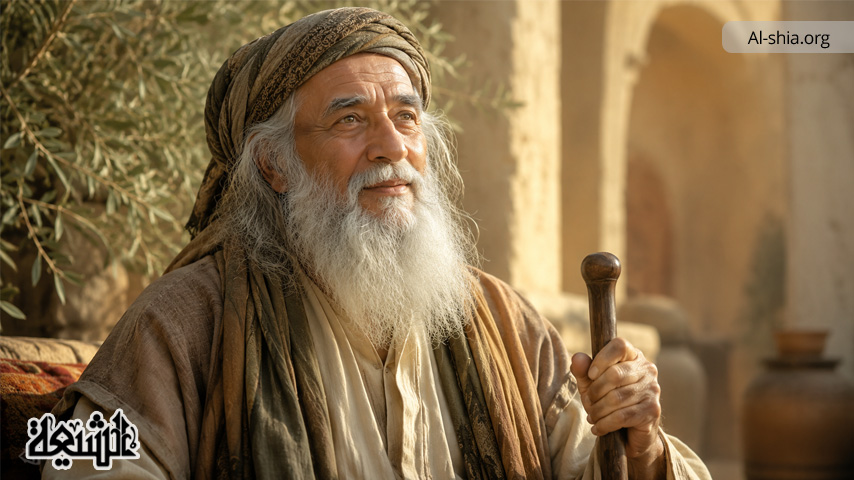

Hadrat Luqman the Wise is one of the most distinguished personalities mentioned in the Holy Qur’an. Although he lived before the advent of Islam but his name is mentioned in the Qur’an and an entire chapter is dedicated to him. He is celebrated for the depth of his wisdom, his profound moral insight, and the timeless counsel he offered to his son[1]. His admonitions encompass the core principles of Islamic ethics and spirituality, including sincere devotion to Allah, the rejection of polytheism, humility, moderation, dignity in conduct, gratitude, righteous companionship, and noble character[2].
Because of his extraordinary wisdom and unwavering faith, Hadrat Luqman occupies an eminent place among the righteous and the divinely wise. His life and counsel have received extensive attention from Qur’anic exegetes, Shiʿi and Sunni hadith scholars, and Muslim scholars throughout history. The Qur’anic account of Hadrat Luqman, together with the traditions that elaborate upon his character and wisdom, continues to serve as a rich source of moral, spiritual, and educational guidance for Muslims of every generation.
This article aims to examine the Qur’anic wisdom and counsel of Hadrat Luqman in light of the Holy Qur’an, Shiʿi exegetical works, and authentic hadith sources, highlighting their enduring relevance for individual character formation, family life, and moral education.
The Status of Hadrat Luqman in Islam
Hadrat Luqman occupies a unique and honored position in Islam as the embodiment of divinely bestowed wisdom (ḥikmah), moral integrity, and righteous conduct. The Holy Qur’an immortalizes his name by dedicating the thirty-first chapter (Sūrat Luqmān) to him and preserving his timeless counsel to his son. His inclusion in the Qur’an signifies that wisdom, sincere faith, and exemplary character are among the highest virtues that Allah bestows upon His righteous servants. Consequently, Hadrat Luqman has long been regarded by Muslim scholars as one of the greatest sages in human history and a model of ethical and spiritual excellence.
The central basis of Hadrat Luqman’s elevated status is the divine gift of wisdom. Allah states: “Certainly, We gave Luqman wisdom, saying, ‘Give thanks to Allah; and whoever gives thanks, gives thanks only for his own sake. And whoever is ungrateful, [let him know that] Allah is indeed all-sufficient, all-laudable.’”[3]
According to an interpretation, the wisdom (ḥikmah) bestowed upon Luqman was not merely intellectual knowledge but a comprehensive combination of knowledge and understanding, noble moral character, piety, and the light of divine guidance[4].
Al-Ṭabāṭabāʾī explains that the wisdom (ḥikmah) bestowed upon Hadrat Luqman in this verse is far more than mere intellectual ability or accumulated knowledge. Drawing upon the Qur’anic usage of the term, he explains that ḥikmah is beneficial and sound knowledge that enables a person to perceive reality correctly and to act upon that knowledge with balance and righteousness. It occupies the middle path between two destructive extremes: ignorance (jahl), which prevents a person from recognizing the truth, and intellectual excess or sophistry (jarbazah), in which intelligence is misused through deception, arrogance, or manipulation rather than being directed toward truth and virtue[5].
Likewise, al-Ṭabarsī interprets the divine gift of wisdom (ḥikmah) to Hadrat Luqman as a comprehensive endowment that includes intellect, knowledge, the ability to act in accordance with that knowledge, and sound judgment in all matters[6]. Thus, the Qur’an presents Hadrat Luqman not as a philosopher in the abstract sense but as a practical teacher whose wisdom transformed belief into righteous conduct.
Islamic tradition is equally clear that Hadrat Luqman was not a prophet[7]. Numerous narrations transmitted by both Shiʿi and Sunni authorities affirm that he did not receive prophethood or divine revelation in the prophetic sense. Instead, he was one of Allah’s righteous servants (ṣāliḥīn) upon whom wisdom was bestowed[8].
The hadith literature further illuminates the qualities that elevated Hadrat Luqman to such an esteemed position. His greatness did not arise merely from intellectual brilliance but from the harmonious integration of knowledge, faith, and righteous action.
One of the most comprehensive descriptions of Luqman’s character appears in a narration from Imam Jaʿfar al-Ṣādiq (peace be upon him) where he said that Allah did not grant Luqman wisdom because of noble ancestry, wealth, physical stature, or handsome appearance. Rather, he was a man who was steadfast in the cause of Allah, scrupulously God-conscious (waraʿ), tranquil, and reserved. He was distinguished by exceptional modesty and self-restraint to the extent that no one ever saw him relieving himself or bathing because of his carefulness in preserving his privacy and modesty. It was because of these noble qualities that he was granted wisdom and endowed with sound judgment. This narration underscores that true wisdom is not the product of worldly status or outward distinction, but the fruit of piety, moral discipline, and unwavering devotion to Allah[9]. This narration encapsulates the Islamic conception of wisdom as a divine gift bestowed upon those who combine sincere faith with humility, reflection, and unwavering obedience.
The Qur’anic Counsel of Hadrat Luqman
One of the most enduring legacies of Hadrat Luqman is the series of profound counsels that Allah preserves in Sūrat Luqmān (31:12–19). These verses constitute one of the Qur’an’s finest models of moral and spiritual education, presenting a father who nurtures his son through wisdom, compassion, and reason rather than coercion.
The Qur’an introduces Luqman’s advice only after declaring that Allah had granted him ḥikmah (wisdom). This arrangement indicates that genuine wisdom manifests itself through righteous counsel and practical guidance. Therefore, Hadrat Luqman’s counsel outlines a complete program for nurturing faith, character, worship, and social responsibility.
- Pure Monotheism: The Foundation of All Guidance
Luqman’s wisdom is reflected in the fact that he begins his counsel with the most fundamental doctrinal principle: Tawḥīd (Monotheism). He places the affirmation of Allah’s absolute oneness at the very foundation of his son’s moral and spiritual education, recognizing that every aspect of faith and righteous conduct is built upon this belief. Conversely, every form of deviation and destructive conduct that opposes Allah ultimately originates from shirk (associating partners with Him). Thus, Luqman rightly identifies the rejection of polytheism as the essential starting point for a life of true faith and righteousness: “‘O my son! Do not ascribe any partners to Allah. Polytheism is indeed a great injustice.’”[10]
This opening advice demonstrates that the soundness of belief precedes the reform of conduct. According to Tafsīr al-Mīzān, shirk (associating partners with Allah) is described as the greatest injustice because it violates Allah’s exclusive right to be worshipped by attributing partners to Him, even though He alone is Allah, the One who has no partner[11].
The address, “Yā bunayya” (“O my dear son”), also reflects the Qur’anic method of education. The affectionate expression shows that effective guidance is rooted in compassion and sincere concern[12]. Shiʿi scholars frequently cite this verse as evidence that successful moral instruction combines firmness in principle with gentleness in expression.
- Awareness of Divine Knowledge and Accountability
Hadrat Luqman next instills within his son a profound awareness of Allah’s perfect knowledge: “ ‘O my son! Even if it should be the weight of a mustard seed, and [even though] it should be in a rock, or in the heavens, or in the earth, Allah will produce it. Indeed, Allah is all-attentive, all-aware.”[13]
This verse establishes the principle of moral accountability. Nothing escapes Allah’s knowledge, however small or concealed it may be. Al-Ṭabāṭabāʾī explains that this verse teaches that sincere faith in the Hereafter requires a constant awareness that Allah has perfect knowledge of every deed, however small or hidden, and that every action will ultimately be brought forth for divine judgment and recompense[14]. Thus, every deed, intention, and hidden action will ultimately be brought to light.
- Establishing Prayer
Hadrat Luqman then instructs: “O my son! Maintain the prayer.”[15] Prayer occupies a central place in Luqman’s educational program because it is the believer’s most important bond with the Creator[16].
Prayer occupies the central place among practical acts of worship because it strengthens the servant’s relationship with Allah[17] and serves as the foundation of spiritual discipline. Shiʿi traditions consistently describe prayer as the pillar of religion[18], the first deed to be examined on the Day of Judgment[19] and among practical acts of worship that strengthen the servant’s relationship with Allah[20].
Makārim Shīrāzī observes that Luqman places the command to establish prayer at the heart of his son’s spiritual upbringing because prayer awakens the heart, purifies the soul, and illuminates one’s life with divine guidance. It cleanses the effects of sin, causes the light of faith to shine within the heart, and restrains the believer from indecency and wrongdoing. Thus, Luqman’s counsel emphasizes that genuine spiritual growth and moral excellence begin with a sincere and steadfast relationship with Allah through prayer[21].
- Enjoining What Is Right and Forbidding What Is Wrong
Immediately after commanding prayer, Hadrat Luqman turns to the most important social obligation: “… Bid what is right and forbid what is wrong…”[22]
Enjoining what is right and forbidding what is wrong (al-amr bi al-maʿrūf wa al-nahy ʿan al-munkar) is one of Islam’s foremost social responsibilities. It reflects love for the faith, genuine concern for people, and a commitment to the moral well-being of society. It also embodies freedom of expression, religious zeal, sincere care among members of the community, an awakened human conscience, public accountability, and active participation in communal affairs. At the same time, it encourages those who do good, educates those who are ignorant, warns against wrongdoing before it spreads, and promotes social order, moral responsibility, and communal discipline[23].
- Patience and Steadfastness
Hadrat Luqman continues: “… and be patient through whatever may befall you. That is indeed the steadiest of courses.”[24]
Every effort to uphold truth inevitably encounters hardship. Hadrat Luqman therefore teaches that patience (ṣabr) is indispensable for anyone committed to faith and righteousness. According to Tafsīr al-Mīzān, patience is considered the hallmark of true determination, enabling believers to remain steadfast in worship, moral responsibility, and obedience to Allah despite trials and hardships[25].
- Humility and Good Character
Hadrat Luqman’s counsel then turns to interpersonal conduct: “ Do not turn your cheek away disdainfully from the people, and do not walk exultantly on the earth. Indeed, Allah does not like any swaggering braggart.”[26]
Arrogance destroys both individual character and social harmony. Hadrat Luqman warns against contemptuous behavior and reminds his son that true honor belongs to those who humble themselves before Allah[27]. Hadrat Luqman’s counsel means that one should not turn one’s face away from people in arrogance or turn aside from someone who is speaking out of contempt or disdain for him[28].
- Moderation and Gentleness
Hadrat Luqman instructs: “Be modest in your bearing.”[29] This instruction emphasizes balance, dignity, and self-restraint. Moderation in walking symbolizes composure and humility. The first quality that distinguishes the servants of the Most Merciful is their humility. Allah says: “The servants of the All-beneficent are those who walk humbly on the earth…”[30]. The expression “walk humbly on the earth” is understood as a metaphor for one’s manner of living and interacting with people[31]. Thus, the servants of the Most Merciful conduct themselves with humility, free from ostentation and arrogance[32], neither seeking superiority over others nor expecting followers to trail behind them[33].
- Lowering of Voice
Finally, Luqman instructs: “…Lower your voice. Indeed, the ungainliest of voices is the donkey’s voice.’.”[34]. The verse emphasizes the importance of moderation and refinement in speech. Lowering one’s voice reflects gentleness, respect, humility, and emotional discipline, whereas raising it unnecessarily is not a sign of greatness or strength but rather a mark of unbecoming behavior and ignorance[35]. Through this vivid comparison, the Qur’an teaches that dignified and considerate speech is a hallmark of wisdom and noble character.
Conclusion
The Qur’anic account of Hadrat Luqman presents one of the most profound and enduring models of wisdom, moral education, and righteous living in the Islamic tradition. Although he was not a prophet, Allah honored him with the priceless gift of ḥikmah (wisdom), preserved his name in the Holy Qur’an, and immortalized his counsel as a timeless guide for humanity. His example demonstrates that true wisdom is not measured by lineage, wealth, social status, or worldly achievement, but by sincere faith, gratitude to Allah, sound judgment, righteous conduct, and unwavering obedience to the Divine will.
Luqman’s counsel to his son offers a comprehensive framework for Islamic education that integrates belief, worship, ethics, and social responsibility. Beginning with the affirmation of pure monotheism, his advice proceeds to gratitude, filial piety, awareness of divine accountability, the establishment of prayer, enjoining what is right and forbidding what is wrong, patience in adversity, humility, moderation, and refinement in speech and conduct. This deliberate progression reflects the Qur’anic method of nurturing individuals whose inward faith is manifested through noble character and constructive engagement with society.
In an age marked by moral uncertainty, weakening family bonds, and increasing spiritual challenges, the Qur’anic wisdom of Hadrat Luqman remains remarkably relevant. His compassionate approach to educating his son reminds parents, educators, and community leaders that lasting reform begins with nurturing sound belief, cultivating virtuous character, and leading by personal example. His counsel transcends time and culture, offering principles that continue to inspire individuals and families seeking lives rooted in faith, wisdom, justice, and compassion.
Ultimately, the legacy of Hadrat Luqman affirms that the Qur’an is not merely a record of past events but a living source of guidance for every generation. His timeless counsel invites believers to strengthen their relationship with Allah, embody the highest standards of Islamic ethics, and transmit these enduring values to future generations. By embracing the wisdom preserved in Sūrat Luqmān (Qur’an 31), Muslims can cultivate spiritually grounded individuals and morally responsible communities, thereby fulfilling the Qur’anic vision of a life guided by faith, wisdom, and righteous action.
Notes:
[1] . Ṭabāṭabāʾī. Tafsīr al-Mīzān, vol. 16, p. 214.
[2] . Qur’an 31:12-19.
[3] . Qur’an 31:12.
[4] . Makārim Shīrāzī. Tafsir-e Nemuneh, vol. 17, p. 36.
[5] . Ṭabāṭabāʾī. Tafsīr al-Mīzān, vol. 16, p. 215.
[6] . Ṭabarsī. Majma‘ al-Bayān, vol. 8, p. 493.
[7] . Majlisi. Biḥār al-Anwār, vol. 13, p. 424.
[8] . Jazā’iri. al-Nūr al-Mubīn fi Qiṣaṣ ‘Anbiya’ wa al-Murasalin, p. 328.
[9] . Ḥurr Amili. Wasā’il al-Shi`ah, vol. 1, p. 305, Hadith 801.
[10] . Qur’an 31:13.
[11] . Ṭabāṭabāʾī. Tafsīr al-Mīzān, vol. 16, p. 215.
[12] . Qara’ati. Tafsir-e Nūr, vol. 7, p. 244.
[13] . Qur’an 31:16.
[14] . Ṭabāṭabāʾī. Tafsīr al-Mīzān, vol. 16, p. 218.
[15] . Qur’an 31:17.
[16] . Makārim Shīrāzī. Tafsir-e Nemuneh, vol. 17, p. 53.
[17] . Ḥarrānī, Tuḥaf al-ʿuqūl, p. 455.
[18] . Muḥammadī Riyshahrī, Mīzān al-ḥikma, vol. 5, p. 370.
[19] . Kulaynī. Al-Kāfī, vol. 3. P. 268.
[20] . Ḥarrānī, Tuḥaf al-ʿuqūl, p. 455.
[21] . Makārim Shīrāzī. Tafsir-e Nemuneh, vol. 17, p. 53.
[22] . Qur’an 31:17.
[23] . Qara’ati. Tafsir-e Nūr, vol. 7, p. 264.
[24] . Qur’an 31:17.
[25] . Ṭabāṭabāʾī. Tafsīr al-Mīzān, vol. 16, p. 218.
[26] . Qur’an 31:18
[27] . Kulaynī. Al-Kāfī, vol. 2. P. 122, Hadith 3.
[28] . Ṭabāṭabāʾī. Tafsīr al-Mīzān, vol. 16, p. 220.
[29] . Qur’an 31:19.
[30] . Qur’an 25:63.
[31] . Ṭabāṭabāʾī. Tafsīr al-Mīzān, vol. 15, p. 239.
[32] . Makārim Shīrāzī. Tafsir-e Nemuneh, vol. 15, p. 147; Ṭabarsī. Majma‘ al-Bayān, vol. 7, p. 279.
[33] . Mughniyyah. al-Tafsīr al-Kāshif, vol. 5, p. 481.
[34] . Qur’an 31:19.
[35] . Ṭabarsī. Majma‘ al-Bayān, vol. 8, p. 500.
References
Holy Qur’an (with the English translation: Qarai, Ali Quli (2005). The Qur’an: With a Phrase-by-Phrase English Translation (2nd edition). London: Islamic College for Advanced Studies (ICAS) Press.
- Ḥarrānī, Ḥasan ibn ʿAli. (1363 SH). Tuḥaf al-ʿUqūl. Qom: Daftar-i Intishārāt-i Islāmī.
- Ḥurr Amili, Muhammad ibn Hassan. (1988). Tafṣīl Wasā’il al-Shi`ah ila Tahṣīl Masā’il al-Shari`ah (1st edition). Qom: Al al-Bayt Institute
- Jazā’iri, Ni`matollah ibn Abdullah. (1983). al-Nūr al-Mubīn fi Qiṣaṣ ‘Anbiya’ wa al-Murasalin (1st edition). Qom: Ayatollah Mar`ashi Najafi Library
- Kulayni, Muhammad ibn Ya`qoub (1986). Al-Kāfī (4th edition). Tehran: Dar al-Kutub al-Islamiyyah.
- Majlisi, Muhammad Baqir ibn Muhammad Taqi (1982). Biḥār al-Anwār (2nd edition). Beirut: Dar Ihya al-Turath al-Arabi.
- Makārim Shīrāzī, Nāṣir. (1992). Tafsīr-e Nemūneh. Tehran: Dār al-Kutub al-Islāmiyyah.
- Mughniyyah, Muḥammad Jawād. (1424 AH). al-Tafsīr al-Kāshif. Qom: Dār al-Kitāb al-Islāmī.
- Muḥammadī Riyshahrī, Muḥammad. (n.d). Mīzān al-Ḥikmah. Qom: Dār al-Ḥadīth.
- Qara’ati, Mohsen. (2009). Tafsir-e Nūr (1st edition). Tehran: Cultural Center for Teachings of the Qur’an.
- Ṭabāṭabāʾī, Sayyid Muḥammad Ḥusayn. (1970). Tafsīr al-Mīzān (2nd edition). Beirut: Mu’asassat al-A’lami li al-Matbou’aat.
- Ṭabrisī, Faḍl ibn al-Ḥasan. (1993). Majmaʿ al-Bayān fī Tafsīr al-Qurʾān. Tehran: Nāṣir Khusrow.


![The Event of Ghadir and Imam al-Mahdi [afs]](https://en.al-shia.org/wp-content/uploads/2026/06/17221.jpg)