


The Islamic Revolution of Iran is the outcome of all the Islamic movements and uprisings that have emerged across the Islamic world over the past two centuries. One of its most important achievements has been the expansion of the “boundaries of the Islamic Resistance front” in confronting global arrogance. This article, by raising the most fundamental questions about the background, nature, necessity, dimensions, levels, and functions of resistance, seeks to explain “the role of Islamic Resistance in creating and expanding a new Islamic civilization”.
It does so by outlining the pattern of its developments within the experience of the Islamic Republic of Iran at four levels: theory, document, practice, and strategy. The present text aims to demonstrate the following combined hypothesis: Every civilization is preceded by a spiritual transformation appropriate to it, and resistance provides the environment for the emergence and growth of the spiritual changes needed for Islamic civilization. Indeed, resistance plays a significant role in expanding and strengthening these changes, and is fundamentally involved in shaping the “otherness” that defines civilizational identity.
The Nature and Essence of Islamic Resistance
The following issues are among the most important theoretical discussions concerning the nature and essence of resistance:
Resistance: Divergence or Convergence?
Any element that creates division or promotes isolation will have an anti-civilizational effect. Islamic countries constitute the geographical units of Islamic civilization, and therefore any factor that disrupts their bond will undoubtedly delay the realization of a new Islamic civilization.
Islamic Resistance is susceptible to creating division and isolated units in two ways. First, its realization requires bearing costs and enduring hardships. This not only causes some countries to fall behind the path of resistance and sever their ties with resistance-oriented nations, but due to the Islamic nature of resistance, may also cause those who fall behind to be labeled as “non-Islamic”.
This, in turn, prepares a psychological basis for their alignment with the opposing bloc against the Islamic Resistance.
Second, the pure Islamic nature of resistance inherently sidelines those governments and political leaders in the Islamic world who have little affinity with such purity. As a result, resistance stands in opposition to them just as it does to the open enemies of Islam.
Clearly, these two factors generate a certain degree of division within the Islamic world. Given this reality, can Islamic Resistance still be regarded as a capacity for realizing and sustaining a new Islamic civilization?
Undoubtedly, all major undertakings, precisely because they are major, lack the participation of all their potential contributors and are achieved only with the cooperation of some. Just as the “graduate education project”, due to the effort it requires, does not receive the active participation of all those who need it, yet scholars and designers of knowledge have never doubted its rationality.
The project of resistance is no exception. In other words, phenomena such as revolution, education, and resistance are not evaluated based on those who fail to join them, but rather on those who participate in them and the outcomes and consequences they produce.
Moreover, today’s global interconnectedness prevents any complete severing of ties even with opposing countries. More importantly, the spirit of resistance is “not obeying,” not “not interacting”.
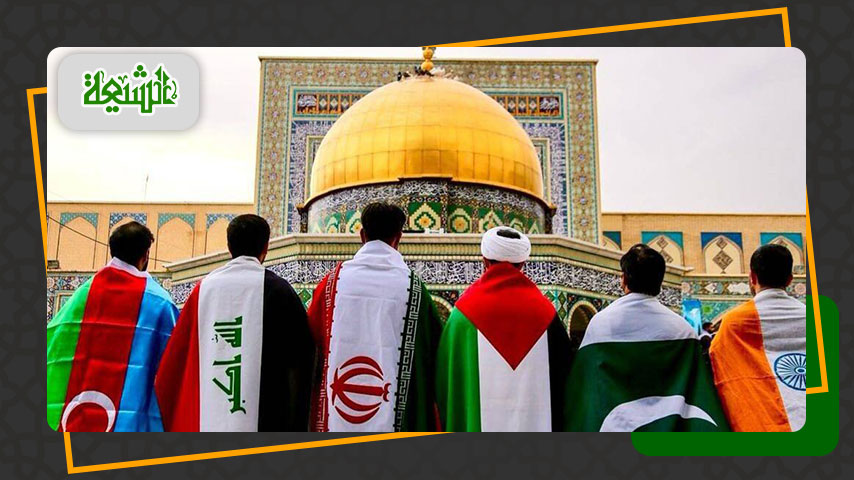
Post-revolutionary Iran is the clearest example among the countries of the Islamic Resistance front. Despite relentless efforts, false propaganda, and baseless claims by arrogant powers about Iran’s supposed international isolation, its increasing internal strength and growing external influence have become significant enough to turn it into the most serious nightmare for its adversaries.
Resistance as a Social Identity
Human beings are social creatures, and their identity is fluid, constantly forming and changing, because the human world is shaped by human wills and is influenced by active and creative divine deposits. Therefore, the realization of resistance, like any other social phenomenon, requires social infrastructures that typically develop over a relatively long period.
For example, the emergence of Ayatollah Khomeini as a symbol of Islamic Resistance against global arrogance in the past century was the product of a long history involving dozens of Islamic awakening movements.
Without such a history and movements in another place, one should not expect the emergence of another “Khomeini”. On this basis, one can accept the correctness of Rached Ghannouchi’s claim that comparing himself to Imam Khomeini would be incorrect, for Tunisia’s historical background differs significantly from that of Iran.
Additionally, because factors such as publicity, reputation, and legal status play a determining role in the social domain, even strong ideological foundations of resistance cannot become a social movement unless they enjoy adequate social acceptance.
The Relationship Between Islamic Resistance and Related Religious Concepts
When adapting Islamic concepts to various human cultures, the discussion becomes sociological. An example of this is the transformation of the phrase “legal jihad” into the concept of “civil resistance”. Yet nearly all scholars who have spoken or written about Islamic jihad have understood jihad in the Quran and traditions as a form of “hard and manifest struggle”.[1]
Some jurists, without making any distinction, have used the term “fiqh of defensive jihad” interchangeably with “fiqh of resistance”.[2] This means that all the rulings of defensive jihad can be applied to the Resistance front.
However, replacing the concept of jihad entirely and permanently with the concept of resistance would diminish or restrict many of the capacities found within this religious term.
The Relationship Between Islamic Resistance and Related Religious Currents
A theoretical reflection on the concept and instance of Islamic Resistance and clarifying its relationship with other related Islamic concepts, is necessary because it distinguishes its conceptual and theoretical boundaries from alternative or distorted models of Islam.
Takfiri Currents
Islamic Resistance differs from Takfiri movements in two fundamental ways. First, Takfiri movements follow a negational approach aimed at excluding others, whereas Islamic Resistance adopts an affirmative approach focused on affirming and establishing its own identity. Second and more importantly, the nature and language of resistance are such that they can convey their rationality through dialogue and even persuade their opponents.
The Liberal Current
The liberal current seeks, with a conciliatory approach, to showcase the compassionate face of Islam in order to distance itself from accusations of Takfiri violence. However, the main function of the liberal current is to blur or remove internal boundaries, whereas the main function of Islamic Resistance is to clarify the boundaries between the in-group and the out-group.
Since boundaries (by definition) mark the separation between one identity and what lies outside it, the identity-based nature of resistance, and the anti-identity nature of the liberal current, can easily be confirmed.
The Necessity and Rationality of Islamic Resistance
All identities, other than the essence of the Almighty, possess a nature. The nature of each thing defines the limits of its existence, such that what lies outside it cannot be considered the same as what lies within it.
Social phenomena also possess social natures; for example, civilizations have identities, which is why they can be described as Islamic, Western, ancient, and so on.
Human history is filled with examples of civilizations that, for various reasons, including territorial expansion, meeting essential or nonessential needs, and human ambition, intentionally engineered their entry into the domain of rival civilizations, thereby engaging in cultural invasion.
This means, first, that if a worldview does not present a positive and actionable program in the practical sphere, others will surely offer their own. Second, any practical program in real life, just as Feyerabend’s idea of “elimination through replacement” suggests, naturally leads to the removal of other programs.
Therefore, the rationality of the Resistance front includes both preventing foreign programs from penetrating a civilization and protecting the existing programs of the established civilization.
From another perspective, it should be noted that in established philosophical thought, the final cause explains and provides part of the rationality of the other causes, namely the material cause, the formal cause, and the efficient cause.
The ultimate goal of the Resistance front is to lead the oppressed toward perfection by liberating them from the yoke of global arrogance. It is clear that reaching such a goal is possible only through hardships, sanctions, wars, and similar challenges.
Civilization scholars have noted that if civilizational comfort becomes so dominant that it minimizes hardship, it can paradoxically create the conditions for civilizational collapse. With this in mind, one can be assured that the Resistance movement, constantly associated with unique hardships and challenges, acts as a safety valve that prevents internal collapse within a civilization.
Dimensions, Levels, and Types of Resistance
It appears that resistance can take as many forms as the faces of an enemy; thus, if the enemy is viewed as multifaceted and multidimensional, resistance too becomes a multifaceted concept with diverse expressions.
For example, the political hostility of the United States and the West toward the Islamic Republic, manifested in colonial efforts to increase Iran’s dependency, strategic alliances with Iran’s adversaries, refusal to support Iran in international resolutions, and more, has led to the emergence of political resistance among Iranians, symbolized by the social slogan “Death to global arrogance” (America, the West, Israel, etc.).
Similarly, the hostility of arrogant powers toward the Islamic Republic in the sphere of knowledge, through formulating theories in the humanities to strengthen the foundations of Western modernity and weaken the foundations of cultures and civilizations opposed to the West, imposing sanctions on essential foundational sciences required for Iran’s and other Islamic countries’ advancement.
Also, orchestrating the soft and hard assassination of Iranian scholars, spreading negative propaganda about the condition of scientific research in Iran, and simultaneously offering continuous incentives encouraging their migration to the West, has generated scientific resistance among Iranians against the West.
This resistance includes, for example, traditional medicine, which is now challenging modern medicine in the treatment of certain diseases where modern methods have proven ineffective. At the same time, fields within modern medicine, such as stem cell research, have achieved globally exclusive ranks.
More importantly, in technical and engineering sciences, including missile industries, nuclear energy, and similar fields, Iran has achieved a level of success that has forced the entire front of global arrogance into reactive stances.
In the economic sphere, Western hostility toward the Islamic Republic, most notably expressed through sanctions on essential goods, has generated economic resistance. In recent years, this resistance, through theoretical work centered on the key term “resistance economy,” has seriously questioned Iran’s dependency on oil.
Ultimately, it has led to policies aimed at maximizing support for national production and minimizing reliance on Western goods. In the military sphere, in addition to success during the eight-year Sacred Defense, these achievements, combined with their cultural extensions, have further expanded Iran’s soft regional influence in West Asia.
Thus, it must be acknowledged that the realization of diverse dimensions of resistance within a nation enhances that nation’s civilizational potential.
Effects and Functions of Islamic Resistance
The effects and outcomes of a concept or phenomenon can help explain part of its rationality. The most important effect of resistance is its ability to build capacity within society, because in the context of resistance, the latent potentials of individuals and communities are discovered and activated.
In fact, the philosophy behind hardships in God’s perfect order is nothing but preparing the ground for human growth. The reality is that people become more active in times of difficulty and hardship than in periods of comfort and security.
Based on this analysis, the numerous and intense trials faced by God’s chosen ones can perhaps be better understood. Social development also takes shape through confronting trials and challenges. Thus, the importance of resistance lies in the fact that it serves as the software that guides individuals and societies toward properly dealing with difficulties.
Historical experience in Islamic countries has also shown that Islamic Resistance increases engagement with the Islamic heritage and, through that, strengthens and intensifies its social application.
The secret behind this lies in the fact that resistance emerges from a suitable psychological background, typically arising from a sense of being wronged. This means that such a mental foundation allows the oppressed to maintain the upper hand in social interactions.
Historical experience has also shown that psychological readiness acts as one of the essential prerequisites for civilizational advancement. Its importance is so great that many nations attempt to engineer such readiness.
What matters, however, is recognizing that such readiness is rarely achieved through prior recommendations; rather, whenever the other conditions for civilizational progress come together and connect, the community gains the highest level of psychological readiness for that advancement.
The Background of Resistance in the Islamic World
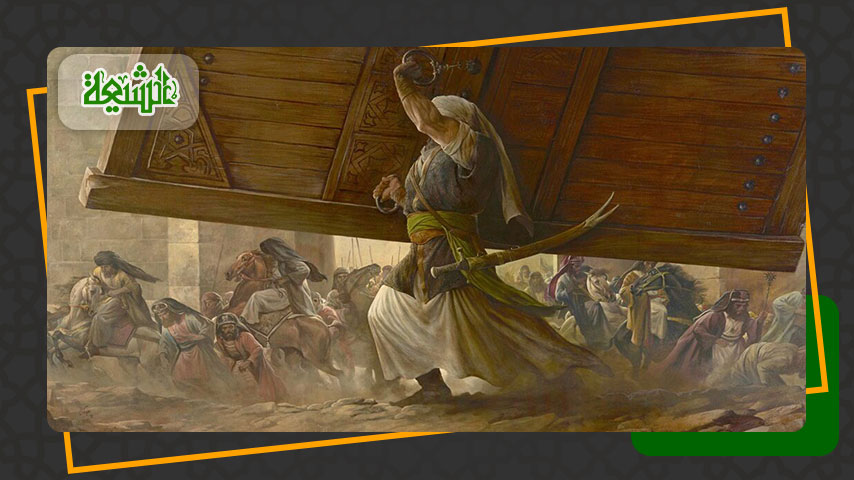
In early Islam, two events, the episode of “Shib Abu Talib” and “Karbala”, can be seen as foundational contexts for the emergence of Islamic Resistance, though they are not the only examples from that period.
Islamic movements in the Indian subcontinent, such as the Khilafat Movement, the Tablighi Jamaat Movement, the Aligarh Movement, the Islamic Students Movement of India, and others[3];
Islamic movements in Arab regions, including the Muslim Brotherhood (in Egypt, Turkey, Tunisia, etc.), the resistance led by Omar Mukhtar in Libya, the 1920 Revolution in Iraq, the Ennahda Movement in Tunisia, Algeria’s Islamist movement, Jihad and Hamas in Palestine, and finally Hezbollah in Lebanon;
Islamic movements in non-Arab regions, such as the Islamic revival movement of Said Nursi in Turkey (which, despite splitting into several branches, ultimately gained political power), the Islamic Revolution of Iran, and others, together represent only part of the Islamic Resistance in recent centuries.
These movements emerged openly, mostly with a political orientation, and all contributed to strengthening Islamic identity in contrast to Western identity. Although the visible end of many of these movements appears, at first glance, to be unsuccessful or incomplete, this does not confirm John Foran’s theory of “fragile resistance”.
This is because, first, every apparent failure of earlier movements has produced invaluable strategic lessons for later ones; and second, the collective momentum of these movements has strengthened Islamic identity and helped overcome identities imposed by the West.
In other words, the trajectory of Islamic Resistance movements is an evolutionary one, capable of integrating the Islamic world. Overall, the significant heritage of Islamic Resistance in the modern era has had multiple civilizational functions, the most important of which include:
Preventing Civilizational Collapse
Western colonialism deliberately sought to secure its ongoing presence in the Islamic world through the distortion, destruction, and transfer of the civilizational heritage of Muslims, replacing it with Western civilizational elements.
The opposition of Islamic world elites to this destructive policy awakened the Muslim masses, ultimately leading to the rise of resistance movements and the collapse of that colonial guarantee.
The “temporal-spatial breadth” and the “content-method diversity” of these movements increased the density of resistance across the Islamic world, thereby preventing the collapse of Islamic civilization.
Preventing the Dissolution of Islamic Civilization into Western Civilization
The pervasive influence of the West, through the promotion and institutionalization of Western lifestyles, could have deeply penetrated Islamic civilization. However, the Islamic Resistance movement, by emphasizing the legitimacy and authenticity of the Islamic way of life, sustained the continuity of Islamic culture and civilization.
Strengthening the Islamic World’s Readiness for Entering a New Islamic Civilization
Islamic Resistance, through rebuilding Islamic identity, created new institutional capacities. The most significant institutional outcome of the Resistance movement can be seen in the establishment of a governing institution in the experience of the Islamic Republic of Iran.
Conclusion
Islamic Resistance can be viewed as one of the most strategic and fundamental approaches in confronting enemies and global arrogance. True resistance can move nations forward in all scientific, cultural, social, political, and economic fields, serving as a decisive advantage against adversaries.
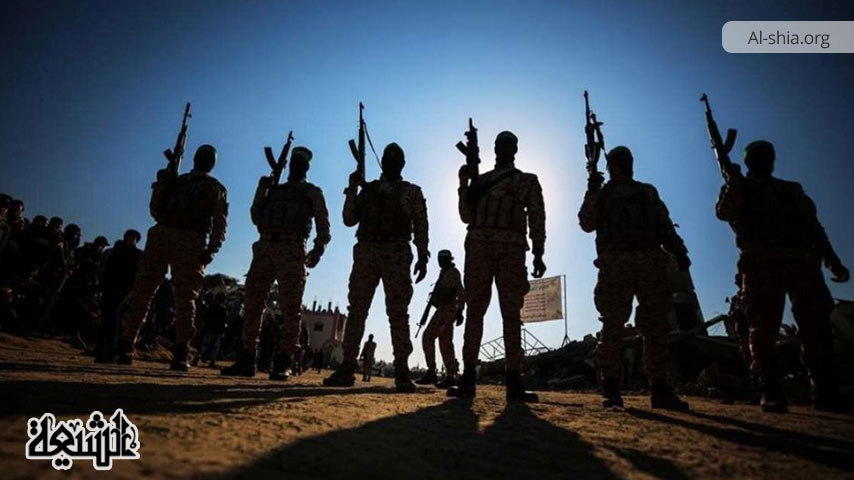
Military resistance against enemy aggression is the most visible form and can more clearly demonstrate the effects of resistance to oppressed nations. Belief in resistance can empower nations to stand strong against their enemies in all dimensions.
Notes:
[1] . Lankarani, Jihad in the Quran, Introduction section.
[2] . Asefi, A Comparative Study in the Jurisprudence of Resistance, p.13.
[3] . Hatami and Bahrani; Encyclopedia of Islamic Movements, Section “Islamic Movements of the Indian Subcontinent”.
References
- Asefi, Mohammad Mahdi; A Comparative Study in the Jurisprudence of Resistance, translated by Ali Karshenas, vol. 1, Qom: Zamzam-e Hedayat, 2016.
- Hatami, Mohammad Reza, and Morteza Bahrani; Encyclopedia of Islamic Movements, vol. 1, Tehran: Institute for Cultural and Social Studies, 2013.
- Lankarani, Mohammad Jawad Fazel; Jihad in the Quran (Preliminary Edition), Qom: The Jurisprudential Center of the Ahl al-Bayt (AS), 2015.
Source of the article | Adapted from:
Heydaripour, Abbas. The Civilizational Report Card of the Islamic Republic of Iran (Abstract of the Book: The Civilizational Standard of the Islamic Republic of Iran), Research Institute for Islamic Culture and Thought, p. 55–77.


![The Event of Ghadir and Imam al-Mahdi [afs]](https://en.al-shia.org/wp-content/uploads/2026/06/17221.jpg)