

The Prophet’s Household (Ahl al-Bayt) occupies a unique position not merely in devotional sentiment but in the very structure of Prophetic guidance itself. Through authentic hadith, the Messenger of Allah (PBUHH) repeatedly emphasized the spiritual authority, purity, and enduring relevance of his purified Household, presenting them as a source of light, protection, and continuity after him. Understanding the Prophet’s Household, therefore, is not a marginal theological discussion but a central dimension of faith, love, and obedience.
For believers seeking clarity amid historical differences and contemporary confusion, returning to the Prophetic narrations about the Ahl al-Bayt allows us to rediscover a divinely designated path rooted in revelation, loyalty, and spiritual excellence.
Who Are the Ahl al-Bayt?
The term Ahl al-Bayt — commonly translated as “Household” “Family” or sometimes refers to “the family of the Prophet”[1]: those specific individuals within the Household of the Prophet who have received special attention from God in the Holy Qur’an and through His Messenger, occupying a unique and divinely distinguished position within the Muslim community.
It is noteworthy that the Ahl al-Bayt of the Prophet (peace be upon them) are sometimes referred to in the Holy Qur’an and authentic narrations by titles such as “Dhawī al-Qurbā’“[2] (i.e. the close kinship), “Uli al-Amr“[3] (i.e. those vested with authority), ” ʿItrah“[4] (the Prophet’s family), “Āl Muḥammad“[5] (the family of Muhammad), and other similar designations.
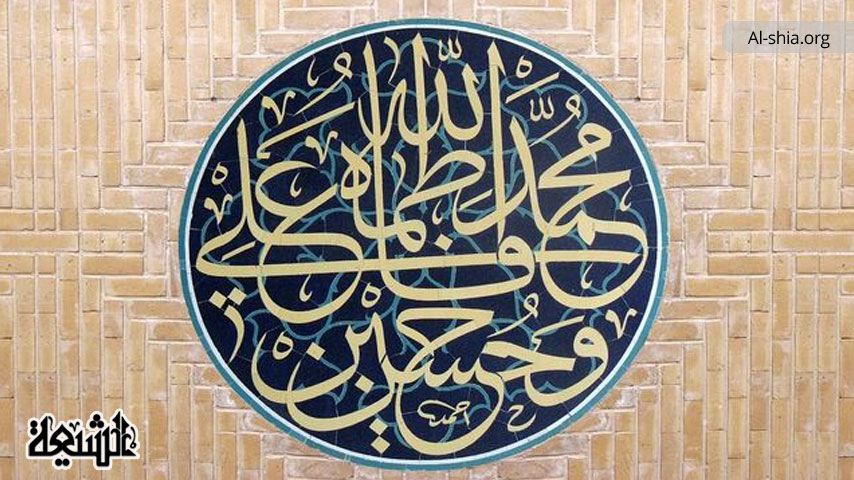
Thus, when Muslims speak of the Ahl al-Bayt in the context of Prophetic hadith, they are referring to a divinely purified family nucleus: Ali ibn Abi Talib, Fatimah al-Zahra, Hasan ibn Ali, and Husain ibn Ali (peace be upon them)— inseparably connected to the Prophet himself.
In view of this, understanding who the Prophet’s Household (Ahl al-Bayt) is therefore the first step toward appreciating why the Messenger of Allah (PBUHH) repeatedly emphasized their love, loyalty, and adherence as integral elements of faith itself.
Prophet’s Household (Ahl al-Bayt) in Prophetic Hadith
On different occasions and circumstances, the Holy Prophet (PBUHH) has repeatedly made reference to his purified Household and we shall refer to some of them briefly in this article.
-
The Ḥadīth al-Thaqalayn: The Two Weighty Things
Among the most widely transmitted and consequential Prophetic traditions concerning Prophet’s Household is the Ḥadīth al-Thaqalayn — the Hadith of the Two Weighty Things. In this profound narration, the Messenger of Allah declares: “I am leaving among you two weighty things (al-thaqalayn): the Book of Allah and my Ahl al-Bayt. If you hold firmly to them, you will never go astray after me. They will never separate until they return to me at the Pond (al-Ḥawḍ).”
This hadith is recorded in numerous Sunni[6] and Shīʿī[7] sources. Its wide transmission across different schools of thought gives it a unique authority in Islamic scholarship. Importantly, the Noble Prophet did not merely recommend respect for his purified Household; he paired them inseparably with the Qurʾan itself.
The wording of the hadith is striking. By calling the Qurʾan and the Prophet’s Household “two weighty things,” the Prophet (PBUHH) indicated their immense value and responsibility[8]. The Qurʾan is the revealed word of Allah, the ultimate source of guidance. The Prophet’s Household (Ahl al-Bayt), by being mentioned alongside it, are presented as its living interpreters and protectors. The command to “hold fast” suggests active adherence — not passive admiration.
Equally significant is the statement that the two “will never separate until they return to me at the Pond.” This indicates a permanent and enduring bond between the Qurʾan and the Ahl al-Bayt.
For believers reflecting on this narration, the message is clear: attachment to the Qurʾan cannot be separated from attachment to the Prophet’s Household[9] (Ahl al-Bayt).
-
Ḥadīth al-Safīnah: The Ark of Salvation
Another powerful Prophetic narration highlighting the rank of the Prophet’s Household is the well-known Ḥadīth al-Safīnah (the Hadith of the Ark). In this tradition, the Messenger of Allah said: “The example of my Ahl al-Bayt among you is like the Ark of Noah; whoever boards it is saved, and whoever turns away from it drowns.”
This narration is also reported in a number of classical sources. Though scholars have discussed its chains of transmission, it has been widely cited across both Sunni[10] and Shīʿa[11] literature as a significant statement about the spiritual role of the Prophet’s Household.
The imagery is deeply Qurʾanic. Just as salvation during the flood was tied to boarding the Ark of Noah, spiritual safety after the Prophet (PBUHH) is linked to loyalty to and adherence to the Prophet’s Household. The comparison is not merely poetic; it conveys urgency. The Ark was not optional for survival — it was the divinely appointed means of protection.
In this light, the Prophet’s Household are portrayed not simply as respected relatives of the Prophet (PBUHH), but as a refuge in times of confusion, division, and moral trial. Thus, the Ahl al-Bayt and their loyal followers are protected from confusion and saved from Hellfire[12].
-
Ḥadīth al-Kisāʾ: The Tradition of the Cloak
One of the clearest moments in which the Prophet (PBUHH) publicly defined the Prophet’s Household is preserved in what is known as Ḥadīth al-Kisāʾ (the Tradition of the Cloak). This event is closely connected to Qurʾan 33:33— the famous Verse of Purification (Āyat al-Taṭhīr): “Indeed, Allah desires to repel all impurity from you, O People of the Household, and purify you with a thorough purification.”
According to narrations recorded in major Sunni works[13] and Shia authoritative sources of hadith[14], the Prophet (PBUHH) gathered under his cloak four individuals: Ali ibn Abi Talib, Fatimah al-Zahra, Hasan ibn Ali, and Husain ibn Ali. He then prayed: “O Allah, these are my Ahl al-Bayt. Remove impurity from them and purify them completely.”
This deliberate act of gathering them under the cloak was not symbolic alone; it was a public clarification of who constitutes the core of the Prophet’s Household[15]. When Umm Salamah asked whether she was included, the Prophet affirmed her goodness but clarified that these individuals were specifically his Ahl al-Bayt in this context[16].
It is important to note that the wives of the Prophet are honored in Islam as “Mothers of the Believers,” a title established in the Qurʾan 33:6. However, the specific designation of the Prophet’s Household (Ahl al-Bayt) in the context of purification and spiritual authority, as demonstrated in the Ḥadīth al-Kisāʾ, refers particularly to individuals often called Ahl al-Kisāʾ.
Love of the Ahl al-Bayt as a Religious Obligation
Love for the Prophet’s Household is not presented in Islam as a mere cultural sentiment or historical attachment; it is framed in the sources as a religious responsibility. The foundation for this obligation appears clearly in the Qurʾan, where Allah commands: “Say: I do not ask of you any reward for it except love of [my] relatives” (Qurʾan 42:23).
Classical exegetes are of the opinion that the term dhawi al-qurba indicates the relatives of the Noble Prophet (S) and love for them may serve as a means of acknowledging the Imamate and leadership of the Infallible Imams (as) as descendants of the Noble Prophet (S) and as a support for imparting the Divine Call[17].
Importantly, love in this context is not reduced to emotion alone. It implies respect, loyalty, defense of their dignity, and learning from their example. To love the Prophet’s Household is to align oneself with their values — justice, piety, patience, and devotion to Allah. For this reason, Muslim scholars have consistently regarded attachment to the Prophet’s Household as part of sincere faith, rooted in revelation and affirmed by the Prophet’s own words.
The Ahl al-Bayt as Divine Guides After the Prophet
One of the most significant questions facing the early Muslim community was: who would safeguard the message after the passing of Prophet Muhammad (PBUHH)? While prophethood itself came to an end with him, guidance did not cease. In numerous narrations, the Prophet (PBUHH) directed the community toward his Ahl al-Bayt as a continuing source of clarity and protection from misguidance[18].
The most prominent of these reports is the Ḥadīth al-Thaqalayn, recorded in both Sunni and Shia reliable sources, in which the Holy Prophet (PBUHH) declared that he was leaving behind “the Book of Allah and my Ahl al-Bayt,” and that holding firmly to both would prevent deviation. The pairing of the Qurʾan with Prophet’s Household (Ahl al-Bayt) indicates that the Ahl al-Bayt were not simply to be respected, but to be followed as authoritative interpreters of revelation.
Another powerful declaration occurred at Ghadīr Khumm, where the Prophet proclaimed concerning Imam Ali ibn Abi Talib: “For whomever I am his master (mawlā), Ali is his master.”[19] This statement has been understood by many scholars as an affirmation of Ali’s leadership and spiritual authority immediately after the Prophet (PBUHH).
Within the Shīʿī understanding, these narrations form the foundation of the doctrine of Imamate — the belief that divine guidance continues through designated members of the Prophet’s Household. Even beyond theological formulation, however, the broader message is clear: the Ahl al-Bayt were presented as guardians of authentic Islam, preservers of the Sunnah, and living embodiments of Qurʾanic ethics.
Conclusion
The status of the Prophet’s Household (Ahl al-Bayt) is not built on later sentiment, cultural attachment, or sectarian preference. It is rooted firmly in revelation and in the explicit words of the Noble Prophet (PBUHH) himself. Through narrations such as Ḥadīth al-Thaqalayn, Ḥadīth al-Safīnah, and Ḥadīth al-Kisāʾ, the Messenger consistently directed the Muslim community toward his family as a source of purity, guidance, and protection from misguidance.
To remain loyal to the Prophet’s Household, therefore, is to remain loyal to the Prophet (PBUHH) himself. Their love is tied to his love, their dignity to his dignity, and their path to his path. When Muslims hold firmly to the Qurʾan and remain attached to the Ahl al-Bayt, they are responding to a Prophetic call grounded in revelation itself.
Footnotes
[1] . Ba’albakī, Rohi (2010), Al-Mawrid (A Modern Arabic-English Dictionary), p. 204.
[2] . Qur’an 42:23.
[3] . Qur’an 4:59.
[4] . Kulaynī (1986). al-Kāfī, vol. 1, p. 294
[5] . Hurr Amili (1988). Wasā’il al-Shī`ah, vol. 1, p. 29.
[6] . Muslim (1991). Ṣaḥīḥ Muslim, vol. 7, p. 122; Tirmidhi, (1998). Sunan al-Tirmidhi, vol. 5, p. 478; Ibn Hanbal (1995). Musnad, vol 17, p. 170.
[7] . Kulayni (1986). Al-Kāfī, vol. 2, p. 415, vol 3, p. 423; Shaykh Ṣadūq (1982). Ma`ani al-Akhbar, p. 58.
[8] . Al-Milani, Sayyid Ali (1430 AH). Ḥadīth al-Thaqalayn, p. 173.
[9] . Ibid, p. 179.
[10] . Nasā’ī (1990). Al-Sunan al-Kubra, vol. 5, p. 113; Ḥākim Neishabūri (1997). al-Mustadrak al-Ṣaḥīḥayn, vol. 2, p. 343.
[11] . Shaykh Ṣadūq (1995). Al-Khiṣāl, vol. 2, p. 573.
[12] . Qazvini (1388 Sh). Ghadir az Nigāhi Ahl -e- Sunnah, p. 128.
[13] . Muslim (1991). Ṣaḥīḥ Muslim, vol. 7, p. 130; Ibn Hanbal (1995). Musnad, vol 28, p. 195; vol. 44, p. 174, 327; Tirmidhi, (1998). Sunan al-Tirmidhi, vol. 5, p. 192, 479; Nasā’ī (1990). Al-Sunan al-Kubra, vol. 5, p. 113.
[14] . Kulaynī, al-Kāfī, vol. 1, p. 287; Shaykh Ṣadūq (1995). Al-Khiṣāl, vol. 2, p. 550.
[15] . Ṭabāṭabāī, (1970). Al-Mīzān fī Tafsīr al-Qur’an, vol. 16, p. 311.
[16] . Ibn Hanbal (1995). Musnad, vol 44, p. 217, 328; Kulaynī, al-Kāfī, vol. 1, p. 287.
[17] . Faqih Imani (1997). An Enlightening Commentary into the Light of the Holy Qur’an, vol. 16, p. 296.
[18] . Ḥākim Neishabūri (1997). al-Mustadrak al-Ṣaḥīḥayn, vol. 2, p. 343.
[19] . Ḥākim Nishabūrī (1997). Al-Mustadrak, vol. 3, p. 110; Nasā’ī (1990). Al-Sunan al-Kubra, vol. 5, p. 113; Suyūtī (1993). Durr al-Manthūr, vol. 5, p. 182.
References
Holy Qur’an (with the English translation: Qarai, Ali Quli (2005). The Qur’an: With a Phrase-by-Phrase English Translation (2nd edition). London: Islamic College for Advanced Studies (ICAS) Press.
- Al-Milani, Sayyid Ali (1430 AH). Ḥadīth al-Thaqalayn (1st edition). Qom: Al-Haqaeq Publishers.
- Ba’albakī, Rohi (2010), Al-Mawrid (A Modern Arabic-English Dictionary), Beirut: Dar El-Ilm Lilmalayin, nineteenth edition.
- Fakhr Rāzī (1985). Tafsīr al-Kabīr. Beirut: Dār al-Fikr.
- Faqih Imani, Sayyid Kamal et al (1997). An Enlightening Commentary into the Holy Qur’an (1st edition). Translated by Sayyid Abbas Sadr-‘Ameli. Isfahan: Iman Ali Library and Research Centre.
- Ḥākim Ḥaskāni, Ubaidullah ibn Abdullah (1974). Shawā’id al-Tanzīl Li-Qawā’id al-Tafḍīl fī al-Ᾱyāt al-Nāzilat Fī Ahl al-Bayt. Beirut: Al-Alami Foundation.
- Ḥākim Neishabūri, Muḥammad ibn Abdullah (1997). Al-Mustadrak ‘ala al-Ṣaḥīḥayn. Beirut: Dār al-Ma’rifah.
- Hurr Amili, Muhammad ibn Hassan (1988). Tafṣīl Wasā’il al-Shī`ah ila Taḥṣil Masā’il al-Sharī`ah (1st edition). Qom: Al al-Bayt Institute.
- Ibn Babawayh, Muhammad ibn Ali [Shaykh Ṣadūq] (1982). Ma`ani al-Akhbar (1st edition). Qom: Islami Publishers affiliated to the Group of Lecturers of Islamic Seminary of Qom.
- Ibn Babawayh, Muhammad ibn Ali [Shaykh Ṣadūq] (1995). Al-Khiṣāl (5th edition). Qom: Islami Publishers, affiliated to Group of Lecturers in Islamic Seminary of Qom.
- Ibn Hanbal, Ahmad ibn Muhammad (1995). Musnad al-Imam Ahmad ibn Hanbal (1st edition). Beirut: Mu’assasat al-Risalah.
- Kulayni, Muhammad ibn Ya`qoub (1986). Al-Kāfī (4th edition). Tehran: Dar al-Kutub al-Islamiyyah.
- Muslim ibn Hajjaj (1991). Ṣaḥīḥ Muslim (1st edition). Beirut: Dar al-Fikr.
- Nasā’ī, Ahmad ibn Ali (1990). Al-Sunan al-Kubra (1st edition). Beirut: Dar al-Kutub al-‘Ilmiyyah, Manshourat Muhammad Ali Baydoun.
- Qazvini, Sayyid Muhammad (1388 Sh). Ghadir az Nigāhi Ahl -e- Sunnah (1st edition). Qom: Naqsh Nagin Publishers.
- Suyūti, Jalāl al-Din (1993). Al-Dur al-Manthūr Fī al-Tafsīr al-Mathur. Beirut: Dār al-Fikr
- Ṭabāṭabāī, Muḥammad Ḥussayn (1970). Al-Mīzān fī Tafsīr al-Qur’an (2nd edition). Beirut: Mu’asassat al-A’lami li al-Matbou’aat.
- Tirmidhi, Muhammad ibn ‘Isa (1998). Al-Jami` al-Ṣaḥīḥ [Sunan al-Tirmidhi] (1st edition). Cairo: Dar al-Hadith.


![The Event of Ghadir and Imam al-Mahdi [afs]](https://en.al-shia.org/wp-content/uploads/2026/06/17221.jpg)