

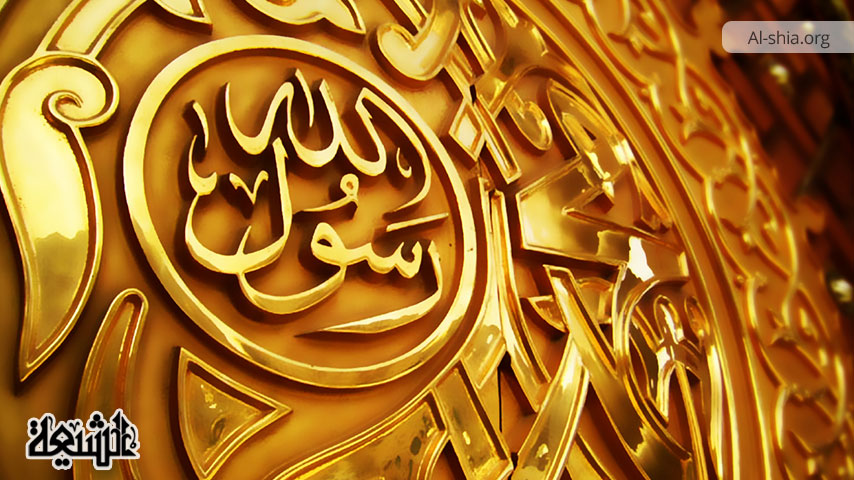

In every age, humanity searches for a model of integrity, compassion, and moral clarity—someone whose life offers guidance not only in worship, but in every aspect of human life. For over fourteen centuries, Prophet Muhammad (PBUHH) has stood as that timeless example. The Qurʾan presents the Prophet Muhammad as “an excellent example” for those who seek God and the Last Day[1], and history testifies that he (PBUHH) transformed a fractured society into a community rooted in justice, mercy, and faith. Beyond cultural and geographical boundaries, the Prophet embodies values that resonate with the deepest human aspirations: truthfulness, humility, patience, and unwavering devotion to God. To reflect upon the life of Holy Prophet is therefore not merely to revisit history, but to rediscover a living model for personal reform and societal renewal.
The Qurʾanic Portrait of Prophet Muhammad (PBUHH)
The Qurʾan introduces Prophet Muhammad not merely as a historical figure, but as a divinely shaped personality whose character embodies revelation itself[2]. When the Qurʾan declares, “Indeed you possess a great character”[3], it affirms that the Holy Prophet possesses great and marvelous nobilities of character, unrivalled purity and sincerity, and indescribable patience, perseverance, steadfastness, and forbearance[4]. His mission is described as universal mercy: “We did not send you but as a mercy to all the nations”[5]. This verse alone elevates the Prophet (PBUHH) beyond tribal or regional boundaries; but a mercy for all human beings, in every age and across all places[6].
The Qurʾan also presents the Prophet Muhammad as deeply concerned for people’s well-being: “There has certainly come to you an apostle from among yourselves. Grievous to him is your distress; he has deep concern for you, and is most kind and merciful to the faithful”[7]. These words reveal the emotional depth of the Prophet (PBUHH) of whose qualities is that he is distressed by your grief and hardship and that he cares for you deeply, whether or not you are yet believers, and he is most kind and compassionate to the faithful among you in particular[8].
Furthermore, the Qurʾan commands believers to see the Holy Prophet (PBUHH) as the practical model of faith: “There is certainly a good exemplar for you in the Apostle of Allah…”[9]. Thus, the Qurʾanic portrait of the Holy Prophet is not an abstract theology; rather, it presents him as the best exemplar for you—not only in that arena (i.e., the battlefield), but throughout the entirety of life. His exalted character, steadfastness and patience, vigilance and wisdom, sincerity and constant attentiveness to God, mastery over circumstances, and refusal to yield before hardships and difficulties—each of these serves as a model and guiding example for all Muslims[10].
His Personal Character (Akhlaq)
The personal character of the Holy Prophet (PBUHH) was the clearest proof of his message. Long before revelation, he built up a reputation for truthfulness, integrity and sound judgment. They called him Amin (trustworthy) and Sadiq (truthful)[11]. The Qurʾan itself testifies to his moral excellence[12]. Commenting on this verse, classical exegetes such as Allama Ṭabāṭabāī in Tafsīr al-Mizān explain thus: “This verse praises the handsome conduct of the Prophet. However, when viewed in context of the other verses, it implies praise of his handsome conduct on a societal level, with respect to interpersonal relations, such as upholding justice, tolerating rudeness and harassment, clemency, overlooking things, striving hard, kindness, civility, humility, and so on.”[13]
The Qurʾan further highlights his gentleness: “It is by Allah’s mercy that you are gentle to them; had you been harsh and hardhearted, they would have surely scattered from around you”[14]. This verse indicates that a fruitful and proper leadership and administration ship is always accompanied with attraction and affection[15] and which reveals that the success of Holy Prophet was rooted not in coercion, but in mercy and good character.
His forgiveness remains one of the most powerful manifestations of his noble character. After years of persecution, when he entered Mecca in victory during the Conquest of Mecca, the Holy Prophet (PBUHH) proclaimed a general amnesty—an event widely documented in the early sīrah literature. His magnanimous conduct toward the people of Mecca displayed both the grandeur of Islam and the nobility of his character before those who had long opposed him. For nearly twenty years, the Quraysh had persecuted him and his followers in every possible way and now feared severe retribution; yet when the Prophet declared, “I grant you all your freedom,” their fear gave way to relief and, for many, sincere allegiance, so that those who had once fought against Islam were moved by his clemency to embrace and defend it[16].
Even his closest companion in faith, Imam Ali ibn Abi Talib (a.s), while describing the noble character of the Holy Prophet said: “The Prophet was the most generous of people in charity, the bravest among them, the most truthful in speech, the most faithful in fulfilling his promises, the gentlest in disposition, and the most gracious in his dealings. Whoever saw him for the first time would be awed by his majesty, and whoever associated with him and came to know him would love him. I have never seen anyone like him, neither before him nor after him.[17]”
In sum, the Prophet’s character was not a matter of occasional virtue, but of unwavering consistency. In private and in public, in times of hardship and of ease, he (PBUHH) embodied the very Qurʾan he proclaimed, rendering his personal character the most compelling proof of his prophethood.
The Prophet (PBUHH) as a Family Man
The greatness of Prophet Muhammad (PBUHH) was not only visible in public leadership but also in the intimacy of his home. The Qurʾan presents marriage as a relationship built upon tranquility and mercy[18].
With his noble wife Khadijah bint Khuwaylid, the Holy Prophet (PBUHH) shared a partnership rooted in love, trust, and mutual sacrifice. He never forgot her devotion, even years after her passing, often remembering her virtues with gratitude[19]. This loyalty demonstrates that Prophet Muhammad (PBUHH) valued emotional faithfulness and deep companionship.
His tenderness toward his daughter Fatimah al-Zahra (a.s) is especially well documented. Numerous hadith reports—including narrations found in Ilal al-Sharayi —describe how Prophet Muhammad (PBUHH) would stand when Fatimah entered the room, seat her in his place, and say, “Fatimah is a part of me, and I am a part of her. Whoever harms her has harmed me”[20]. This statement is understood not merely as paternal affection but as an affirmation of her spiritual rank and purity, connected to the Verse of Purification (Qurʾan 33:33).
With his grandsons, Hasan and Husain, the Holy Prophet (PBUHH) displayed open affection—carrying them on his shoulders, prolonging his prostration when they climbed upon his back, and declaring, “Whoever loves them (has indeed) loved me and whoever hates them (has indeed) hate me.”[21] Such narrations show that the Noble Prophet (PBUHH) did not consider tenderness toward children a weakness, but a sign of spiritual refinement.
Even within his household responsibilities, reports indicate that the Holy Prophet mended his own clothes, assisted with chores, and lived with simplicity. His home was not a place of authoritarian control but of mercy, consultation, and remembrance of God. In this way, Prophet Muhammad (PBUHH) transformed family life into a sacred space of compassion and dignity, offering a timeless model for husbands, fathers, and believers seeking balance between devotion and domestic responsibility.
The Prophet as a Social Reformer
The mission of Prophet Muhammad (PBUHH) was not confined to personal spirituality; it was a comprehensive reform of society. When he (PBUHH) began preaching in Mecca, he confronted a social order rooted in tribal arrogance, economic exploitation, and moral inequality. The Qurʾan reveals that his message sought to liberate human beings from oppression and ignorance[22].
One of the most radical reforms introduced by Prophet Muhammad (PBUHH) was the abolition of racial and tribal superiority. In his Farewell Sermon, he (PBUHH) echoed this Qurʾanic principle, affirming that no Arab has superiority over a non-Arab except through piety[23].
Economic justice was another pillar of the reform led by Prophet Muhammad (PBUHH). The Qurʾan condemned exploitation and hoarding of wealth[24] and institutionalized zakāt[25] to wipe poverty from the society[26]. Thus, charity in the Islamic teachings was not occasional generosity but structured social responsibility.
In essence, Prophet Muhammad (PBUHH) reformed hearts and institutions simultaneously. His social transformation was not driven by revenge or domination, but by moral elevation. Through revelation and personal example, Prophet Muhammad built a community grounded in justice, compassion, and human dignity—principles that remain urgently relevant in every age.
The Prophet as a Divine Leader
The leadership of Prophet Muhammad (PBUHH) was unlike the models of power common in his time. It was not built upon domination, wealth, or tribal privilege, but upon moral authority and divine guidance. The Qurʾan commands: “Obey Allah and obey the Messenger and those vested with authority among you”[27], placing obedience to Prophet Muhammad (PBUHH) alongside obedience to God— indicating that Islam is a comprehensive school of thought that integrates creed (beliefs) and politics. The obedience to the Prophet and those vested with authority, which is a political matter, is intricately linked with faith in God and the Hereafter, which is a matter of creed[28].
At the same time, Prophet Muhammad (PBUHH) combined gentleness with firmness. The Qurʾan notes: “Muhammad is the Messenger of Allah, and those with him are firm against aggressors and merciful among themselves”[29]. His firmness was principled, not personal. When he entered Mecca victorious after years of persecution, Prophet Muhammad (PBUHH) chose forgiveness over revenge, declaring general amnesty. Leadership, in his example, meant moral elevation even at the height of power. Historical reports also portray Prophet Muhammad as accessible—sitting among people without distinction, listening to the weak before the powerful.
Conclusion
The life of Prophet Muhammad (PBUHH) stands as a timeless guide for humanity, combining spiritual depth, moral excellence, social justice, and compassionate leadership. His character, rooted in the Qurʾan and illuminated through hadith, demonstrates how mercy, humility, patience, and integrity can transform individuals and societies alike.
From his tender care for family and children to his unwavering commitment to justice and ethical governance, Prophet Muhammad exemplifies values that remain profoundly relevant today. For believers and seekers of goodness, following Prophet Muhammad is not merely an act of reverence but a practical path to personal and social reform, offering a living model of faith in action, mercy in leadership, and devotion in every sphere of life.
Footnotes
[1] . Qur’an 33:21.
[2] . Qur’an 53: 3-4.
[3] . Qurʾan 68:4.
[4] . Faqih Imani (1997). An Enlightening Commentary into the Light of the Holy Qur’an, vol. 18, p. 225.
[5] . Qurʾan 21:107.
[6] . Qara’ati (2009). Tafsir-e Nūr, vol. 5, p. 505.
[7] . Qurʾan 9:128.
[8] . Ṭabāṭabāī (1970). Al-Mizān fī Tafsīr al-Qur’an, vol. 9, p. 411.
[9] . Qurʾan 33:21.
[10] . Makārim Shīrāzī (1992). Tafsir-e Nemuneh, vol. 17, p. 242.
[11] . Asghar Razwy (2001). A Restatement of the History of Islam and Muslims, p. 29.
[12] . Qurʾan 68:4.
[13] . Ṭabāṭabāī (1970). Al-Mizān fī Tafsīr al-Qur’an, vol. 19, p. 369.
[14] . Qur’an 3:159.
[15] . Faqih Imani (1997). An Enlightening Commentary into the Light of the Holy Qur’an, vol. 3, p. 333.
[16] . Shahīdī (1390 Sh). Tārīkh-i Taḥlīlī-yi Islām, pp. 94-95.
[17] . Majlisi (1982). Biḥār al-Anwār, vol. 16, p. 231.
[18] . Qurʾan 30:21.
[19] . Pishvāī (1390 Sh). Tārīkh Islām az Jāhiliyyah tā Riḥlat Payāmbar Islām, p. 171.
[20] . Ibn Babaweyh (2006). Ilal al-Sharayi, vol. 1, p. 187.
[21] . Nasā’ī, (1990). al-Sunan al-Kubra, vol. 5, p. 49.
[22] . Qurʾan 7:157.
[23] . Qurʾan 49:13.
[24] . Qurʾan 9:34–35.
[25] . Qurʾan 9:60.
[26] . Faqih Imani (1997). An Enlightening Commentary into the Light of the Holy Qur’an, vol. 6, p. 416.
[27] . Qurʾan 4:59.
[28] . Qara’ati (2009). Tafsir-e Nūr, vol. 2, pp. 91-92.
[29] . Qurʾan 48:29
References
Holy Qur’an (with the English translation: Qarai, Ali Quli (2005). The Qur’an: With a Phrase-by-Phrase English Translation (2nd edition). London: Islamic College for Advanced Studies (ICAS) Press.
- Asghar Razwy, Sayyid Ali (2001). A Restatement of the History of Islam and Muslims (1st edition). United Kingdom: World Federation of Khoja Shia Ithna Asheri Muslim Communities.
- Faqih Imani, Sayyid Kamal et al (1997). An Enlightening Commentary into the Holy Qur’an (1st edition). Translated by Sayyid Abbas Sadr-‘Ameli. Isfahan: Iman Ali Library and Research Centre.
- Ibn Babaweyh, Muḥammad ibn Ali (2006). Ilal al-Sharayi (1st edition). Qom: Davari Bookstore.
- Majlisi, Muhammad Baqir ibn Muhammad Taqi (1982). Biḥār al-Anwār (2nd edition). Beirut: Dar Ihya al-Turath al-Arabi.
- Makārim Shīrāzī, Nāsir (1992). Tafsir-e Nemuneh (10th edition). Tehran: Dar al-Kutub al-Islamiyyah.
- Nasā’ī, Aḥmad ibn Ali (1990). al-Sunan al-Kubra (1st edition). Beirut: Dar al-Kutub al-‘Ilmiyyah, Manshourat Muhammad Ali Baydoun.
- Pishvāī, Mehdi (1390 Sh). Tārīkh Islām az Jāhiliyyah tā Riḥlat Payāmbar Islām (16th edition). Daftar Nashr Ma‘arif.
- Qara’ati, Mohsen (2009). Tafsir-e Nūr (1st edition). Tehran: Cultural Center for Teachings of the Qur’an.
- Shahīdī, Sayyid Jaʿfar (1390 Sh). Tārīkh-i Taḥlīlī-yi Islām. Tehran: Markaz-i Nashr-i Dānishgāhī.
- Ṭabāṭabāī, Muḥammad Ḥussayn (1970). Al-Mizān fī Tafsīr al-Qur’an (2nd edition). Beirut: Mu’asassat al-A’lami li al-Matbou’aat.

![The Event of Ghadir and Imam al-Mahdi [afs]](https://en.al-shia.org/wp-content/uploads/2026/06/17221.jpg)