

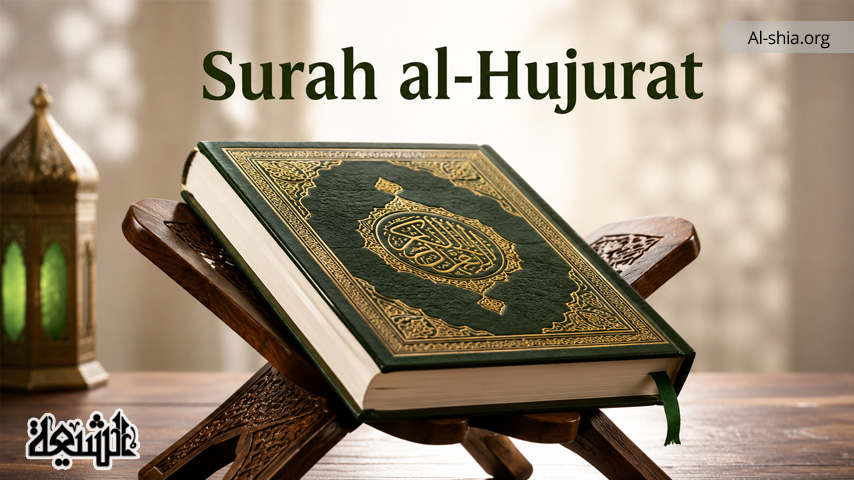

The Qur’an is not merely a book of beliefs and rituals; it is also a complete guide for building righteous individuals and harmonious societies. Among its chapters, Surah al-Hujurat (Qur’an 49) occupies a unique place as one of the Qur’an’s greatest manuals on personal character, social ethics, and community life. Revealed in Madinah, this forty-ninth chapter teaches believers how to relate to God, His Messenger, fellow Muslims, and humanity at large. Its teachings remain as relevant today as they were at the time of revelation.
This article explores the major life lessons and practical guidance found in Surah al-Hujurat, demonstrating how its timeless teachings can help individuals build stronger relationships, healthier communities, and a closer relationship with Allah.
The Virtue and Significance of Sūrah al-Ḥujurāt
Although Surah al-Hujurat is one of the shorter chapters of the Qur’an, its moral and spiritual significance is immense. Revealed in Madinah[1], it is often described by Muslim scholars as one of the Qur’an’s greatest chapters of ethics and often referred to by many classical exegetes as Sūrat al-Akhlāq wa al-Ādāb (“the Chapter of Ethics and Manners”) because it brings together a comprehensive code of personal and social conduct[2].
One of the distinguishing features of Surah al-Hujurat is that it is a comprehensive guide to personal conduct, social ethics, and the foundations of a righteous society[3]. It sets forth the principles that cultivate a happy and balanced life for individuals while establishing a just, harmonious, and morally upright community.
The Sūrah teaches proper etiquette in one’s relationship with Allah and His Messenger (PBUHH), regulates interactions among people, and establishes God-consciousness (Taqwā) as the only true criterion of honor and excellence, thereby distinguishing Islam from all other social systems and human standards of superiority. It concludes by clarifying the distinction between outward submission (Islam) and genuine faith (Īmān), reminding believers that true faith is a divine blessing bestowed by Allah[4].
The Sūrah also occupies a special place because of its emphasis on preserving the unity of the Muslim community. It commands believers to reconcile those who are in conflict, describes believers as brothers and sisters in faith, and warns against behaviors that weaken social cohesion, such as mockery, insults, suspicion, and backbiting[5]. These teachings remain profoundly relevant in contemporary societies, where misinformation, social polarization, and hostile communication frequently undermine trust and unity.
Another remarkable feature of Surah al-Hujurat is its affirmation of the equality and dignity of all human beings[6]. This verse establishes one of the Qur’an’s most universal ethical principles: race, ethnicity, nationality, language, wealth, and social status are not measures of human worth. Rather, God-consciousness (Taqwā) is the only criterion of true honor before Allah.
The virtues of reciting Surah al-Hujurat are also mentioned in the traditions. Ubayy ibn Kaʿb narrated that the Messenger of Allah (PBUHH) said: “Whoever recites Surah al-Hujurat will be rewarded with ten good deeds for every person who has obeyed Allah and for every person who has disobeyed Him.”[7]
Imam Jaʿfar al-Ṣādiq (a.s) said: “Whoever recites Surah al-Hujurat every night or every day will be among the visitors of Muḥammad (peace and blessings be upon him and his family).”[8]
While the reward for its recitation is significant, the greatest virtue of this Sūrah lies in understanding and living by its teachings. Thus, the ethical guidance of Surah al-Hujurat should shape everyday life—whether in family relationships, workplaces, places of worship, or interactions on social media.
Moral and Social Teachings of Sūrah al-Ḥujurāt
Surah al-Hujurat presents one of the Qur’an’s most comprehensive frameworks for moral excellence and healthy social living. The moral and social values embodied in Surah al-Hujurat remain as relevant today as they were at the time of its revelation, making it a timeless guide for anyone seeking to live with integrity, compassion, and faith. Meanwhile, the social and moral teachings of Surah al-Hujurat shall be discussed as follows:
1. Place Allah and His Messenger Above Personal Opinions
Surah al-Hujurat opens with a profound principle: “O you who have faith! Do not venture ahead of Allah and His Apostle, and be wary of Allah…”[9]
This verse establishes the foundation of Islamic life: believers should allow divine guidance to shape their beliefs, decisions, and actions instead of allowing personal desires, emotions, or social trends to take precedence.
Therefore, believers are instructed to place Allah and His Messenger (PBUHH) above all others in authority and guidance. They are not to advance any opinion or judgment that contradicts the Qur’an or the authentic Prophetic Sunnah[10].
In today’s world, opinions spread instantly through social media, podcasts, and online platforms. People often adopt views simply because they are popular or emotionally appealing. Surah al-Hujurat reminds believers that truth is determined not by popularity but by conformity to divine guidance.
2. Respect for the Messenger and the Etiquette of Communication
One of the central lessons of Surah al-Hujurat is the importance of respect—beginning with respect for the Messenger of Allah (PBUH), and extending to respectful communication with everyone. Allah says: “O you who have faith! Do not raise your voices above the voice of the Prophet, and do not speak aloud to him like you shout to one another….”[11]
The verse prohibits believers from raising their voices above the Prophet’s voice or speaking to him loudly as they would speak to one another, emphasizing that respect in speech reflects respect for his divine mission[12]. Thus, the verse highlights that proper etiquette toward the Messenger is an essential expression of faith and a means of preserving the acceptance of one’s righteous deeds[13].
Although the Prophet is no longer physically among us, the etiquette taught by these verses remains binding. Respect for the Messenger includes honoring his teachings, refraining from speaking carelessly about his Sunnah, and studying his life with humility and sincerity. It also requires that his guidance be treated as a source of wisdom rather than merely historical information.
3. Verify Information Before Believing or Sharing It
One of the most practical and timely teachings of Surah al-Hujurat concerns the responsible handling of information. In an age where news spreads within seconds through social media and messaging platforms, this Qur’anic principle is more relevant than ever.
Allah says: “O you who have faith! If a vicious character brings you some news, verify it, lest you should visit [harm] on some people out of ignorance…”[14]
This verse establishes the principle that information should be accepted only after proper verification. If a report is brought by someone who is unreliable, believers are instructed to investigate its accuracy before acting upon it. This command protects individuals and society from injustice, false accusations, and the harmful effects of rumors and misinformation[15].
Thus, in modern life. Believers should verify information before sharing it, avoid judging others based on rumors or one-sided reports, and seek reliable evidence before making decisions. Whether in family matters, community affairs, religious discussions, or on social media, this verse encourages honesty, critical thinking, and responsible communication, helping to prevent injustice, conflict, and the spread of misinformation.
4. Building Brotherhood, Reconciling Differences, and Preserving Unity
One of the defining characteristics of Islam is its emphasis on building a united and compassionate community. While differences of opinion and disagreements are inevitable in any society, Surah al-Hujurat teaches believers how to respond to conflict in a manner that preserves justice, strengthens relationships, and protects the unity of the Muslim community.
Allah says: “If two groups of the faithful fight one another, make peace between them. But if one party of them aggresses against the other, fight the one which aggresses until it returns to Allah’s ordinance. Then, if it returns, make peace between them fairly, and do justice. Indeed, Allah loves the just.”[16]
The verse calls on Muslims to preserve unity by actively resolving conflicts within the community. Believers should first seek reconciliation between disputing parties, but if one side persists in aggression, they must stand against the wrongdoer until justice is restored. The ultimate goal is a fair and lasting peace based on justice and impartiality, as Allah loves those who act with equity[17].
He then declares: “The faithful are indeed brothers. Therefore, make peace between your brothers and be wary of Allah, so that you may receive [His] mercy.”[18]
The verse portrays the relationship between believers as a bond of true brotherhood, emphasizing a deep, mutual, and enduring connection founded on faith rather than worldly interests. This brotherhood calls Muslims to support one another, share each other’s joys and sorrows, forgive one another’s shortcomings, and remain united in the face of challenges. By describing believers as brothers, the Qur’an highlights the strongest form of social solidarity and encourages unity, compassion, and reconciliation within the Muslim community.
5. Guarding the Tongue: Avoiding Mockery, Insults, Suspicion, Spying, and Backbiting
Among the greatest life lessons of Surah al-Hujurat is the importance of safeguarding one’s speech and respecting the dignity of others. Many of the conflicts that damage families, friendships, and communities begin not with actions, but with careless words. For this reason, the Qur’an devotes two consecutive verses to warning believers against a number of destructive social behaviors.
Allah says: “O you who have faith! Let not any people ridicule another people … And do not defame one another, nor insult one another by [calling] nicknames.”[19] He continues: “O you who believe! Avoid much suspicion. Indeed, some suspicion is sinful. Do not spy on one another, nor let some of you backbite others…”[20]
The verses call believers to uphold mutual respect and protect the dignity of one another by avoiding behaviors that damage relationships and community harmony. Muslims are forbidden from mocking, ridiculing, insulting, or looking down on others, for those they despise may be better in the sight of Allah. The verses also prohibit baseless suspicion, spying, and backbiting[21], urging believers to think well of others and respect their privacy. Rather than focusing on the faults of others, Muslims are encouraged to examine and improve themselves. Together, these teachings cultivate humility, goodwill, and compassion while preserving trust, brotherhood, and unity within the Muslim community[22].
6. Piety: The Criterion of Superiority
One of the most profound teachings of Surah al-Hujurat is its declaration of the equality of all human beings and its rejection of every form of racial, tribal, ethnic, or social superiority. At a time when societies continue to struggle with discrimination, prejudice, and inequality, the Qur’an presents a timeless vision of human dignity and justice.
Allah says: “O mankind! Indeed, We created you from a male and a female, and made you nations and tribes that you may identify yourselves with one another. Indeed, the noblest of you in the sight of Allah is the most Godwary among you…”[23]
This verse affirms the equality of all human beings, teaching that everyone shares the same origin regardless of gender, race, or ethnicity. While people differ in their nations, tribes, and individual characteristics, these differences exist for mutual recognition rather than superiority. The only true measure of honor before Allah is God-consciousness (Taqwā), emphasizing that a person’s worth is determined by righteousness and moral character rather than lineage, social status, or worldly distinctions[24].
7. True Faith Is More Than Words: Sincerity, Submission, and Complete Trust in Allah
Surah al-Hujurat concludes by turning from outward social conduct to the inner reality of faith. After teaching believers how to interact with others, the Sūrah reminds them that all righteous actions must be rooted in sincere faith and complete submission to Allah. The closing verses distinguish between merely professing Islam and possessing genuine Īmān (faith) that transforms the heart and guides one’s conduct.
Allah says: “The Bedouins say, ‘We have faith.’ Say, ‘You do not have faith yet; rather, say, ‘‘We have embraced Islam,’’ for faith has not yet entered into your hearts. Yet if you obey Allah and His Apostle, He will not stint anything of [the reward of] your works…'”[25]
This verse distinguishes between Islam and Īmān (faith). Islam refers to one’s outward submission to Allah and acceptance of the religion, whereas Īmān is a deeper inner conviction rooted in the heart. While a person may outwardly be a Muslim, true faith is characterized by sincere belief, unwavering spiritual commitment, and righteous conduct, rather than by mere words or outward appearance[26].
Conclusion
Surah al-Hujurat is a timeless guide to building righteous individuals and harmonious communities. Despite its eighteen verses, it presents comprehensive teachings on respecting Allah and His Messenger (PBUHH), verifying information, resolving conflicts with justice, preserving the dignity of others, and fostering unity through mutual respect, compassion, and brotherhood. It also affirms the equality of all people, declaring God-consciousness (Taqwā) as the only true measure of honor before Allah.
Above all, the Sūrah teaches that genuine faith (Īmān) is reflected in noble character and righteous conduct, not merely in outward claims. By living according to its principles—truthfulness, justice, humility, sincerity, and respect for others—believers can strengthen their relationship with Allah while contributing to a just, compassionate, and morally upright society.
Notes:
[1] . Ma‘rifat. ‘Ulūm Qur’anī, p. 79.
[2] . Qara’ati. Tafsir-e Nūr, vol. 9, p. 153; Ṭabarsī. Majma‘ al-Bayān, vol. 9, p. 193.
[3] . Qara’ati. Tafsir-e Nūr, vol. 9, p. 153.
[4] . Ṭabāṭabāʾī. Tafsīr al-Mīzān, vol. 18, p. 305.
[5] . Qur’an 49:9–12.
[6] . Qur’an 49:13.
[7] . Ṭabarsī. Majma‘ al-Bayān, vol. 9, p. 193.
[8] . Ibn Babawayh. Thawāb al-A‘māl, p. 115.
[9] . Qur’an 49:1
[10] . Faqih Imani. An Enlightening Commentary into the Light of the Holy Qur’an, vol. 17, p. 162.
[11] . Qur’an 49:2.
[12] . Makārim Shīrāzī. Tafsir-e Nemuneh, vol. 19, p. 246
[13] . Ṭabāṭabāʾī. Tafsīr al-Mīzān, vol. 18, p. 308.
[14] . Qur’an 49:6.
[15] . Rezaei. Tafsir-e Qur’an-e Mehr, vol. 19, pp. 254-255.
[16] . Qur’an 49:9.
[17] . See: Faqih Imani. An Enlightening Commentary into the Light of the Holy Qur’an, vol. 17, p. 173.
[18] . Qur’an 49:10.
[19] . Qur’an 49:11.
[20] . Qur’an 49:12.
[21] . Ṭabāṭabāʾī. Tafsīr al-Mīzān, vol. 18, p. 305.
[22] . See: Faqih Imani. An Enlightening Commentary into the Light of the Holy Qur’an, vol. 17, p. 178 & 180.
[23] . Qur’an 49:13.
[24] . Qara’ati. Tafsir-e Nūr, vol. 9, p. 195.
[25] . Qur’an 49:14.
[26] . Rezaei. Tafsir-e Qur’an-e Mehr, vol. 19, pp. 283-284.
References
Holy Qur’an (with the English translation: Qarai, Ali Quli (2005). The Qur’an: With a Phrase-by-Phrase English Translation (2nd edition). London: Islamic College for Advanced Studies (ICAS) Press.
- Faqih Imani, Sayyid Kamal et al (1997). An Enlightening Commentary into the Holy Qur’an (1st edition). Translated by Sayyid Abbas Sadr-‘Ameli. Isfahan: Iman Ali Library and Research Centre.
- Ibn Babawayh, Muḥammad ibn Ali. (1985). Thawāb al-A‘māl wa ‘Iqāb al-A‘māl (2nd edition). Qom: Dar al-Sharif al-Radhi.
- Ma‘rifat, Muḥammad Hādī. (1392 SH). ‘Ulūm Qur’anī (15th edition). Qom: Tamhīd Cultural Institute.
- Makārim Shīrāzī, Nāṣir. (1992). Tafsīr-e Nemūneh. Tehran: Dār al-Kutub al-Islāmiyyah.
- Qara’ati, Mohsen. (2009). Tafsir-e Nūr (1st edition). Tehran: Cultural Center for Teachings of the Qur’an.
- Rezaei, Muhammad Ali. (2008). Tafsir-e Qor’an-e Mehr (1st edition). Qom: Pajūhish-haye Tafsīr.
- Ṭabāṭabāʾī, Sayyid Muḥammad Ḥusayn. (1970). Tafsīr al-Mīzān (2nd edition). Beirut: Mu’asassat al-A’lami li al-Matbou’aat.
- Ṭabrisī, Faḍl ibn al-Ḥasan. (1993). Majmaʿ al-Bayān fī Tafsīr al-Qurʾān. Tehran: Nāṣir Khusrow.




![The Event of Ghadir and Imam al-Mahdi [afs]](https://en.al-shia.org/wp-content/uploads/2026/06/17221.jpg)