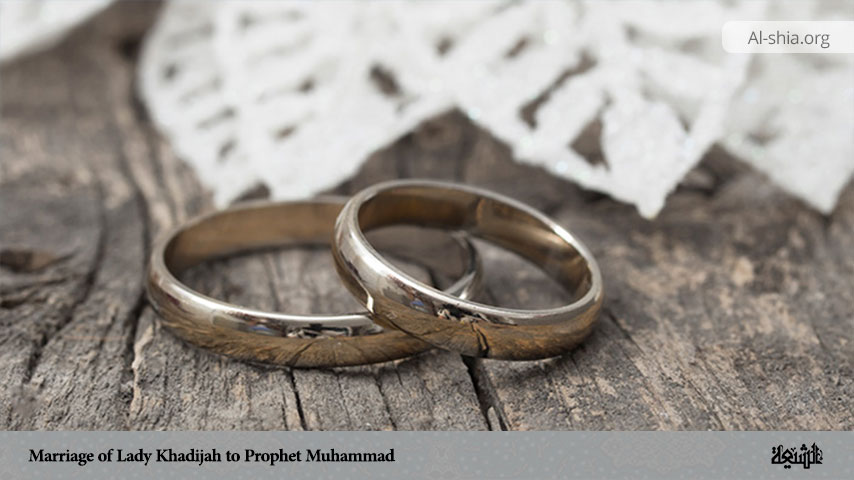


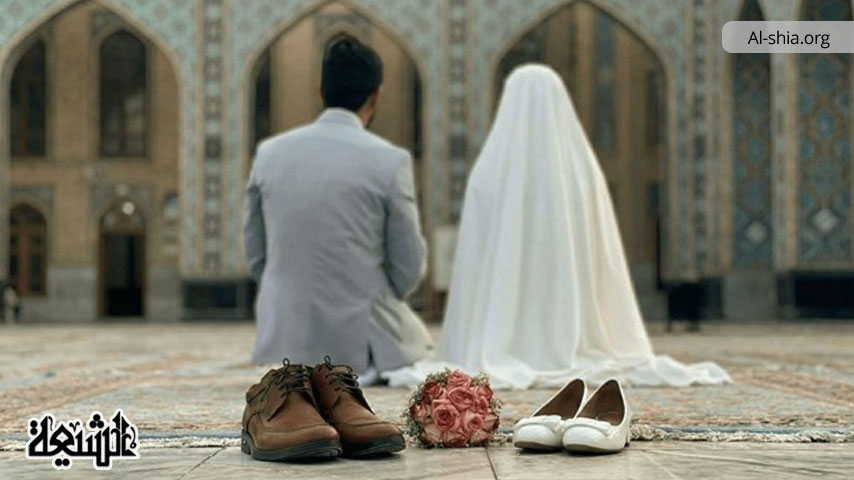

Marriage in Islam is founded upon affection, mercy, justice, and mutual responsibility, and these principles extend to the financial relationship between husband and wife. Islamic law establishes specific financial rights for each spouse, including the wife’s right to mahr (dower), her entitlement to maintenance under the relevant conditions, her independent ownership of property, and protection from unjust appropriation of wealth by either spouse. Understanding these financial rights is essential for preventing misconceptions and financial disputes and for ensuring that marital responsibilities are fulfilled in accordance with the Islamic teachings.
The objective of this article is to explain the principal financial rights and obligations between spouses in Islam.
Financial Rights and Responsibilities in Islamic Marriage
Marriage in Islam is not merely a personal relationship based on affection and companionship; it is also a legal and moral covenant in which each spouse has rights and responsibilities. Among these are important financial rights that Islam establishes to protect the dignity, security, and welfare of both husband and wife. Understanding these financial rights is particularly important because financial disagreements are among the issues that can create tension within a marriage.
It is interesting that the Holy Qur’an[1] introduces the aim of marriage as peace and tranquillity[2] and mutual responsibility. At the same time, Islamic law establishes specific financial obligations, particularly concerning mahr (dower) and marital maintenance.
Therefore, financial rights in marriage should not be understood merely as claims to money. They are part of a broader Islamic framework of justice, responsibility, dignity, and trust. These rights include the wife’s right to mahr (dower), her right to maintenance, her independent ownership of property, and the financial rights of both spouses concerning debts, shared expenses, divorce, and inheritance.
The Islamic Concept of Financial Responsibility between Spouses
Islam recognizes that marriage creates certain financial obligations that did not necessarily exist before marriage. However, it does not automatically transform the property of one spouse into the property of the other. Marriage and ownership are therefore two distinct matters.
One of the most important principles is that a person’s property remains legally his or her property[3] unless a valid transfer of ownership takes place. Thus, a wife does not lose ownership of her wealth merely because she marries. Similarly, the husband does not become the owner of his wife’s mahr, salary, inheritance, gifts, or personal property merely by virtue of being her husband.
Financial responsibility must therefore be distinguished from financial ownership. A husband may have a legal responsibility to maintain his wife without becoming the owner of her property. Likewise, a wife may possess considerable wealth without thereby becoming legally responsible for all of her husband’s expenses.
In Islamic teachings, the husband’s obligation to provide maintenance for a permanent wife is established under specified conditions.
This distinction is essential to understanding Islamic financial rights: responsibility does not necessarily mean ownership, and ownership does not necessarily mean responsibility for another person’s expenses.
Mahr: The Wife’s Financial Right
One of the clearest financial rights established for a Muslim wife is mahr, the bridal gift that the husband gives or undertakes to give to his wife as part of the marriage contract[4]. The Qur’an commands husbands to give women their bridal gifts willingly: “Give women their dowries, handing it over to them.”[5]
The verse establishes that the mahr (dower) is the woman’s rightful entitlement and that paying it to her is obligatory. The dower is not the price of a woman; rather, it is a gift from the husband to his wife and a sign of the man’s sincerity in his affection and love for her. The woman herself is the owner of her dower, and neither her father nor her other relatives have the right to take it for themselves. Thus, the verse emphasizes that the dower belongs directly to the woman and is to be given to her as a gift[6].
The reports from the Ahl al-Bayt (a.s) strongly emphasize the seriousness of the husband’s intention concerning mahr. Imam al-Sadiq (ʿa.s) is reported in al-Kāfī to have said that a man who marries a woman without intending to give her the agreed mahr is like one who commits adultery[7]. In another narration, a man who stipulates a dower and then has no intention of fulfilling it is like a thief[8].
The mahr may be paid immediately or deferred according to the terms agreed upon in the marriage contract. When it is due, the wife has the right to demand it[9].
The husband cannot simply take back the mahr because he later changes his mind. If the wife voluntarily gives some or all of it back, however, such a transfer can constitute a separate act of voluntary disposition[10].
Thus, the wife’s voluntary relinquishment is fundamentally different from coercion or unlawful appropriation.
Nafaqah: The Husband’s Obligation of Financial Maintenance
Another major category of financial rights is nafaqah, or marital maintenance[11]. In Islamic jurisprudence, nafaqah generally refers to the necessary expenses that the husband is required to provide for his wife under the applicable conditions[12].
The Qur’anic verses[13] establish that providing nafaqah (marital maintenance), including financial support, food, and clothing according to one’s means, is an obligation of the husband/father toward his wife and children.
The precise legal rules of nafaqah are developed in Islamic jurisprudence. In Islamic jurisprudence, a permanent wife is generally entitled to maintenance when the conditions for entitlement are present. The maintenance may therefore include necessities such as food, clothing, housing, household furnishings, and other requirements appropriate to the wife’s circumstances and social status[14].
Importantly, maintenance is not necessarily a fixed amount. Its quantity and quality can vary according to time, place, social circumstances, customary standards, and the financial situation of the husband.
The wife’s wealth does not automatically eliminate her right to maintenance. She remains entitled to maintenance even if she is wealthy and financially independent.
The obligation is also not necessarily cancelled simply because the husband is temporarily unable to pay. Where maintenance remains unpaid, it can become a debt upon him under the applicable rules[15].
The Wife’s Independent Ownership of Wealth
Islam recognizes a married woman’s independent legal ownership of property. Her marriage does not automatically transfer ownership of her wealth to her husband.
Her property may include her mahr, salary, business income, inheritance, gifts, savings, investments, and other legitimately acquired possessions.
This principle is particularly important for Muslim women who work or operate businesses. The Qur’an states: “For men is a share of what they have earned, and for women is a share of what they have earned.”[16] This verse makes it clear that both men and women have an independent right to what they earn, acknowledging their individual contributions and efforts[17].
Accordingly, a woman who works is not required to give her wages to her husband merely because she is married. If she voluntarily assists her husband financially, this is considered a praiseworthy act, but her husband does not have the right to compel her to surrender her earnings.
Consequently, the wife’s salary does not automatically become household property. If the spouses wish to establish joint ownership or agree that both incomes will be used for household expenses, they may make such arrangements through mutual agreement.
The distinction between financial rights and voluntary generosity is therefore essential. A spouse may voluntarily sacrifice some financial rights for the welfare of the family, but voluntary generosity should not be confused with a compulsory transfer of ownership.
The Husband’s Financial Rights and the Wife’s Financial Responsibilities
Financial rights in marriage are not exclusively one-sided. The husband also possesses rights relating to property and financial trust.
A wife who is entrusted with her husband’s property must not misuse or unlawfully dispose of it without the consent of the husband. Likewise, a husband has no unrestricted authority over his wife’s independently owned property. The general Islamic principle is that property must not be taken or consumed unlawfully[18].
Marriage therefore requires honesty concerning income, debts, savings, purchases, and major financial decisions. Neither spouse should deceive the other, conceal liabilities that materially affect the family, or appropriate property belonging to the other without legitimate authority.
Joint Expenses, Shared Property, and Family Finances
Marriage does not automatically make all property jointly owned. If a husband purchases a house with his own money and ownership is registered or otherwise established in his name, the mere fact that his wife lives there does not automatically transfer ownership to her. Likewise, if the wife purchases property with her own money, marriage alone does not make it the husband’s property.
However, spouses may deliberately establish joint ownership. They may purchase property together, contribute money to a shared business, or create joint savings. In such cases, the legal consequences depend upon the nature of the agreement and the ownership established.
For this reason, couples should clearly document significant financial arrangements. This is particularly important for: jointly purchased homes; businesses; investments; family savings; loans between spouses; major gifts; deferred mahr; property purchased from combined funds.
Debts and Financial Obligations between Spouses
Marriage does not automatically make one spouse responsible for the personal debts of the other. If a husband incurred a personal debt before marriage, the wife does not automatically become liable for it merely by marrying him. Similarly, the husband’s marriage to a woman who has personal debts does not automatically make him responsible for those debts.
However, spouses may voluntarily agree to share debts or assume financial liabilities. They may also become legally responsible through contracts, guarantees, joint ownership, or other recognized arrangements.
Financial Rights During Marital Disputes
Financial disagreements can become particularly difficult when spouses experience serious marital conflict. Islamic law, however, does not simply erase one spouse’s financial rights because of disagreement.
For example, mahr remains a separate obligation. Maintenance has its own detailed rules[19]. In Twelver Shiʿi jurisprudence, certain forms of nushūz[20] can affect entitlement to maintenance, but the determination depends upon the specific legal circumstances. A wife who is deprived of maintenance because of the husband’s refusal or inability to provide it may have legal avenues available to pursue her right. Sayyid al-Sistani states that where the husband refuses to provide obligatory maintenance, the wife may, under the relevant circumstances, refer the matter to the religious authority or take the amount necessary from his property according to the applicable rules[21].
Financial Rights in Divorce and Separation
Divorce does not simply erase financial obligations accumulated during marriage. One of the most important issues is unpaid mahr (dower). If the husband has not paid an amount that has become due, it remains a financial obligation according to the applicable rules.
During divorce, the Qur’an establishes the wife’s financial and residential rights, including fair provision, appropriate housing according to the husband’s means, and protection from harm or unjust eviction during the prescribed period[22].
The precise financial rights following divorce depend upon the type of divorce, the wife’s condition, whether she is pregnant[23], the existence of ʿiddah, and other legal circumstances[24].
Divorce therefore requires careful attention to outstanding financial rights, rather than assuming that separation immediately terminates every financial obligation.
Financial Rights After the Death of a Spouse
The death of a husband or wife introduces another category of financial rights. At this stage, it is important to distinguish between ownership, debt, and inheritance.
If the husband dies while owing his wife unpaid mahr, that obligation must be considered among his debts. Likewise, unpaid financial obligations may have consequences for the deceased’s estate.
The surviving spouse may also have inheritance rights under Islamic inheritance law. However, inheritance is different from the deceased person’s ownership during life. A wife does not automatically own everything her deceased husband possessed, nor does a husband automatically own everything his deceased wife possessed.
The estate must be dealt with according to the applicable rules concerning debts, testamentary dispositions, and inheritance.
Common Misconceptions about Spousal Finances
Several misunderstandings about Islamic marriage can lead to violations of financial rights.
- “A wife’s salary automatically belongs to her husband.” This is incorrect as a general principle. A woman’s earnings remain her property¹⁵
- “Marriage makes all property jointly owned.” Marriage itself does not automatically transfer ownership. Property remains with its legal owner unless transferred through a valid transaction or agreement.
- “The husband can take back the wife’s mahr.” The mahr (dower) becomes the wife’s property according to the applicable rules. A husband cannot simply reclaim it without a legally recognized basis or her voluntary agreement.
- “A wealthy wife has no right to maintenance.” In Islamic rulings, the wife’s wealth does not by itself cancel her entitlement to obligatory maintenance.
- “A working wife must pay household expenses.” Her employment does not automatically transform her personal earnings into the husband’s property or make her legally responsible for his maintenance obligations. A wife may voluntarily contribute to household expenses or agree on financial arrangements with her husband, but such contributions do not make her legally responsible for household maintenance.
- “If spouses are fighting, financial rights disappear.” Marital conflict does not automatically erase established financial obligations. Each claim must be examined according to its own legal basis.
- “The husband owns everything because he provides maintenance.” Providing maintenance does not make the husband the owner of the wife’s independently owned property.
Conclusion
Islamic marriage is founded on rights, responsibilities, fairness, and mutual respect, including clearly defined financial rights between spouses. Mahr (dower) is the wife’s financial right, while nafaqah represents the husband’s obligation to provide maintenance according to his means. The wife retains independent ownership of her wealth, and voluntary contributions to household expenses should not be confused with legal obligations. At the same time, spouses should deal responsibly with debts, shared expenses, property, and other financial arrangements, while observing each other’s financial rights during marital disputes, divorce, separation, and after the death of a spouse.
Understanding these financial rights helps spouses distinguish between what Islamic law requires, what they mutually agree upon, and what they voluntarily give. Many misunderstandings about spousal finances arise when cultural practices or personal expectations are treated as religious obligations.
By learning and respecting Islamic financial rights, spouses can protect each other’s property, fulfill their responsibilities, resolve financial matters fairly, and strengthen trust within the family. Ultimately, awareness of financial rights is not merely about money; it is about fulfilling obligations, preserving dignity, and maintaining justice within marriage.
Notes
[1] . Qur’an 30:21.
[2] . Faqīh Imānī, An Enlightening Commentary into the Light of the Holy Qur’an, vol. 14, p. 89.
[3] . Qur’an 4:32.
[4] . See: Salarifar, Family from the Islamic and Psychological Points of View, p. 163.
[5] . Qur’an 4:4.
[6] . See: Qaraʾatī, Tafsīr-e Nūr, vol. 2, p. 20.
[7] . Kulaynī, al-Kāfī, vol. 5, p. 383, hadith 2.
[8] . Ibid, hadith 1.
[9] . See: Makārim Shīrāzī, Tafsīr-e Nemūneh, vol. 3, p. 264.
[10] . Qur’an 4:4. See: Qaraʾatī, Tafsīr-e Nūr, vol. 2, p. 21.
[11] . See: Ḥurr al-ʿĀmilī, Wasāʾil al-Shīʿah, vol. 21, pp. 509-513.
[12] . See: Hakimzadeh, Ahkām Izdivāj va Ṭalāq, p. 66
[13] . Qur’an 65:7; 2:233.
[14] . See: Hakimzadeh, Ahkām Izdivāj va Ṭalāq, p. 66
[15] . al-Sistani, Islamic Laws, p. 430, Ruling 2430,
[16] . Qur’an 4:32
[17] . Ṭabāṭabāī, Al-Mizan fi Tafsir al-Qur’an, vol. 4, pp. 337-338.
[18] . Qur’an 4:29
[19] . See: Hakimzadeh, Ahkām Izdivāj va Ṭalāq, pp. 66-73.
[20] . Nushūz is an Islamic legal term generally referring to marital disobedience or serious breach of marital obligations by a spouse.
[21] . al-Sistani, Islamic Laws, p. 431, Ruling 2434.
[22] . Qur’an 2:236; 65:1, 6.
[23] . Kulaynī, al-Kāfī, vol. 6, p. 115.
[24] . See: Hakimzadeh, Ahkām Izdivāj va Ṭalāq, p. 69.
References
Holy Qur’an (with the English translation: Qarai, Ali Quli (2005). The Qur’an: With a Phrase-by-Phrase English Translation (2nd edition). London: Islamic College for Advanced Studies (ICAS) Press.
- Faqīh Imānī, Sayyid Kamal et al. (1997). An Enlightening Commentary into the Holy Qur’an (1st edition). Translated by Sayyid Abbas Sadr-‘Ameli. Isfahan: Imam Ali Library and Research Centre.
- Hakimzadeh, Sayyid Murteza. (1397 SH). Ahkām Izdivāj va Ṭalāq (1st edition). Mashhad: Sayyid Murteza Publications. [In Persian]
- Ḥurr al-ʿĀmilī, Muḥammad ibn al-Ḥasan. (1988). Wasāʾil al-Shīʿah (1st edition). Qom: Al al-Bayt Institute
- Kulaynī, Muḥammad ibn Yaʿqūb. (1986). al-Kāfī. (4th edition). Edited by ʿAli Akbar Ghaffārī and Muḥammad Ākhūndī. Tehran: Dār al-Kutub al-Islāmiyyah.
- Makārim Shīrāzī, Nāṣir, et al. (1995). Tafsīr-e Nemūneh. (10th edition). Tehran: Dār al-Kutub al-Islāmiyyah. [In Persian]
- Qaraʾatī, Muḥsin. (2009). Tafsīr-e Nūr. (1st edition). Tehran: Cultural Center for Teachings of the Qurʾan.
- Salarifar, Muhammad Rida. (2019). Family from the Islamic and Psychological Points of View. Translated by Mehdi Azadi. Qom: Al-Mustapha International Translation and Publication Center.
- Sistani, al-Sayyid Ali al-Husayni. (2023). Islamic Laws According to the Fatwas of His Eminence. (4th edition). Translated and annotated by Mohammed Ali Ismail. UK: The World Federation of KSIMC.
- Ṭabāṭabāī, Muḥammad Husayn. (1970). Al-Mizan fi Tafsir al-Qur’an (2nd edition). Beirut: Mu’asassat al-A’lami li al-Matbou’aat.


![The Event of Ghadir and Imam al-Mahdi [afs]](https://en.al-shia.org/wp-content/uploads/2026/06/17221.jpg)