


Introduction
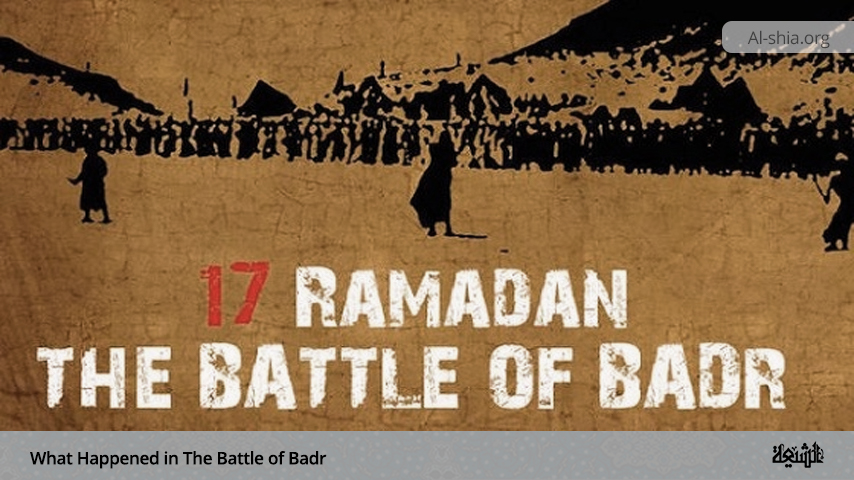
The Battle of Badr stands as one of the most pivotal moments in Islamic history. It is the first and most important battle between the Muslims led by the Prophet Muhammad (peace be upon him), and the polytheists of the Quraysh tribe of Mecca during the early history of Islam. The Battle was fought on the 17th of Ramadan in the year 624 CE[1] (2 AH). This battle, though small in scale, carried immense significance, not only for its immediate outcome but also for its lasting impact on the spread of Islam. The Muslims, outnumbered and ill-equipped, faced overwhelming odds, yet their unwavering faith and strategic brilliance led to a victory that would shape the course of Islamic history. The Battle of Badr is not merely a historical event; it is a testament to the power of faith, unity, and divine support in the face of adversity.
Its Geographical Location
Badr was a place where the Arabs gathered, and its market was exhibited in the month of Dhu l-Qa’da for eight days[2]. Nowadays, the area of Badr has turned into a city 155 kilometers away from Medina, 310 kilometers from Mecca, and approximately 45 kilometers from the shore of the Red Sea.
Background to the battle
Before migrating, the Muslims endured immense suffering and oppression at the hands of the Quraysh polytheists[3]. They were subjected to harm, torture, and exile, driven out of their homes and city, and deprived of their right to perform Hajj[4]. Initially, God prohibited the Muslims from resisting or retaliating against the Quraysh, instead instructing them to endure with patience. However, after they migrated to Medina, God while recalling the injustices perpetrated by the Quraysh, permitted them to fight back[5].
Before the Battle of Badr, the Muslims undertook several operations aimed at disrupting the trade caravans of Quraysh, but these efforts were largely unsuccessful except for the Sariyya of Nakhla. This particular mission, led by ‘Abd Allah ibn Jahsh, took place a month and a half before the Battle of Badr during one of the sacred months. In this operation, the Muslims killed one polytheist (‘Amr ibn al-Hadrami), captured two others, and seized the trade caravan[6]. This event was seen as a significant humiliation by the Quraysh, who considered it a stain on their reputation among the Arab tribes. They demanded blood money for the death of ‘Amr ibn al-Hadrami, which played a notable role in escalating tensions leading to the Battle of Badr. Among the caravans that the Muslims failed to intercept was one led by Abu Sufyan. The Prophet (PBUHH) pursued it to Dhu l-‘Ushayra, located five stations from Medina, but was unable to catch up with it[7] and subsequently returned to Medina.
Abu Sufyan, aware of the Muslim threat, was informed that his caravan would likely be targeted upon his return. As a precaution, he dispatched Damdam ibn ‘Amr from the region of Tabuk to Mecca, requesting reinforcements from the Quraysh.
Battle of Badr
As the caravan approached its return to Mecca, the Prophet (PBUHH) commanded his forces to march out of Medina, aiming for a decisive confrontation—either with the caravan or the Quraysh army[8]. Following this directive, the Prophet (PBUHH) personally set out from Medina. According to the widely accepted view, he departed with a force of 313 men[9] on the 12th or 13th of Ramadan[10]. During the initial halt, he reviewed his troops and sent back a few individuals who were deemed too young to participate in the battle[11]. The Islamic defense was a combination of three defensive lines:
- The personality of the Messenger, his leadership, and his unequaled firmness. He (PBUHH) was to the Muslims the final refuge at Badr and at every battle he attended.
- The Hashmites: The clan of the Prophet (PBUHH): led by Ali Ibn Abu-Talib (PBUH) who entered this battle relatively obscure and came out with unequalled military fame. His military performances became the popular subject of the Arab caravan’s conversations throughout the Arabian Peninsula.
- The hundreds of companions of the Messenger whose hearts were filled with faith and readiness for sacrifice. Many of them viewed martyrdom to be a gain, equal to life and victory. These good companions were the army of Islam, its first line of defense and the thick wall behind which the Messenger (PBUHH) used to stand that were the attackers and the defenders.
As to the clan of the Holy Messenger of Allah, they were the ones that he used to call before anyone else, to offer the heavy sacrifice. They used to stand in the first line of defense opening for the army the way through their thrusts in the line of the enemies. When the general offensive began and every companion participated, the clan of the Messenger (PBUHH) was the most damaging to the enemies. They were so at Badr and the following battles.
On the other hand, when Abu Sufyan learned of the Prophet’s plans while in Syria, he sent an urgent and emotionally charged letter to the people of Mecca, appealing for their assistance in protecting his caravan. Since most Meccans had invested in the caravan, an army of 950 men[12], led by Abu Jahl (‘Amr ibn Hisham), set out for Badr. This force included men from nearly all the tribes except Banu ‘Udayy ibn Ka’b, and it was joined by most of the Quraysh nobles, except for Abu Lahab, who sent al-‘As b. Hisham as his substitute. Despite the impressive size of the army, not all Quraysh leaders supported the decision to engage in battle. Figures like ‘Utba, Shayba, and Umayya ibn Khalaf were among those who were hesitant, yet they too participated and ultimately met their end in the battle.
According to a famous narration, the battle of Badr happened on Friday, Ramadan 17[13], 2/March 13, 624. Although the Battle of Badr took no longer than half a day, it is one of the most important events in the early history of Islam. No one was aware of the importance of the outcome of the Battle as the Prophet (PBUHH) himself. We might read the depth of his anxiety in his prayer before the beginning of the Battle when he stood up supplicating his Lord: “O Allah! This is Quraish. It has come with all its arrogance and boastfulness, trying to discredit Thy Apostle. God, I ask Thee to humiliate them tomorrow. God, if this Muslim band will perish today, Thou shall not be worshipped[14].”
The battle began when Utbah Ibn Rabiah, his son Al-Walid, and his brother Sheibah (all from the Umayyad) stood in front of the pagan army and asked the Prophet (PBUHH) to send them their equals for a dual. Hundreds of companions were around him and many of them were expecting to be called upon by the Prophet (PBUHH) but he chose to start from his own family. The load was heavy and the heavy load could be carried only by the people to whom it belonged as he called upon Ali, Al-Hamza (the Prophet’s uncle), and Obeidah Al-Harith (all from the clan of the Prophet) to face the three warriors. Ali destroyed Al-Walid and Al-Hamza killed Utbah; then they both assisted Obeidah against his opponent Sheibah. Sheibah died immediately and Obeidah was the first martyr at this battle. He died after he lost his leg.
When the general offensive began, hundreds of companions participated in the battle and offered sacrifices and pleased their Lord. But the members of the House of the Messenger (PBUHH) distinguished themselves. Ali’s endeavor was unique in this battle. When Hanthala Ibn Abu Sufyan faced him, Ali liquefied his eyes with one blow from his sword. He annihilated Al Auss Ibn Saeed, met Tuaima Ibn Oday, and transfixed him with his spear, saying, “You shall not dispute with us in God after today”.
The Messenger of Allah (PBUHH) took a handful of gravel when the battle was extremely heated. He threw it at the faces of the pagans saying “May Your faces be disfigured. God, terrified their hearts and invalidated their feet. The pagans ran away, turning their faces to no one. The Muslims went on killing them and taking prisoners. 70 pagans met their death, and the Muslims took from them 70 prisoners. History preserved in its records only a fifth of the names out of the 70 pagans lost. Twenty or twenty-two of them died at Ali’s hand. This battle laid the foundation of the Islamic State and made the Muslims a force to be reckoned with by the dwellers of the Arabic Peninsula.
Conclusion
The Battle of Badr remains a cornerstone of Islamic history, symbolizing the triumph of faith over force and the divine intervention that guided the early Muslim community. It was a turning point that solidified the Muslims’ position in Arabia and demonstrated the strength of their conviction. The lessons from Badr—unity, trust in God, and perseverance—continue to inspire millions around the world. This battle is not just a historical account but a timeless reminder of how courage and faith can overcome even the most daunting challenges. The legacy of Badr endures, serving as a beacon of hope and resilience for generations to come.
References:
[1] . Ibn Saʿd, Muḥammad, al-Ṭabaqāt al-Kubrā, vol. 2, p. 14-15; Yaʿqūbī, Aḥmad, Tārīkh al-Yaʿqūbī, vol. 2, p. 45.
[2] . Jaʿfarīyān, Rasūl, Āthār-i Islāmī-yi Makka wa Madīna, p. 393.
[3] . Qur’an 2:217.
[4] . Qur’an 8:34.
[5] . Qur’an 22:39.
[6] . Ibn Hishām, ʿAbd al-Malik, al-Sīra al-Nabawīyya, vol. 2, p. 252-254.
[7] . Ibid, vol. 2, p. 248-249.
[8] . Qur’an 8:6-7.
[9] . Ibn Saʿd, Muḥammad, al-Ṭabaqāt al-Kubrā, vol. 2, p. 19-20.
[10] . Bahrāmīyān, ʿAlī, “Badr.” In Dāʾirat al-maʿārif-i buzurg-i Islāmī, vol. 11, p. 527.
[11] . Ibn Athīr, ʿAlī ibn Muḥammad, Usd al-ghāba fī maʿrifat al-ṣaḥāba, vol. 3, p. 457.
[12] . Ibn Hishām, al-Sīra al-Nabawīyya, vol. 2, p. 363-364.
[13] . Ibn Saʿd, Muḥammad, al-Ṭabaqāt al-Kubrā, vol. 2, p. 14-15.
[14] . Ibn Hishām, ʿAbd al-Malik, al-Sīra al-Nabawīyya, vol. 2, p. 621.