



The concept of Takfīr—declaring another Muslim an unbeliever—has long been one of the most sensitive issues in Islamic history. It has shaped sectarian tensions, political rivalries, and social divisions within the Muslim world. Yet, when viewed through the Shia perspective on Takfīr, a deeper, more balanced understanding emerges—one that values mercy over condemnation and unity over exclusion. This discussion explores the meaning, scope, and moral boundaries of Takfīr based on the insights of Shia scholars.
The Shia perspective on Takfīr emphasizes that such judgment belongs to God alone, as only He knows the hearts of people. By grounding this understanding in the Qur’an and the teachings of the Prophet and his family, Shia thought calls Muslims to resist rash accusations of disbelief and instead uphold the principles of compassion, reason, and justice. In conclusion, the Shia perspective on Takfīr reminds us that unity is a divine command, and a correct understanding of this concept can counter sectarianism and heal divisions within the ummah.
Understanding Takfīr in Islam
The term Takfīr derives from the Arabic root k-f-r, meaning “to cover” or “to conceal.[1]” In theology, it signifies the act of attributing disbelief to the People of the Qiblah[2]. In other words, Takfīr means declaring a Muslim to be an unbeliever or attributing disbelief to the People of the Qiblah.
Takfīr is a jurisprudential and theological subject that has been misused throughout history and has caused immense harm—wars, displacement[3], and the destruction of sacred sites[4]. The Shia perspective on Takfīr warns that it has often been exploited for political or sectarian purposes rather than genuine faith concerns.
In recent centuries, with the spread of Takfīrī ideologies and the practice of declaring other Muslims unbelievers by their adherents, the discussion on Takfīr has gained greater prominence, leading to the writing of works[5] and the organization of conferences on the subject.
While disbelief (kufr) is a clear Qur’anic category, the declaration of Takfīr against a professed Muslim is a much graver matter. The Qur’an warns against rash judgments on belief and commands believers to investigate before condemning another who professes Islam[6]. Likewise, in Islamic jurisprudence, making an unfounded accusation of Takfīr is regarded as a major forbidden act (haram)[7], and a hadith states that anyone who wrongly declares another Muslim an unbeliever becomes an apostate themselves[8]. Hence, jurists across traditions, including Shia scholars, affirm that Takfīr applies only to those who deny the basic tenets of Islam—not those who differ in interpretation, law, or political stance. This careful distinction is central to the Shia perspective on Takfīr, which promotes dialogue and understanding instead of condemnation.
Historical Background of Takfīr
The phenomenon of Takfīr among the People of the Qiblah dates back to the first century AH, shortly after the passing of the Holy Prophet (PBUHH). During the caliphate of Abū Bakr, some Muslims who rejected his authority, believing that leadership should remain with the Prophet’s Household (Ahl al-Bayt)[9] were declared unbelievers and rebels. Among them was Mālik ibn Nuwayrah, a devout Muslim who continued to pray but refused to pay zakāt to Abū Bakr’s government[10]. As a result, he and others were accused of apostasy and executed during what became known as the Riddah wars[11].
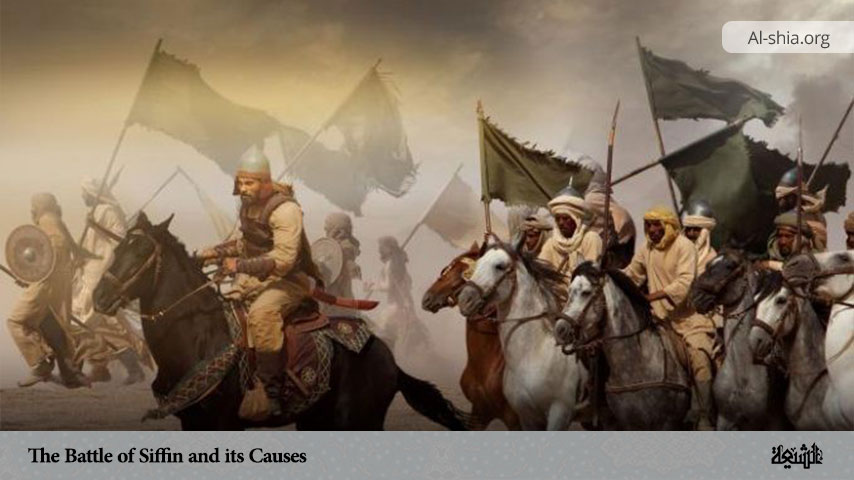
During the caliphate of Imam ʿAli (a.s), the Khawārij[12] rebelled after the arbitration at Ṣiffīn, accusing both Imam Ali (a.s) and Muʿāwiyah of disbelief for accepting human judgment in what they claimed was “God’s matter.[13]” Consequently, they withdrew from the camp of Imam Ali (a.s) and subsequently launched the Battle of Nahrawān against him[14].
The Shia perspective on Takfīr draws heavily from Imam ʿAli’s response to such extremism. Despite being unjustly accused, Imam ʿAli refused to reciprocate with Takfīr. He treated his opponents as misguided Muslims, not unbelievers, showing patience and restraint.
Over time, Takfīr became a political tool used to silence rivals and justify violence. However, the Shia perspective on Takfīr challenges this history by calling for restraint, justice, and humility, reminding Muslims that no political authority or group has the right to monopolize faith. In a nutshell, the Shia perspective on Takfīr teaches that making such a declaration is not only harmful but also a deeply irresponsible act that endangers one’s own spiritual integrity.
Shia Scholars’ Perspectives on Takfīr
In Shia thought, the question of Takfīr is approached with both theological depth and moral sensitivity. The Shia perspective on Takfīr insists that only God can truly judge belief and disbelief, since the inner state of a person’s faith cannot be measured by others. Imam Jaʿfar al-Ṣādiq taught his companions not to accuse those who pray toward the same qiblah and bear the same testimony of disbelief, for they are their brothers in Islam. This principle captures the Shia attitude toward other Muslims: inclusion, not exclusion.
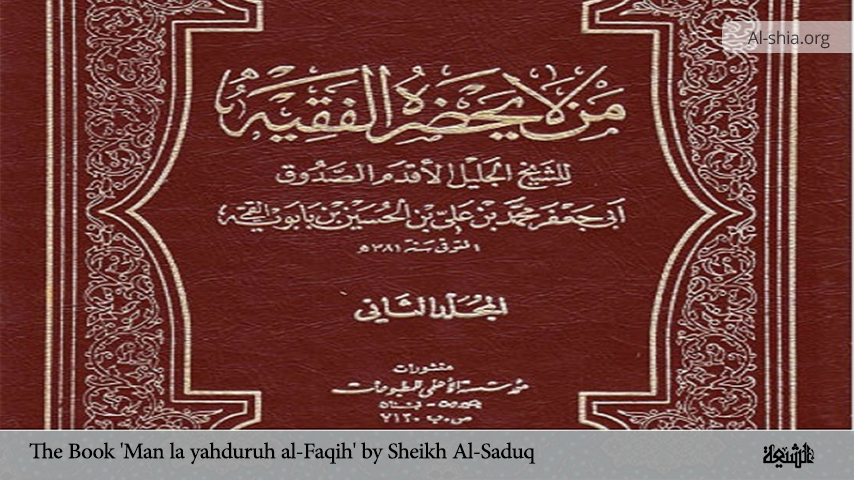
The Imāmī jurists, drawing on the Sunnah of the Prophet and the teachings of the Imams (peace be upon them), have likewise prohibited declaring the People of the Qiblah or those who profess the Shahādatayn [the two testimonies] as unbelievers. This is evident from their discussions regarding the criteria of Islam and disbelief. Shaykh Ṣadūq, in his book al-Hidāyah, defines the criterion of Islam as the acknowledgment of the Shahādatayn, which ensures the protection of life and property: “Islam is thus the acknowledgment of the Shahādatayn, and through this acknowledgment, life and property are safeguarded. Whoever says Lā ilāha illā Allāh, Muḥammad Rasūl Allāh has their life and property protected.[15]“
Allāmah Majlisī, in explaining the criterion of Islam, states: “Islam consists of an outward acknowledgment of God’s existence and the Prophethood of Muhammad (PBUHH), without denying any of the essentials of the religion…. Accordingly, hypocrites and all Muslims who recite the Shahādatayn, except for the nawāsib and extremists (ghulāt), are considered part of Islam.[16]“
Regarding the criterion for disbelief, they explain: “A disbeliever is one who denies either of the Shahādatayn or denies an essential of religion whose essentiality is known from the Prophet’s religion (PBUHH).[17]“
Therefore, the Shia perspective on Takfīr is that, as long as these two pillars are affirmed, one’s life, property, and dignity are protected. Throughout history, prominent Shia scholars have emphasized that Islam is defined by the testimony of faith—the Shahādatayn. The essence of Islam lies in confessing the oneness of God and the prophethood of Muhammad, not in agreement on every doctrinal point. Accordingly, all those who affirm the Shahādatayn and do not deny any essential of religion are regarded as Muslims by all juridical schools, with their life, property, and honor protected and under the safeguard of the Islamic state.
In modern times, leading Shia authorities have reaffirmed this stance. They consistently warn against Takfīr as a destructive act that divides Muslims. The Shia perspective on Takfīr thus represents an enduring call for balance and inclusion: faith is defined by affirmation, not exclusion.
Contemporary Relevance of the Shia Perspective on Takfīr
In today’s world, the Shia perspective on Takfīr stands out as a call for restraint and unity. The misuse of Takfīr has resurfaced in the rhetoric of extremist groups who claim a monopoly over truth, declaring others outside the fold of Islam. In contrast, the Shia perspective on Takfīr promotes restraint, urging Muslims to distinguish between disagreement and disbelief, and to resolve differences through dialogue and understanding.
Following divine guidance, the Shia perspective on Takfīr urges the Ummah to reject sectarian narratives. It calls for dialogue among all Muslims—Sunni, Shia, and others—based on mutual respect and shared values. This approach does not deny theological diversity but transforms it into a source of enrichment rather than enmity. In practice, this Shia perspective on Takfīr encourages dialogue over denunciation. It invites Muslims to appreciate diversity in interpretation while holding fast to shared essentials. Contemporary scholars further urge the Muslim world to replace sectarian suspicion with intellectual cooperation.
In a time when unity is under strain, the Shia perspective on Takfīr offers a path forward: one that replaces suspicion with solidarity, and judgment with empathy. It is a vision that upholds the Prophet’s legacy of mercy, calling Muslims to live as one community bound by faith, not divided by labels.
Conclusion
The concept of Takfīr remains one of the most misunderstood and misused aspects of Islamic discourse. Yet, through the Shia perspective on Takfīr, Muslims are reminded that faith cannot be confined to political or sectarian boundaries. The Shia perspective on Takfīr is rooted in the principles of ‘aql (reason) and ‘adl (divine justice), insists that faith is known through the Shahādatayn (declaration of the two testimonies) and not by secondary theological views. The affirmation of God and His Messenger suffices for the name Islam; disputes in understanding do not expel one from the community. However, according to the Shia perspective on Takfīr, the realization of disbelief is based on one of two things: first, the denial of the Shahādatayn, meaning the denial of God’s oneness or the Prophethood of Muhammad; second, the denial of an essential of religion, such as prayer, fasting, pilgrimage, and so forth.
Thus, the Shia perspective on Takfīr teaches that such a declaration is not only dangerous but also spiritually reckless. At present, the unity of the ummah must not be sacrificed for theological disputes. Contemporary voices continue this legacy, urging Muslims to recognize one another as brethren in faith and to resist divisive labels.
Footnotes:
[1] . Farāhidi. (1988). Kitab al-`Ayn, vol. 5, p. 357.
[2] . ʿAbd al-Munʿim. (1999). Muʿjam al-Muṣṭalaḥāt wa al-Alfāẓ al-Fiqhiyya, vol. 1, p. 487.
[3] . Āqā Ṣāliḥī et al. “Takfīr wa Barresī-yi Payāmad-hā-yi Ān dar Jāmiʿeh-yi Islāmī.” p. 95.
[4] . Ibid., p. 105.
[5] . Naṣr Iṣfahānī. “Kitābshanāsī-yi Takfīr.” p. 258.
[6] . Qur’an 4:94.
[7] . Moghadam, Assaf (2010). “Motives for Martyrdom: Al-Qaida, Salafi Jihad, and the spread of suicide attacks”, p. 83.
[8] . Maher, Shiraz (2016). Salafi-Jihadism: The History of an Idea, p. 75.
[9] . Jaʿfariyān, Rasūl. (1380 SH). Tārīkh-i Khulafā, vol. 2, p. 32.
[10] . Wāqidī. (1410 AH). Al-Riddah, pp. 106–107.
[11] . Maqdisī. (n.d). Al-Badʾ wa al-Tārīkh, vol. 5, p. 152.
[12] . Khawārij is a group that emerged during the caliphate of Imam ʿAli ibn Abī Ṭālib (ʿa.s) and rebelled after the arbitration at Ṣiffīn.
[13] . Subḥānī (1427–1428 AH). Buḥūth fī al-Milal wa al-Niḥal, vol. 5, p. 97.
[14] . Yaʿqūbī (n.d.). Tārīkh al-Yaʿqūbī. Beirut, vol. 2, pp. 192–193.
[15] . Shaykh Ṣadūq (1418 AH). Al-Hidāyah, p. 54.
[16] . Muḥammad Bāqir Majlisī (1403 AH). Biḥār al-Anwār (2nd edition), vol. 65, p. 244.
[17] . Muḥammad Ḥusaynī Shīrāzī (n.d). Al-Asʾilah wa al-ʾAjwibah. N.P, vol. 1, p. 65.
References
1. ʿAbd al-Munʿim, Maḥmūd ʿAbd al-Raḥmān (1999). Muʿjam al-Muṣṭalaḥāt wa al-Alfāẓ al-Fiqhiyya. 1. Cairo: Dār al-Faḍīla.
2. Āqā Ṣāliḥī, ʿAlī, Khosrow Moʾmenī, Mojtabā Jaʿfarī, and ʿAlīrezā Ṣāberiyān. “Takfīr wa Barrasī-yi Payāmad-hā-yi Ān dar Jāmiʿah-yi Islāmī.” Muṭālaʿāt-i Fiqh wa Uṣūl, 2nd series, no. 2 (Autumn and Winter 2019).
3. Farāhidi, Khalil b. Ahmad (1988). Kitab al-`Ayn (2nd edition). Qom: Hijrat Press.
4. Jaʿfariyān, Rasūl. (1380 SH). Tārīkh-i Khulafā. Qom: Dalīl.
5. Maher, Shiraz (2016). Salafi-Jihadism: The History of an Idea. Oxford: Oxford University Press.
6. Maqdisī, Muṭahhar ibn Ṭāhir. (n.d.). Al-Badʾ wa al-Tārīkh. Port Said: Maktabat al-Thaqāfah al-Dīniyyah.
7. Moghadam, Assaf (2010). “Motives for Martyrdom: Al-Qaida, Salafi Jihad, and the spread of suicide attacks”. In Michael E. Brown; Owen R. Coté Jr.; Sean M. Lynn-Jones; Steven E. Miller (eds.). Contending with Terrorism: Roots, Strategies, and Responses. Cambridge, Massachusetts, US: MIT Press. pp. 57–91.
8. Muḥammad Bāqir Majlisī (1403 AH). Biḥār al-Anwār (2nd edition). Beirut: Dār Iḥyāʾ al-Turāth al-ʿArabī.
9. Muḥammad Ḥusaynī Shīrāzī (n.d). Al-Asʾilah wa al-ʾAjwibah. N.P
10. Naṣr Iṣfahānī, Abādharr (2014). Kitābshināsī-yi Takfīr. Qom: Dār al-Iʿlām li-Madrasat Ahl al-Bayt (ʿa).
11. Shaykh Ṣadūq (1418 AH). Al-Hidāyah (1st edition). Qom: Muʾassasah Imām Hādī.
12. Subḥānī Tabrīzī, Jaʿfar (1427–1428 AH). Buḥūth fī al-Milal wa al-Niḥal. Qom: Muʾassasat al-Nashr al-Islāmī.
13. Wāqidī, Muḥammad ibn ʿUmar (1990). Al-Ridda (1st edition). Edited by Yaḥyā al-Jubūrī. Beirut: Dār al-Gharb al-Islāmī.
14. Yaʿqūbī, Aḥmad ibn Abī Yaʿqūb (n.d.). Tārīkh Yaʿqūbī. Beirut: Dār Ṣādir.





![The Event of Ghadir and Imam al-Mahdi [afs]](https://en.al-shia.org/wp-content/uploads/2026/06/17221.jpg)