

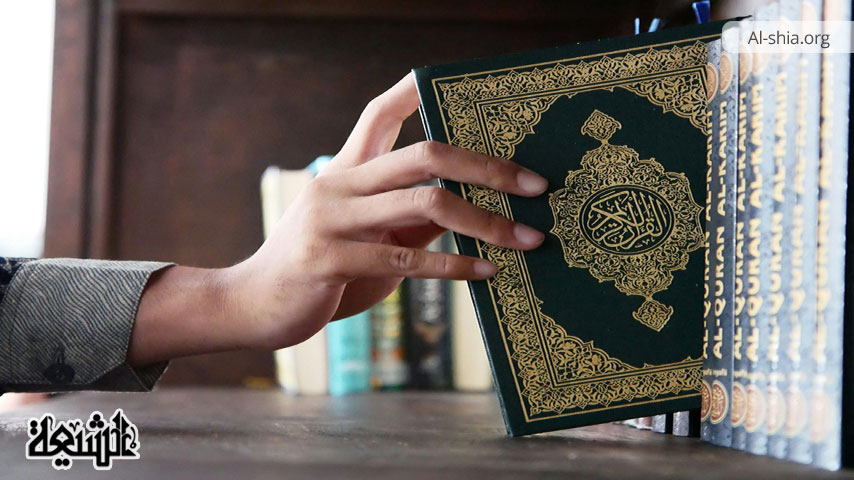

In Islam, every aspect of a believer’s life is guided by divine order and refinement, from acts of worship such as prayer and fasting to everyday practices like eating and sleeping. The recitation of the Holy Qur’an is no exception, as it is accompanied by specific rulings and etiquettes of recitation. Some of these etiquettes are obligatory, while others are recommended and enhance the beauty and impact of the recitation. Observing these etiquettes of recitation deepens one’s reverence for the Qur’an, attracts abundant spiritual benefits, and increases the divine blessings bestowed upon the reciter.
It is notable that the etiquettes of Quranic recitation are derived from the Holy Quran itself and from the traditions (Ahadith) of the infallible Imams (AS). The purified Prophet’s household (the Ahl al-Bayt) are the locus of revelation and the place where Gabriel descended; therefore, when it comes to the proper manners of recitation, this family should be considered as the model and guideline. As the Messenger of God (PBUHH) said: “They are with the Quran and the Quran is with them; they do not separate from it, nor does it separate from them …”.[1]
1. Purity and Wudu (Ablution)
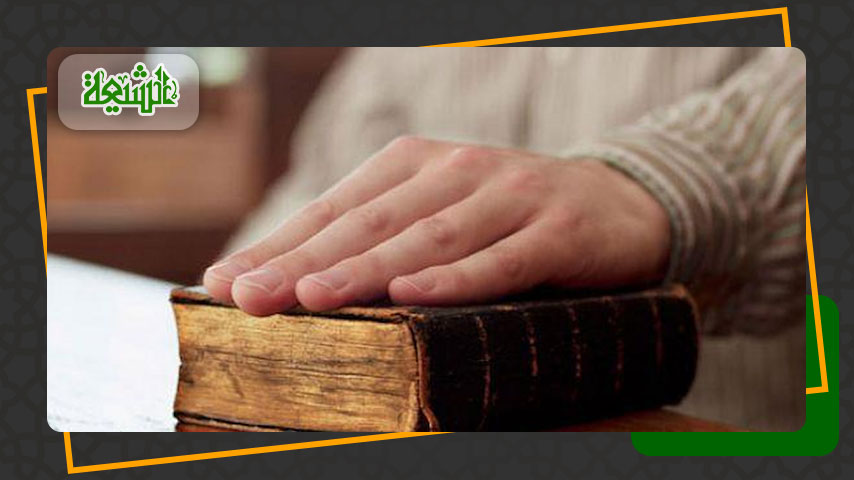
We should strive to be ritually pure and in a state of wudu when we recite the Quran. If we intend to touch the written text of the Quran with any part of our body, such as our hand, it is obligatory to be pure and in wudu. “A servant should not recite the Quran when he is in a state other than purity until he purifies himself”.[2]
If the Quran we have chosen to read has also been translated into Persian or another language, touching the translation or its explanatory meanings with a hand or another body part while not in a state of purity and without wudu is not considered objectionable and is permitted.
However, if the translation contains the names of God, the divine prophets, or the infallible Imams (AS), one must not touch those sacred Names with a hand or other body part while lacking purity and wudu. (Some of the Maraji-high-ranking jurists, hold different opinions on this point).
2. Quantity of Quran Recited
It is commendable to recite the Holy Quran frequently; through abundant recitation the hearts, which may be tarnished, are awakened and become recipients of guidance, healing, blessing, and piety. God Almighty says in the Quran: “So recite what is easy [for you of the Quran]”.[3]
Imam Sadiq (AS) says: “The Quran is God’s covenant to His creatures; therefore, it is fitting for a Muslim person to look into this covenant and to recite from it fifty verses every day”.[4]
3. Pleasant Scent, Perfume, and Using a Miswak
It is good for a Quran reciter to use a pleasant fragrance while reciting and to clean the teeth with a miswak before recitation. Imam Sadiq (AS), quoting his noble grandfather, the Messenger of God (PBUHH), says: “Make the path of the Quran clean”. They asked, “O Messenger of God, what is the path of the Quran?” He replied: “Your mouths”. They asked: “With what [should we cleanse them]?” He said: “With the miswak”.[5]
4. A Beautiful Voice
It is desirable to recite the Quran with a beautiful, melodious, and moving voice. Reciting in a moving tone (ḥazin) engenders a state of humility and reverence in the heart and touches hearts more deeply. The Prophet (A) said: “The Quran was revealed with sorrow; so when you recite it, weep; and if you can not weep, then make yourself appear as if you are weeping”.[6]
He also said: “Everything has an adornment, and the adornment of the Quran is a beautiful voice”.[7] This recommendation was also reflected in the practice of the Ahl al-Bayt (AS), who themselves recited beautifully and pleasantly. It is reported that Imam Baqir (AS) recited so melodiously that passersby stopped in their tracks, and water-sellers on their rounds would halt and listen, giving their hearts to the pleasant sound of his recitation.[8]
5. Contemplation and Paying Attention
When the Holy Quran is being recited, one should not speak; rather, one should listen calmly to its verses and reflect upon them. God Almighty says in the Quran: “And when the Quran is recited, listen to it and be silent, that you may receive mercy”.[9]
There is a difference between “listening” (istima) and “attentive silence” (insat); insat means silence combined with attention, reflection, and contemplation. Imam Sadiq (AS) says: “When the Quran is recited in your presence, attentive silence and listening are obligatory upon you”.[10]
Thus, the key matter is “contemplation and reflection” upon the Quran. He asks: “Do they not then reflect upon the Quran?”[11] Do they not think deeply about it?
In a tradition, we read that the Companions of the Prophet learned the Quran ten verses at a time from him, and they would not learn the next ten verses until they had gained both knowledge and practice from the first ten.[12]
Imam Ali (AS) said: “Behold, there is no good in recitation that does not contain contemplation; behold, there is no good in worship that does not involve understanding”.[13]
6. Recitation in the Style of Tartil (Measured, contemplative pacing)
The Holy Quran should be recited in Tartil, that is, measured, slow, and accompanied by reflection: “And recite the Quran with measured recitation”.[14] In a tradition from Imam Sadiq (AS) explaining this verse, we read: “The Quran is not to be recited hurriedly; rather it should be recited in measured fashion. If you pass by a verse that mentions Paradise, stop there and ask God for Paradise; and if you pass by a verse that mentions the Fire, stop there and seek refuge in God from the Fire”.[15]
7. Supplication at the beginning and end
It has been quoted that whenever Imam Sadiq (AS) would take up the Holy Quran, before opening and reciting it he would supplicate as follows: “O God, I bear witness that this is Your Book sent down from You to Your Messenger; Muhammad son of Abdullah, and that Your speech spoken through the tongue of Your Prophet, You have made it a guide from You to Your creatures and a connecting rope between You and Your servants. O God, I have spread forth Your covenant and Your Book. O God, make my looking into it an act of worship, my recitation of it an exercise in thought, and my reflection upon it a source of admonition. Make me among those who are admonished by the clear exhortations in it and who abstain from Your disobedience. Do not seal my hearing at the time of my recitation, and do not place a veil over my sight, and do not make my recitation a mere utterance without contemplation. Rather, make me one who ponders its verses and implements its rulings, observing the laws of Your religion. Do not make my looking into its heedlessness and my recitation mere noise. Indeed, you are the Clement, the Merciful”.[16]
8. Seeking Refuge (Istiadhah) and “Bismillah” before Recitation
It is proper at the start of recitation, to seek refuge in God from Satan, as He says in verse 98 of Surah Al-Nahl: “So when you recite the Quran, seek refuge with Allah from Satan the accursed”.[17]
In a tradition from Imam Sadiq (AS), when asked how to act upon this directive he replied: Utter “I seek refuge with the All-Hearing, All-Knowing from the accursed Satan”.
This seeking refuge should not be limited to words alone; it must penetrate the depths of the soul so that when a person recites the Quran, he breaks away from Satanic inclinations and draws closer to divine attributes, removing barriers that hinder comprehension and enabling him to perceive the truth rightly.
It has been quoted from the Noble Messenger (PBUHH): “Begin it with In the name of God, the Most Compassionate, the Most Merciful, and end it with God has spoken the truth, the Exalted, the Great”.[18]
According to the narrations, one of the times when supplication is accepted is after reciting and completing the Quran. It is related that Imam Ali (AS), after finishing recitation, would pray: “O God, open my chest through the Quran, employ my body through the Quran, enlighten my sight through the Quran, unbind my tongue through the Quran, and help me with it as long as You keep me alive, for there is no strength or power except by You”.[19]
9. Facing the Qiblah
It is recommended that a person face the Qiblah while supplicating, reciting the Holy Quran, eating, or sleeping. Imam Sadiq (AS) said: “The Messenger of God (S) most often sat facing the qiblah”.[20]
10. Looking at the Holy Quran
Ishaq ibn Ammar asked Imam Sadiq (AS): “I have committed the Quran to memory. Should I recite it from my heart (i.e., from memory) which is better, or should I look into the Mushaf [book of Quran]?” Imam Sadiq (AS) replied: “Rather, recite it and look into the Mushaf; that is better. You should know that looking into the Mushaf is an act of worship”.[21]
The Messenger of God (PBUHH) also said: “There is nothing more harmful to Satan than reading from the Mushaf and looking [at it]”.[22]
11. Choosing a Proper Place
It is desirable to recite the Quran in appropriate places, such as mosques. Imam Sadiq (AS) says: “A reciter of the Quran needs three things: a humble heart, a free body, and a secluded place”.[23]
12. Dedicating the Reward of Quranic Recitation as a Gift to the Imams
Ali ibn Mughayrah, a companion of Imam Kadhim (AS), asked about the reward for gifting the reward of Quranic recitation to the Imams (AS). The Imam answered: “My father used to complete it [the Quran] forty times in the month of Ramadan. Then after my father I completed it; sometimes I increased and sometimes I decreased according to my leisure, my occupation, my energy, and my laziness. When it was on the day of Eid al-Fitr, I would allocate one completion for the Messenger of God (PBUHH), another for Imam Ali (AS), another for Hazrat Fatimah (AS), and then for the Imams (AS) until I reached you, so that I made one [completion] for you since I have been in this state. He asked: ‘What is for me by that?’ He said: ‘By that you will be with them on the Day of Resurrection.’ I said: ‘Allahu akbar! Do I have that by it?’ He said: ‘Yes’, three times”.[24]
Conclusion
Maintaining continual intimacy with the Holy Quran and paying attention to the manner of its recitation is emphasized throughout the Quranic verses and Islamic narrations. It is repeatedly recommended that this book of life be always accessible and that every opportunity be used for reciting its verses, pondering and reflecting on them. This should become an inseparable part of our daily lives. How lovely it is when this practice is accompanied by the etiquettes of recitation so that one derives the best and greatest benefit from this luminous book.
Notes
[1]. Fayd Kashani, Tafsir al-Safi, vol.1, p.20.
[2]. Majlisi, Bihar al-Anwar, vol.73, p.130.
[3]. Al-Muzzammil, 20.
[4]. Kulayni, Al-Usul al-Kafi, vol.2, p.619.
[5]. Majlisi, Bihar al-Anwar, vol.73, p.130.
[6]. Majlisi, Bihar al-Anwar, vol.89, p.191.
[7]. Kulayni, Al-Usul al-Kafi, vol.2, p.615.
[8]. Shaykh Hurr al-Amili, Wasail al-Shiah, vol.4, p.859, Hadith 6.
[9]. Al-Araf, 204.
[10]. Majlisi, Bihar al-Anwar, vol.85, p.108.
[11]. Al-Nisa, 82.
[12]. Majlisi, Bihar al-Anwar, vol.92, p.106.
[13]. Majlisi, Bihar al-Anwar, vol.92, p.211.
[14]. Al-Muzzammil, 4.
[15]. Kulayni, Al-Kafi, vol.2, p.452.
[16]. Majlisi, Bihar al-Anwar, vol.89, p.207.
[17]. Al-Nahl, 98.
[18] . Majlisi, Bihar al-Anwar, vol.57, p.243.
[19]. Tusi, Misbah al-Mutahajjid wa Silah al-Mutaabbid, vol.1, p.323.
[20]. Tabrisi, Makarim al-Akhlaq, p.26.
[21] . Shaykh Hurr al-Amili, Wasail al-Shiah, vol.6, p.204.
[22] . Shaykh Hurr al-Amili, Wasail al-Shiah, vol.6, p.204.
[23] . Majlisi, Bihar al-Anwar, vol.85, p.43.
[24]. Shaykh Hurr al-Amili, Wasail al-Shiah, vol.6, p.218.
References
- The Holy Quran.
- Fayd Kashani, Muhammad Muhsin ibn Shah Murtada, Tafsir al-Safi, Maktabat al-Sadr, Tehran, 1415 AH.
- Kulayni, Muhammad ibn Yaqub, Al-Kafi, Tehran, Dar al-Kutub al-Islamiyyah, 1407 AH.
- Majlisi, Bihar al-Anwar, Al-Wafa Institute, Beirut, 1404 AH.
- Shaykh Hurr al-Amili, Muhammad ibn al-Hasan, Wasail al-Shiah, Al al-Bayt (A), 1409 AH.
- Ṭabrisi, Ḥasan ibn Fadl, Makarim al-Akhlaq, Al-Sharif al-Radi, Qom, 1412 AH.
- Tusi, Misbah al-Mutahajjid wa Silah al-Mutaabbid, Beirut, Fiqh al-Shiah Institute, 1411 AH.

![The Event of Ghadir and Imam al-Mahdi [afs]](https://en.al-shia.org/wp-content/uploads/2026/06/17221.jpg)