

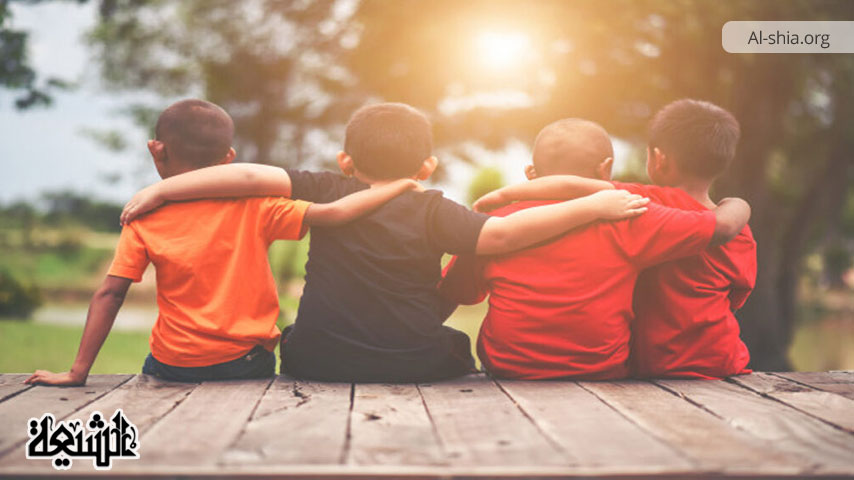

Recognizing and practicing the etiquettes of friendship is an effective way to preserve and maintain friendships. In Letter 31 of Nahj al-Balagha, Imam Ali (AS) teaches his son methods regarding the etiquettes of friendship, such as maintaining connection in the face of severance, showing gentleness in the face of harshness, and offering generosity in return for deprivation.
Learning and applying all the etiquettes of friendship can help us in building and maintaining friendships. This article seeks to mention the etiquettes of making friends in the words of Imam Ali (AS), explain them through Quranic verses and narrations, and highlight examples from history.
1. Etiquettes of Friendship in Letter 31 of Nahj al-Balagha
Imam Ali (AS): “(My son!) Toward your religious brother, impose these actions upon yourself: when he cuts off relations, you restore them; when he grows distant, you draw near; when he is stingy, you are generous; when he becomes harsh, you show gentleness; and when he errs, you accept his excuse”.[1]
From this statement of the Imam (AS), when he says “impose these actions upon yourself”, we understand that these acts go against the natural inclination of the human self toward vengeance.
2. The Most Effective Way to Become a Friend
Imam Ali (AS): “Treat him with such kindness that it is as if you are his servant and he your benefactor”.[2] This statement teaches that just as a servant behaves toward his master, bearing his anger, enduring his faults, and recognizing him as the source of blessings, a believer should act in the same way toward his friends.
In this regard, Imam Sadiq (AS) said: “Sometimes a person in need comes to me, and I rush to fulfill his request, because I fear he may become independent of me. Be aware that the gifts of this world and the Hereafter are summarized in three words from the Book of God: “Adopt [a policy of] excusing [the faults of people], bid what is right, and turn away from the ignorant”.[3]
The interpretation of this verse is that you should reconnect with the one who cuts ties, pardon the one who wrongs you, and give to the one who deprives you.
3. Avoiding Misplaced Humility and Kindness
Imam Ali (AS): “Beware of placing this conduct in the wrong place or with those unworthy of it”.[4] There are those who misuse kindness and only increase in corruption. Some become lazy and entitled because of financial aid, while others grow arrogant and reckless when continually excused. Therefore, one must be discerning in offering kindness and generosity.
4. Avoid Friendship with the Enemy of a Friend
Imam Ali (AS): “Do not take the enemy of your friend as a friend, lest you become an enemy to your own friend”.[5] Making friends with the enemy of your friend is itself a betrayal of friendship.
This principle also applies to our relationship with God: befriending the enemies of God is enmity with God. The Quran warns: “Do not incline toward those who have wronged, lest the Fire touch you, and you have no protectors other than God, and you will not be helped”.[6]
5. Sincere Counsel for Friendship
Imam Ali (AS): “Offer your brother sincere advice, whether it pleases him or not”.[7] Sometimes sincere advice brings gratitude; at other times it may cause discomfort. Yet true friendship requires offering it regardless.
The Prophet (S) said: “The person whose rank will be highest before God on the Day of Judgment is the one who walked the most in giving sincere counsel to God’s servants on earth”.[8]
6. Friendship Through Controlling Anger
Imam Ali (AS): “Swallow your anger, for I have not seen a gulp sweeter in outcome or more pleasant in result”.[9] Suppressing anger is difficult at first, but its consequences are sweet and fulfilling. “Be gentle with one who is harsh toward you, for he may soon soften toward you”.[10]
The Quran teaches: “Repel [evil] with what is best; then the one who is hostile toward you will become as if he were a devoted friend”.[11]
Imam Sajjad (AS), in his will to his son Imam Baqir (AS), said: “My dear son, continually swallow the bitterness you experience from people, for your father will exchange every gulp of anger endured from them for red-haired camels (a symbol of wealth)”.[12]
7. Kindness Toward an Enemy
Imam Ali (AS): “Overcome your enemy with kindness, for that is the sweetest of victories”.[13] Victory over an enemy can be achieved either by force or through kindness. Imam Ali (AS) reminds us that true triumph lies in treating one’s enemy with goodness.
8. Setting Limits in Cutting Ties with a brother in Faith
Imam Ali (AS): “If you must sever ties with your brother, then leave a portion of friendship remaining, to which he may return one day”.[14] This is one of the best ethical teachings: never destroy the bridge of friendship completely, for one day you may wish to rebuild it.
Imam Ali (AS) also said: “Love your friend moderately, for he may one day become your enemy. And hate your enemy moderately, for he may one day become your friend”.[15]
9. Confirming the Good Opinion of Others
Imam Ali (AS): “When someone thinks well of you, confirm his good opinion”.[16] If others believe you are virtuous and noble, act accordingly so that their trust is affirmed.
At the conquest of Mecca, the Prophet (S) asked: “What do you think and what do you say [about me]?” Suhail ibn Amr replied: “We think only good of you.” The Prophet (S) said: “I say to you what my brother Joseph said to his brothers: “No blame upon you today. May God forgive you, and He is the most merciful of the merciful”.[17]
10. Friendship Through Sincerity and Preserving Rights
Imam Ali (AS): “Do not neglect your brother’s rights by relying only on the bond between you, for he who neglects his brother’s rights is no brother at all”.[18]
Sometimes intimacy in friendship causes people to disregard the dignity and rights of the other. Such neglect often leads to the breakdown of friendship.
11. etiquettes of friendship within the Family
Imam Ali (AS): “Let not your family be the most miserable of people because of you”.[19] Imam Ali (AS) advised his son to honor the rights of his family and not neglect them. A person should not be kind to everyone else while ignoring his own household.
Imam Hussain (AS) expressed his love for Rabab and Sukayna by saying: “By your life! I love the house in which Sukayna and Rabab live. I love them, and I will sacrifice all my wealth for them, and no one should argue with me about this”.[20]
12. The Measure of Connection and Friendship
Imam Ali (AS): “Do not seek the friendship of one who turns away from you”.[21] If someone shows no interest in you, do not insist on forcing a friendship.
Ibn Maytham says: “The purpose of this statement is that one should not show interest in a person who lacks the worthiness and capacity for kindness and friendship”.[22]
13. Competing in Strengthening Friendship
Imam Ali (AS): “Do not let your brother be stronger in severing ties than you are in maintaining them”.[23] In etiquettes of friendship, if your friend seeks to end the friendship, you should be even stronger in striving to preserve it.
14. Friendship Through Excelling in Goodness
Imam Ali (AS): “Do not let your brother surpass you in wrongdoing more than you surpass him in kindness”.[24] In etiquettes of friendship, whatever ill-treatment he shows, respond with greater goodness, so that kindness will ultimately overcome his bad behavior.
15. Not Magnifying the Wrong of Friends
Imam Ali (AS): “Do not regard as great the injustice of one who wrongs you, for he is harming himself and benefiting you. The reward of one who brings you joy is not to cause him sorrow”.[25]
In etiquettes of friendship, the oppressor, though he wrongs others, ultimately kindles the fire of divine wrath for himself, while the oppressed gain spiritual reward through patience.
In the account of ‘Ali ibn al-Hasan, who is connected to Imam Hasan al-Mujtaba (AS) through two intermediaries, it is mentioned that Mansur used to imprison the noble descendants of Imam Hasan. While in prison, Abdullah ibn al-Hasan, who had grown weary of the harsh conditions, said to his nephew Ali ibn al-Hasan, who was known as one whose supplications were answered:
“Do you not see our trials and hardships? Will you not ask God to rescue us from this distress and affliction?” Ali ibn al-Hasan remained silent for a long while, and then said: “O uncle, there is a rank in Paradise destined for us that we cannot attain except by enduring this affliction and greater than this. And for Mansur, there is a place in the Fire of Hell that he cannot reach except by inflicting upon us these tribulations and even harsher than them. Now, if you wish, we can endure these hardships, for soon we shall find relief, since death is near to us, and afterward it will seem as though we had never seen any affliction at all. But if you prefer, I will supplicate for you so that you may be delivered from this tribulation; however, in that case, Mansur will not attain the rank that he has in the Fire”. Abdullah replied: “No, I will be patient”. Three days later, he passed away to the eternal abode.[26]
Conclusion
From the perspective of Imam Ali (AS), the etiquettes of friendship include: maintaining connection when ties are cut, generosity when faced with stinginess, drawing near when others withdraw, gentleness in the face of harshness, accepting excuses for mistakes, sincerity in friendship, avoiding friendship with the enemy of a friend, showing measured intimacy, and swallowing anger.
Even with enemies, hostility should be limited, leaving room for reconciliation, for one day they may become friends. Likewise, the injustice of others should not be exaggerated, for their wrongdoing ultimately harms them while benefiting the oppressed.
Notes
[1]. Sharif al-Radi, Nahj al-Balagha, Letter 31.
[2]. Sharif al-Radi, Nahj al-Balagha, Letter 31.
[3] . Tusi, Amali, vol.2, p.258.
[4] . Sharif al-Radi, Nahj al-Balagha, Letter 31.
[5] . Sharif al-Radi, Nahj al-Balagha, Letter 31.
[6] . Al-Hud, 113.
[7] . Sharif al-Radi, Nahj al-Balagha, Letter 31.
[8] . Kulayni, Usul al-Kafi, vol.2, p.208.
[9] . Sharif al-Radi, Nahj al-Balagha, Letter 31.
[10] . Sharif al-Radi, Nahj al-Balagha, Letter 31.
[11] . Al-Fussilat, 34.
[12] . Ibn Maytham al-Bahrani, Sharh Nahj al-Balagha, vol.5, p.55.
[13] . Sharif al-Radi, Nahj al-Balagha, Letter 31.
[14] . Sharif al-Radi, Nahj al-Balagha, Letter 31.
[15] . Tusi, Amali, vol.1, p.374.
[16] . Sharif al-Radi, Nahj al-Balagha, Letter 31.
[17] . Majlisi, Bihar al-Anwar, vol.21, p.132.
[18] . Sharif al-Radi, Nahj al-Balaghah, Letter 31.
[19] . Sharif al-Radi, Nahj al-Balaghah, Letter 31.
[20] . Ahmad al-Arnaut, Wafi bil-Wafayat, p.49.
[21] . Sharif al-Radi, Nahj al-Balagha, Letter 31.
[22] . Bahrani, Sharh Nahj al-Balagha, vol.5, p.56.
[23] . Sharif al-Radi, Nahj al-Balagha, Letter 31.
[24] . Sharif al-Radi, Nahj al-Balagha, Letter 31.
[25] . Sharif al-Radi, Nahj al-Balagha, Letter 31.
[26]. Abul-Faraj al-Isfahani, Maqatil al-Talibiyyin, p.130.
References
- The Holy Quran
- Arnaut, Ahmad. Wafi bil-Wafayat. Beirut: Dar al-Nashr, 1381 AH.
- Abul-Faraj al-Isfahani, Ali ibn al-Husayn. Maqatil al-Talibiyyin. Beirut: Al-Alami Publishing Institute, 3rd ed., 1419 AH.
- Ibn Maytham al-Bahrani. Sharh Nahj al-Balagha. Tehran: Daftar Nashr al-Kitab, 1379 AH.
- Sharif al-Radi, Muhammad ibn al-Husayn. Nahj al-Balagha. Translated by Dashti. Qom: Mashhour, 1379.
- Tusi, Muhammad ibn al-Hasan. Amali. Qom: Dar al-Thaqafah, 1414 AH.
- Kulayni, Muhammad ibn Yaqub. Usul al-Kafi. Tehran: Islamic Scientific Bookstore, 1387.
- Majlisi, Muhammad Baqir. Bihar al-Anwar. Beirut: Dar Ihya al-Turath al-Arabi, 1135 AH.
Source of the article | Adapted from:
Karimi Jahromi, Ali. Towards the Virtuous City. Qom: Rasekhun, 1387SH.

![The Event of Ghadir and Imam al-Mahdi [afs]](https://en.al-shia.org/wp-content/uploads/2026/06/17221.jpg)