



One of the important issues in relations between Shias and Sunnis is whether Shias may participate in the Sunni congregational prayer and follow their prayer leader (imam). The view of Shia jurists from the past until today has generally been that this is permissible on the basis of taqiyya (dissimulation). Of course, there are differences among Shia jurists regarding the details of this issue.
The Islamic Community and the Jurisprudential Challenges between Shia and Sunni
The sensitive situation of today’s Islamic world and the rise of Islamic awakening movements indicate that the Muslim community is in greater need than ever of unity and harmony.
On this basis, presenting the jurisprudential rulings of these two groups toward one another already carries great significance. Indeed, offering an accurate representation of how each side views the other can create practical, rather than merely rhetorical, grounds for Muslims to take real steps toward greater agreement and harmony.
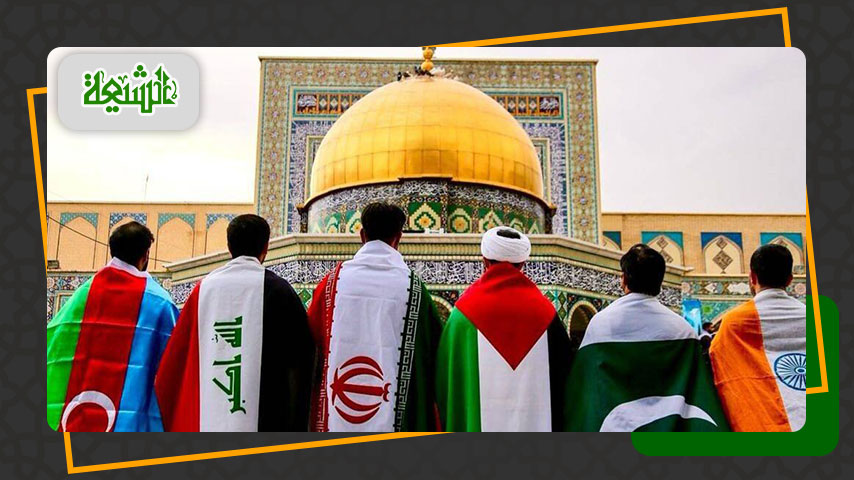
In this context, the participation of Shia individuals in the Sunni congregational prayer stands as an example of unity within the Muslim community and as one of the ways to achieve lasting solidarity between Shias and Sunnis, especially during the Hajj season and the great gathering of Muslims from across the world in the Two Holy Sanctuaries. The realization of this matter depends on examining jurisprudential opinions and explaining the views of the jurists.
The Jurisprudential Ruling on Participating in the Sunni Congregational Prayer
Imami jurists have analyzed the ruling on participating in the Sunni congregational prayer and following their imam from two perspectives: the primary ruling and the secondary ruling.
The primary ruling states that, in essence, this prayer is not accepted by the Lawgiver, whereas the secondary ruling indicates that, based on taqiyya (dissimulation), one may participate in the Sunni congregational prayer.
Primary Ruling: The Impermissibility of Participating in the Sunni Congregational Prayer
By examining the views of Imami jurists regarding the jurisprudential ruling on Sunni imamate in congregational prayer and Shias following them, we find that all of them rule the matter to be impermissible and consequently consider such a congregation invalid. In the jurisprudential works of early scholars, the impermissibility of participating in the Sunni congregational prayer is explicitly stated.[1]
The consensus of jurists on the requirement of the imam’s faith, meaning belief in the leadership of Imam Ali ibn Abi Talib (AS) and his eleven descendants after the Messenger of God (S), which corresponds to the Twelver Shia doctrine, is further evidence supporting this claim.[2]
Imam Khomeini, in line with Imami jurists, also emphasized the necessity of the imam’s faith[3] and stated the ruling of impermissibility of following religious opponents.[4]
Secondary Ruling: The Permissibility of Participating in the Sunni Congregational Prayer
Despite the jurists’ explicit statements about the impermissibility of participating in the Sunni congregational prayer, all Imami jurists have ruled that under certain specific circumstances, participation in the Sunni congregational prayer is permissible[5] and even recommended, and in terms of spiritual reward, superior to participating in the congregation of the faithful.[6]
Imam Khomeini, in explaining the secondary ruling, also issued a legal opinion affirming the permissibility of participating in the Sunni congregational prayer and the validity of the prayer performed with them.[7]
Condition for the Permissibility of Participating in the Sunni Congregational Prayer
Among Imami jurists, there is disagreement regarding the secondary title under which the secondary ruling of the issue is applied. Each has ruled permissibility when a particular title and specific conditions are fulfilled.
The majority of early jurists considered the secondary ruling applicable in situations of necessity arising from obligatory taqiyya (dissimulation), which refers to fear-based taqiyya.[8]
Some jurists have also deemed participation in the opponents’ congregation permissible when taqiyya (dissimulation) is practiced for the purpose of courtesy, attracting the goodwill of Sunnis toward Shias, creating an atmosphere of good social interaction among Muslims, reconciling the hearts of opponents toward Shias and their school of thought, and reducing or eliminating hostility toward Shias.
The Manner of Participating in the Sunni Congregational Prayer
According to the majority of jurists, a Shia follower joins the Sunni congregational prayer from the beginning together with the opponents, and in the physical actions of prayer such as bowing (ruku) and prostration (sujud), follows the prayer leader externally.
However, he must recite the call to prayer (adhan) and the iqamah himself. Moreover, the recitation does not drop from him, and he is required to perform it himself.[9] The author of Jawahir explicitly states that the obligation of recitation during participation in the Sunni congregational prayer from the perspective of taqiyya has been affirmed by Imami scholars, and that no contrary opinion has been found on this matter.[10]
In this case, performing the recitation, considering the conditions of taqiyya, has levels: in situations of intense fear, it may be reduced to recitation within one’s mind; and if the imam precedes the follower in recitation, the follower may suffice with whatever he manages to recite, or if he finishes early, he may engage in dhikr. He may also recite silently in audible prayers (salawat jahriyah) instead of reciting aloud.[11]
The Fatwa of Ayatollah Sistani
Ayatollah Sistani says the following regarding participation in the Sunni congregational prayer: “It is permissible for a Shia Imami to perform prayer behind them (the Sunnis), but the follower, if able, must quietly recite for himself; and if he cannot, then he should recite it in his heart. If taqiyya requires, he may also perform takattuf (placing the hands together). Likewise, if in the place one is standing there is nothing upon which prostration is valid, then it is permissible to prostrate on a carpet or similar material; and if something valid such as earth or matting is available, then he must prostrate on that”.[12]
“If the following is in the Friday prayer, it is obligatory to perform the Zuhr prayer afterward”.[13] “Also, if they perform the prayer before its prescribed time, it is not valid and one must not suffice with it”.[14]. “Prostrating on the carpets of the Prophet’s Mosque is also permissible if taqiyya requires it, and it is not obligatory to move elsewhere to avoid prostrating on carpets. Likewise, delaying the prayer until after the sun’s zenith due to taqiyya is not obligatory”.[15]
No Need to Repeat the Prayer after following Sunnis
Most of the jurists who issued the above ruling consider the follower’s prayer valid and do not consider it necessary to repeat it. In this case, it makes no difference whether time remains for repeating the prayer or not, nor whether participation in the congregation occurred out of necessity or not.[16]
Perhaps the reason for not requiring repetition is that although this prayer outwardly appears to be a congregational prayer, it is in reality performed individually. Jurists have also held that such a prayer is to be considered an individual prayer[17] and have stated that the follower in a taqiyya-based prayer with opponents must pray without the intention of congregation.[18]
It is worth noting that some have inclined toward the validity of the prayer in cases of necessity, considering it the stronger opinion.[19] However, it seems that this view is inconsistent with the spirit of the transmitted narrations and the underlying purpose intended by the Lawgiver in permitting attendance in the Sunni congregational prayer.
Therefore, the well-known view, which does not consider the condition of necessity essential, aligns more with the Lawgiver’s intended interest of fostering courtesy and harmony with opponents.
The Manner of Participating in the Sunni Congregational Prayer according to Imam Khomeini
Imam Khomeini considered taqiyya a condition and, when the circumstances of taqiyya exist, deemed participation in the congregation of opponents and following them permissible.
According to him, Imami followers may, without any fear or concern about harm, but rather for the sake of good social relations with Sunnis, showing affection toward them, and promoting unity, follow the Sunni prayer leader.
Such a prayer is valid for them without requiring that they perform their own prayer before or after it, or that they merely outwardly follow the congregation while performing their own recitation. In other words, when taqiyya is present, participation in the Sunni congregational prayer is not merely a formal or symbolic congregation but is considered a genuine and sufficient congregational prayer.[20]
Conclusion
Participation in the Sunni congregational prayer, from the perspective of the Ahl al-Bayt (AS) and Shia jurisprudence, is permissible on the basis of taqiyya. However, Shia jurists differ on whether the necessary conditions for this ruling arise only in situations of fear and necessity, or whether mere courtesy and good social relations are sufficient.
Additionally, regarding the manner of praying with them, whether this prayer counts as only a symbolic congregation in which the Shia follower must intend an individual prayer and recite al-Hamd and the surah himself, or whether it constitutes a valid and sufficient congregational prayer, the individual must refer to his own marja of emulation.
Notes
[1] . Tusi, Al-Khilaf, vol.1, p.549; Ḥilli, Tadhkirat al-Fuqaha, vol.4, p.279.
[2] . Hill, Sharai al-Islam, vol.1, p.114; Shahid al-Thani, Rawd al-Jinan, vol.2, p.967; Yazdi, Al-Urwat al-Wuthqa, vol.1, p.797.
[3] . Khomeini, Tahrir al-Wasilah, vol.1, p.274.
[4] . Khomeini, Al-Rasail, vol.2, p.199.
[5] . Tusi, Al-Nihayah, p.112; Hilli, Muntaha al-Matlab, vol.6, p.264; Shahid al-Awwal, Dhikra, vol.4, p.269; Najafi, Jawahir al-Kalam, vol.13, p.195; Ansari, Kitab al-Salah, vol.2, p. 271, 375.
[6] . Shahid al-Thani, Rasail, vol.1, p.585; Bahrani, Al-Hadaiq, vol.11, p.178.
[7] . Khomeini, Al-Rasail, vol.2, p.198.
[8] . Tusi, Al-Nihayah, p.112; Hilli, Muntaha al-Matlab, vol.6, p.265; Shahid al-Awwal, Dhikra, vol.4, p.470; Najafi, Jawahir al-Kalam, vol.13, p.195.
[9] . Tusi, Al-Mabsut, vol.1, p.158; Bahrani, Al-Hadaiq, vol.11, p.78.
[10] . Najafi, Jawahir al-Kalam, vol.13, p.195.
[11] . Tusi, Al-Mabsut, vol.1, p.158.
[12] . Sistani, Mulhaqat Manasik al-Hajj, Question 393.
[13] . Sistani, Mulhaqat Manasik al-Hajj, Question 394.
[14] . Sistani, Mulhaqat Manasik al-Hajj, Question 395.
[15] . Sistani, Mulhaqat Manasik al-Hajj, Question 399.
[16] . Hilli, Muntaha al-Matlab, vol.6, p.293; Bahrani, Al-Hadaiq, vol.11, p.79; Najafi, Jawahir al-Kalam, vol.13, p.200.
[17] . Bahrani, Al-Hadaiq, vol.11, p.81.
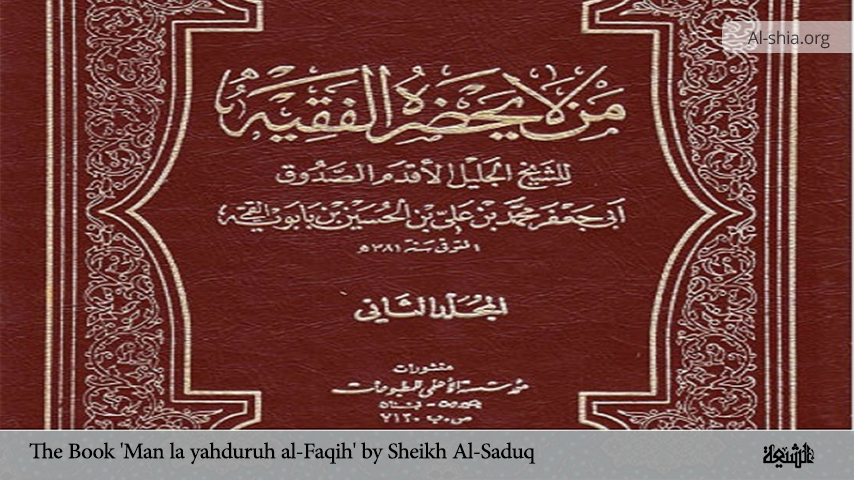
[18] . Ibn Babawayh, Man La Yahduruhu al-Faqih, p.25.
[19] . Ansari, Kitab al-Salah, vol.2, p.375.
[20] . Khomeini, Tawdih al-Masail, vol.1, p.811; Khomeini, Manasik al-Hajj, p. 485, 494.
References
- Ansari, Murtada, Kitab al-Salah, Qom, Congress for the Commemoration of Shaykh al-Azam Ansari, 1st edition, 1415 AH.
- Bahrani, Yusuf b. Ahmad, Al-Hadaiq al-Nadirah fi Ahkam al-Itrah al-Tahirah, Qom, Islamic Publications Office, 1st edition, 1405 AH.
- Hilli, Hasan b. Yusuf, Muntaha al-Matlab, Mashhad, Astanah-yi Ridawiyyah al-Muqaddasah, 1st edition, 1412 AH.
- Hilli, Hasan b. Yusuf, Tadhkirat al-Fuqaha, Qom, Al al-Bayt Foundation, 1st edition, 1414 AH.
- Hilli, Jafar b. Hasan, Sharai al-Islam fi Masail al-Halal wal-Haram, Qom, Ismailiyan Publications, 2nd edition, 1408 AH.
- Ibn Babawayh, Muhammad b. Ali, Man La Yahduruhu al-Faqih, Qom, Islamic Publishing Organization, 2nd edition, 1404 AH.
- Khomeini, Ruhullah, Al-Rasail, Qom, Ismailiyan Publications, 1st edition, 1410 AH.
- Khomeini, Ruhullah, Manasik al-Hajj (Annotated), Tehran, Nashr-i Mashar, 4th edition, 1416 AH.
- Khomeini, Ruhullah, Tahrir al-Wasilah, Tehran, Institute for the Compilation and Publication of the Works of Imam Khomeini, 3rd edition, 1392 SH.
- Khomeini, Ruhullah, Tawdih al-Masail (Annotated), Qom, Islamic Publications Office, 8th edition, 1424 AH.
- Najafi, Muhammad Hasan b. Baqir, Jawahir al-Kalam fi Sharh Sharai al-Islam, Beirut, Dar Ihya al-Turath al-Arabi, 7th edition, 1362 SH.
- Shahid al-Awwal, Muhammad b. Makki, Dhikra al-Shiah, Qom, Al al-Bayt Institution, 1st edition, 1377 SH.
- Shahid al-Thani, Zayn al-Din b. Ali, Rasail, Qom, Islamic Propagation Office of Qom Seminary, 1st edition, 1421 AH.
- Shahid al-Thani, Zayn al-Din b. Ali, Rawd al-Jinan fi Sharh Irshad al-Adhhan, Qom, Al al-Bayt Institution, 1st edition.
- Sistani, Sayyid Ali, Mulhaqat Manasik al-Hajj, Qom, Office of Grand Ayatollah Sistani, 1st edition, 1381 SH.
- Tusi, Muhammad, Al-Khilaf, Qom, Jamiat al-Mudarrisin, 1st edition, 1407 AH.
- Tusi, Muhammad, Al-Mabsut, Tehran, Al-Maktabah al-Murtadawiyyah, 3rd edition, 1387 SH.
- Tusi, Muhammad, Al-Nihayah fi Mujarrad al-Fiqh wal-Fatawa, Beirut, Dar al-Kitab al-Arabi, 1st edition, 1400 AH.
- Yazdi, Muhammad Kazim, Al-Urwat al-Wuthqa, Qom, Dawari Library, 1st edition, 1414 AH.
Source of the article | Adapted from:
Marviyan Husayni, Sayyid Mahdi, et al., Re-examining the Jurisprudential Ruling on Participating in the Congregational Prayer of Opponents and Following Them with a Special Focus on the View of Imam Khomeini, Fiqh wa Usul, Year 48, Issue 105, Summer 2016, p. 137–158.


![The Event of Ghadir and Imam al-Mahdi [afs]](https://en.al-shia.org/wp-content/uploads/2026/06/17221.jpg)