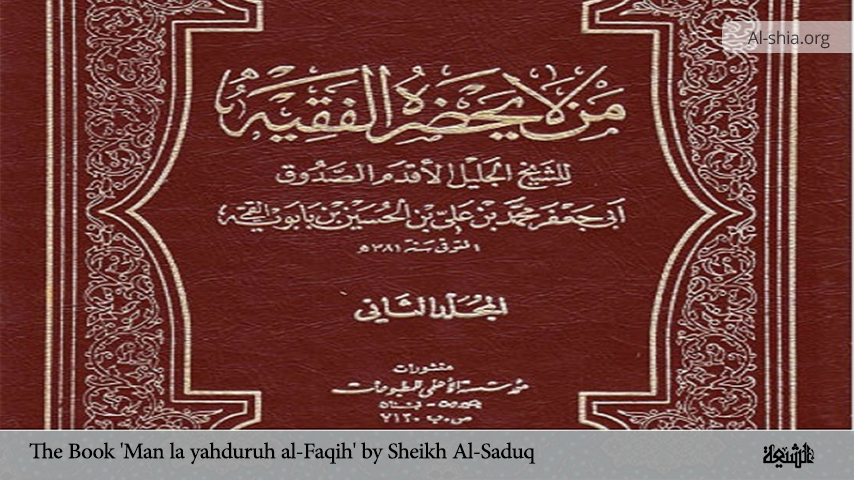




One of the prominent companions of Imam Baqir (AS) and Imam Sadiq (AS) was Jabir ibn Yazid Jaafi. He narrated many hadiths from these two great Imams. One of these narrations contains a collection of moral advices on various matters such as asceticism, repentance, sincerity, controlling one’s desires, and love for God, which Imam Baqir (AS) conveyed to him.[1]
In the following, we highlight some key points from this luminous hadith, which include five valuable recommendations for avoiding sin and undesirable traits, and three essential advices for earning reward and cultivating virtuous qualities.
1.Upholding Justice Despite Being Wronged
Imam Baqir (AS) said to Jabir: “If you are wronged, do not wrong others”. Undoubtedly, no person doubts that wrongdoing is evil and improper; therefore, advising someone not to commit injustice cannot be considered a unique piece of guidance. The essence of the Imam’s advice is not simply “do not wrong others” which is obvious. Rather, his guidance is that sometimes, beyond the usual motives that drive wrongdoers, social circumstances may arise that give a person additional reasons to commit injustice. In such situations, a person may feel compelled to act unjustly, not only due to personal desires or psychological motives but because of external pressures.
In these cases, a person must cultivate a special determination to refrain from wrongdoing. When someone wrongs a person, Satan may incite them, amplifying their impulses to retaliate. However, Islam instructs that even under these circumstances, one must not exceed the bounds of justice and commit injustice against others.
2. Preserving Integrity When Betrayed
Imam Baqir (AS) said to Jabir: “If you are betrayed, do not betray others”. Some people violate the trust placed in them, failing to return entrusted items to their rightful owners, denying responsibility, taking less than they should, or neglecting their duty to safeguard them. These are examples of betrayal.
The common context of betrayal often concerns trusts. The meaning of this narration, therefore, is that if others have betrayed you, for example, if you entrusted something to someone and they failed to return it or misused it, you must not act similarly toward others.
Sometimes, betrayal extends to any form of commitment. Two individuals or groups may have mutual obligations, and one party fails to fulfill them, betraying the commitment. This is not technically betrayal of a trust but rather of a pledge.
Both concepts, honoring trusts and fulfilling commitments, are fundamental values that uphold social life. Even those who follow no religion, ethical school, or philosophical guidance must observe these principles to maintain a functioning society.
Therefore, if someone breaks a promise or agreement, the other party has the right to disregard the prior arrangement, and this is not considered betrayal; however, it does not justify betraying others elsewhere. One must always remain vigilant against the Devil’s temptation and not use others’ betrayal as an excuse for one’s own.
3. Patience in the Face of Denial
Imam Baqir (AS) said to Jabir: “If you are denied or contradicted, do not become angry”. One factor that often leads to anger and injustice is being contradicted by others. Sometimes, a person speaks with the intention of helping, guiding, or correcting someone, aiming solely for good. Yet, the other person may falsely accuse the well-meaning individual of lying. Ordinary people often become upset in such situations, and this can lead to disputes or other inappropriate reactions.
A person who intends to do good for others should remind themselves: if I am contradicted, I must remain indifferent. I have fulfilled my duty, and the other person has their own responsibility, to accept or ignore the advice. In this mindset, one does not become angry in response to others’ wrongful behavior.
4. Humility in the Face of Praise
Imam Baqir (AS) said to Jabir: “If you are praised, do not become elated”. One of the great blessings God bestows upon humans is covering their faults. We all benefit from this blessing to some degree and should be grateful. However, the problem arises when this blessing leads to excessive self-regard, where a person desires to be seen as good by others despite their shortcomings.
They may even want credit for deeds they have not performed. This excessive self-love and concern for reputation is a blameworthy trait, which Imam Baqir (AS) addresses in this narration.
If one recognizes that God’s favor has concealed their faults and feels joy in God’s grace, showing gratitude for this blessing, such behavior is praiseworthy. But if a person’s pleasure comes solely from being liked by others, without acknowledging divine favor, this attitude is blameworthy in divine and monotheistic perspective.
5. Resilience When Spoken Ill Of
Imam Baqir (AS) said to Jabir: “If others speak ill of you, do not despair”. Imam Baqir (AS) elaborates on this advice: “If someone speaks ill of you, do not despair! Sit and consider whether their words are true or false. If you see the truth in them, you should not be upset. Being upset over the truth is displeasing to God. A person who is angered by truth holds no value in God’s sight. But if what they said is false, know that in response to such blame, you earn reward in your record of deeds. Therefore, there is no reason for distress.”
Regarding praise, one does not expect universal approval and does not claim a right to it. However, when it comes to blame, humans naturally do not want to be spoken ill of. Praise is not inherently problematic, especially if it serves to recognize truth or support righteousness. Praise becomes blameworthy when it is flattery or false.
As for blame, humans have the right to expect not to be disparaged, and naturally feel hurt if it occurs, particularly publicly. Insults, ridicule, criticism, gossip, and slander are all forbidden. The fifth advice emphasizes caution: do not let anger arise in response to criticism. Imam Baqir (AS) explains how to control anger in such situations.
Conclusion
This article highlighted five valuable moral advices from Imam Baqir (AS) to Jabir Jaafi. Imam Muhammad Baqir (AS) warned Jabir against injustice, betrayal, anger, delight in others’ praise, and distress over others’ criticism, guiding him toward a life of virtue and spiritual discipline.
Notes
[1]. Ibn Shubah, Tuhaf al-Uqul, p.284.
References
Ibn Shubah, Hasan ibn Ali, Tuhaf al-Uqul, Jamaat al-Mudarrisin fi al-Hawzah al-Ilmiyah bi-Qom, Islamic Publishing Institute, 1404 AH.
Source of the article | Adapted from:
Misbah Yazdi, Muhammad Taqi, and Mohit-e-Yazdkan, Muhammad Ali, A Sip from the Sea of Secret, pp. 29–87 (1st edition), Qom, Imam Khomeini Educational and Research Institute, 2014.






![The Event of Ghadir and Imam al-Mahdi [afs]](https://en.al-shia.org/wp-content/uploads/2026/06/17221.jpg)