

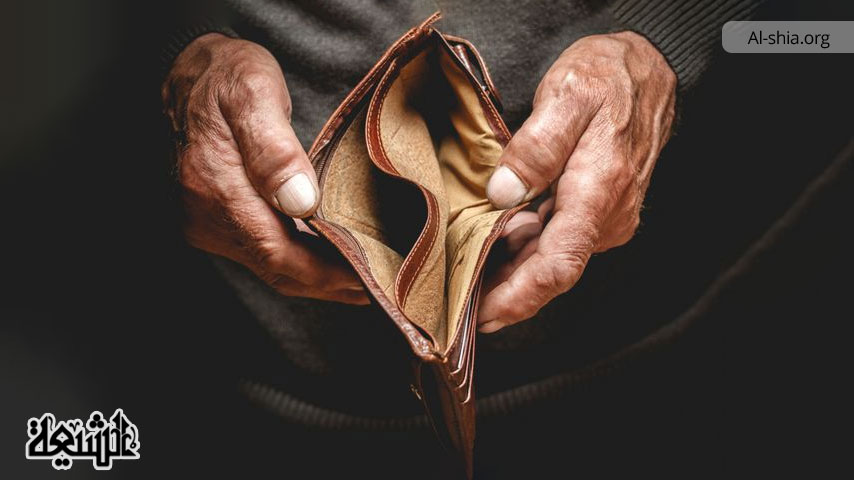

One of the major economic and livelihood challenges in today’s society is the heavy financial dependence of people on bank loans and facilities provided by banks and financial institutions. In this process, a borrower not only has to navigate the complex and difficult legal procedures to obtain a loan, but if they face financial hardship and cannot pay their installments on time, they also encounter challenges such as late payment penalties and enforcement of their collateral.
Regardless of the fact that any social system must have rules and regulations to prevent problems related to lending or borrowing, it should be noted that in Islam, assistance and support are recommended for debtors and those who genuinely face difficulties in repaying their debts. This article highlights some recommendations for helping debtors.
Paying the Debts of Debtors
One way to address the problem of debtors is to pay off their debts on their behalf. Imam Sadiq (AS) said: “Among the most beloved acts to Allah, the Exalted, is bringing joy to a believer: feeding them, relieving their hardship, or paying off their debt”.[1]
All three actions mentioned in this narration are specifically described as being directed toward a believer; however, in the words and practices of the Imams (AS), paying the debts of debtors is not limited to believers alone but applies to all Muslims.
According to the narration of Ziyad ibn Abi Sulaymah, Imam Kadhim (AS) permitted cooperating with the unjust Abbasid administration only to relieve the hardship of a believer, free them from slavery, or settle their debt.[2]
Guaranteeing Debts at the Time of Death
As we know, a person’s debt to others does not end with their death; it remains. Even martyrdom in the path of Allah does not absolve one’s debts. As Sadeer reports from Imam Baqir (AS): “Martyrdom in the way of Allah covers every sin except debt, which has no expiation except its payment, being settled by the debtor themselves, or being forgiven by the rightful claimant”.[3]
Fayz Kashani explains this hadith by saying that “being settled by the debtor themselves” means that someone else may settle it on their behalf. Allamah Majlisi, in his commentary, clarifies that their debtor, refers to their guardian, heir, Imam, or a charitable person.[4] Therefore, one instance in which a person’s debt can be guaranteed and paid is for the deceased, whose ability to settle it has ended.
A narration reports that Imam Sajjad (AS), upon the death of Abdullah ibn Hasan, took responsibility for all his debts. At that time, he did not have the financial means, but when his situation improved through agricultural income, he repaid them.[5]
In another narration by Fudayl and Ubayd from Imam Sadiq (AS), when Muhammad ibn Usamah (the grandson of the adopted son of the Prophet) was on his deathbed, the Banu Hashim approached him. He said: “You know my kinship and position with you, and I have a debt that I would like you to guarantee on my behalf”.
Imam Sajjad (AS) replied: “By Allah, one-third of your debt is on me”, then paused, and the group remained silent. Imam Sajjad then said: “All of your debt is on me”. He added: “Indeed, the only reason I did not guarantee it from the beginning was my dislike that people would say I preceded them in generosity”.[6]
Forgiving All or Part of a Debtor’s Debt
Another commendable act in this regard is reducing or forgiving a debtor’s debt. As a narration states: “Imam Hasan (AS) forgave a man’s debt”.[7]
Forgiving the Debt of a Deceased Person
Debt forgiveness can be applied in multiple ways, including forgiving a debtor who has passed away, especially when their remaining estate exceeds the amount owed. As Hasan ibn Khunis reports, he said to Imam Sadiq (AS): “Abd ibn Rahman ibn Sayabah has a claim against a man who has died. We discussed forgiving him, but he refused”.
Imam Sadiq (AS) said: “Woe to him! Does he not know that for every dirham he forgives, he gains ten dirhams, and if he does not forgive [and claims the money], he only has that one dirham for himself”.[8]
Forgiving the Dowry (Mahr)
The dowry (Mahr) is a sum or property that a husband commits to giving his wife in Islamic marriage and is considered her legal right. One way of helping debtors is the forgiveness of part of the dowry, which is regarded as an act of generosity and selflessness by the wife, either during the marriage or upon separation from her husband.
The Quran states:
وَ آتُوا النِّسَاءَ صَدُقَاتِهِنَّ نِحْلَةً فَإِنْ طِبْنَ لَكُمْ عَنْ شَیْءٍ مِنْهُ نَفْساً فَكُلُوهُ هَنیئاً مریئاً
“And Give women their dowries, handing it over to them; but if they remit anything of it of their own accord, then consume it as [something] lawful and wholesome”.[9]
Regarding forgiving the dowry at the time of divorce, the Quran says:
وَ إِنْ طَلَّقْتُمُوهُنَّ مِنْ قَبْلِ أَنْ تَمَسُّوهُنَّ وَ قَدْ فَرَضْتُمْ لَهُنَّ فَرِیضَةً فَنِصْفُ مَا فَرَضْتُمْ إِلَّا أَنْ یَعْفُونَ أَوْ یَعْفُوا الَّذِی بِیَدِهِ عُقْدَةُ النِّكَاحِ وَ أَنْ تَعْفُوا أَقْرَبُ لِلتَّقْوى وَ لَا تَنْسَوُا الْفَضْلَ بَیْنَكُمْ إِنَّ اللَّهَ بِمَا تَعْمَلُونَ بَصیر
“And if you divorce them before you touch them, and you have already settled a dowry for them, then [pay them] half of what you have settled, unless they forgo it, or someone in whose hand is the marriage tie forgoes it. And to forgo is nearer to Godwariness; so do not forget graciousness among yourselves. Indeed Allah watches what you do”.[10]
This means that the dowry is the right of the wife and is obligatory for the husband to pay; however, the wife may voluntarily forgive part or all of it.
Forgiving Compensation (Diyya)
Another form of helping debtors is the forgiveness of diyya. The Quran states:
وَ مَنْ قَتَلَ مُؤْمِناً خَطَأَ فَتَحْرِیرُ رقبه مُؤْمِنَةٍ وَ دِیَةٌ مُسَلَّمَةٌ إلى أَهْلِهِ إِلا أَنْ یَصَّدَّقُوا
“And anyone who kills a believer by mistake should set free a believing slave, and pay blood-money to his family, unless they remit it in charity”.[11]
Giving diyya as charity is considered an act of forgiveness and carries the reward of charity.
Easing the Burden on Debtors
One of the etiquettes of collecting debts is to be lenient with debtors when settling accounts, and to forgive part of their debt if possible. Some narrations mention this practice. Hammad ibn Uthman reports: “A man came to Imam Sadiq (AS) and complained about one of his companions. Before long, the man being complained about arrived, and Imam Sadiq asked him: What is wrong that he is complaining against you? He replied: He complains that I have taken my right in full. Imam Sadiq, visibly angry, said: It seems you have done wrong by taking it in full. Have you not seen what Allah, the Exalted, mentions in His Book that they fear the evil of accounting:
یَخَافُونَ سُوءَ الْحِسَابِ
“Those who are afraid of an adverse reckoning”[12]
Do you think they are afraid of oppressing Allah upon themselves? No! By Allah, they feared nothing but collecting it in full. So Allah called it the evil of account; thus, it is wrong to take everything in full”.[13]
Reducing the Amount or Extending the Time for Debts
Another form of helping debtors is to give those in financial difficulty more time to repay their debts, allowing them to pay without hardship. A narration from Imam Sadiq (AS) states: “One day, the Messenger of Allah (PBUH) went up to the pulpit, and after praising Allah and sending blessings upon His prophets, he said: O people, inform those absent among you: know that whoever gives respite to a debtor in difficulty, each day of leniency counts as charity from his wealth to Allah until it is repaid”.
Imam Sadiq (AS) then cited the Quranic verse:
وَإِنْ كَانَ ذُو عُسْرَةٍ فَنَظِرَةٌ إِلَىٰ مَيْسَرَةٍ وَأَنْ تَصَدَّقُوا خَيْرٌ لَكُمْ إِنْ كُنْتُمْ تَعْلَمُونَ
“If [the debtor] is in straits, let there be a respite until the time of ease; and if you remit [the debt] as charity, it will be better for you, should you know”.[14]
He explained the second part: “If you know that the debtor is poor, give from your wealth as charity; this is better for you”.[15]
This verse conveys two rulings:
- Granting respite to debtors in difficulty.
- Forgiving the debt as charity, which is better than the first one.
Abd al-Rahman ibn Abi Abdullah narrates from Imam Sadiq (AS): The Messenger of Allah (PBUH) said on a hot day, moving his hands: “Who wishes to be protected from the flames of Hell in the shade?” He repeated this three times, and the people answered each time: “We do, O Messenger of Allah”. He then said: “One who grants respite to a debtor or forgives someone in financial hardship”.
In another narration from Abu Basir, Imam Sadiq (AS) reports from the Messenger of Allah (PBUH): “Debt has three types:
- One who grants respite when collecting debts and pays promptly when indebted benefits and suffers no loss.
- One who collects fully when owed and pays fully when indebted neither gains nor loses.
- One who collects fully when owed but delays repayment when indebted suffers loss and gains nothing”.[16]
Teaching Proper Methods of Collecting Debt
It is also reported that the Ahl al-Bayt (AS), alongside financial or verbal assistance to debtors, taught the correct methods of debt collection without conflict. A man said to Imam Sadiq (AS): “I am owed money by some descendants of Hasan, but I cannot collect it, and words arose between us, and I fear further disputes will distress me”.
Imam Sadiq (AS) said: “The way to get your right is not by causing a scene. Instead, when you go to him, sit for a long time and say nothing”. The man replied: “I only did this briefly, and I recovered my money”.[17]
Conclusion
In Islam, debtors and those who genuinely face difficulty in repaying their debts are advised to be helped and supported. The Quran and Hadith provide various methods for supporting debtors in cases of inability to repay, including paying their debts, guaranteeing the debt of someone at the time of death, forgiving all or part of the debt (in cases such as dowry or diyya and even upon the debtor’s death), as well as easing repayment through leniency in time and reduction of amounts owed.
Notes
[1] . Kulayni, Al-Kafi, vol.2, p.192, Hadith 16.
[2] . Kulayni, Al-Kafi, vol.5, p.109, Hadith 1.
[3] . Kulayni, Al-Kafi, vol.5, p.94.
[4] . Majlisi, Mirat al-Uqul, vol.19, p.45.
[5] . Kulayni, Al-Kafi, vol.5, p.97, Hadith 7.
[6] . Kulayni, Al-Kafi, vol.8, p.332, Hadith 514.
[7] . Bukhari, Sahih al-Bukhari, vol.2, p.918.
[8] . Kulayni, Al-Kafi, vol.4, p.36, Hadith 1.
[9] . Al-Nisa:4.
[10] . Al-Baqarah:237.
[11] . Al-Nisa:92.
[12] . Al-Rad:21.
[13] . Kulayni, Al-Kafi, vol.5, pp. 100–101, Hadith 1.
[14] . Al-Baqarah:280.
[15] . Kulayni, Al-Kafi, vol.4, pp. 35–36, Hadith 4.
[16] . Kulayni, Al-Kafi, vol.5, pp. 97–98, Hadith 9.
[17] . Kulayni, Al-Kafi, vol.5, p.101, Hadith 2.
References
- The Holy Quran.
- Bukhari, Muhammad ibn Ismail. Sahih al-Bukhari, 2nd edition, Cairo: Research and Publication, Supreme Council for Islamic Affairs, 1410 AH.
- Fayz Kashani, Muhammad Mohsen ibn Shah Morteza. Al-Wafi, vol.1, Isfahan: Imam Amir al-Muminin Ali Library, 1406 AH.
- Kulayni, Muhammad ibn Yaqub. Al-Kafi (Dar al-Hadith edition), edited by Dar al-Hadith, vol.1, Qom: Dar al-Hadith, 1429 AH.
- Majlisi, Muhammad Baqir ibn Muhammad Taqi. Mirat al-Uqul fi Sharh Akhbar Ahl al-Rasul, edited by Sayyid Hashem Rasouli Mahallati, vol. 2, Tehran: Dar al-Kitab al-Islami, 1404 AH.
Source of the article | Adapted from: Daliri, Kazem. An Introduction to the Style of Generosity: Principles and Rules of Charity in the Ethical System of Islam. Research Institute of Islamic Sciences and Teachings.


![The Event of Ghadir and Imam al-Mahdi [afs]](https://en.al-shia.org/wp-content/uploads/2026/06/17221.jpg)