
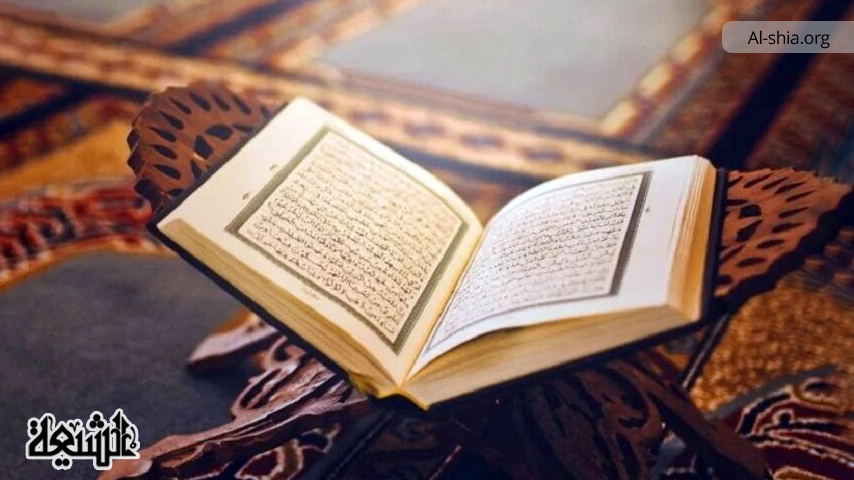

The Holy Quran is the luminous Word of God and a lamp of guidance for humanity. Among the invaluable teachings of the noble religion of Islam, the status of the Quran is so exalted that Imam Ali (AS), in Nahj al-Balagha, refers to it as an unparalleled companion and intimate friend.
Companionship with the Quran does not merely mean reciting its verses; rather, it includes understanding, reflection, and acting upon its teachings. Such companionship with the Quran brings about remarkable effects and abundant blessings in both individual and social life, which we will examine in detail below from the perspective of Nahj al-Balagha.
From the viewpoint of Nahj al-Balagha and based on the statements of the Amir al-Muminin, Imam Ali (AS), companionship with the Holy Quran bestows countless benefits and blessings upon human beings. These benefits, which are clearly explained in Sermon 176 of Nahj al-Balagha, can be summarized into several main categories:
1. Flawless Guidance and Direction
a) Being a sincere counselor, a true guide, and a truthful speaker
Imam Ali (AS) describes the Quran with three fundamental qualities that guarantee its complete and error-free guidance.
“A sincere counselor who never deceives”[1]:
The attribute nasih (sincere counselor) applied to the Quran is a metaphor for its pure and untainted goodwill. The Quran is like an adviser who guides its follower toward all kinds of benefits and goodness and never misleads or betrays. This educational quality of the Quran provides reassurance that a person who follows the path of guidance will remain safe from any form of treachery or deviation.[2]
“A guide who never leads astray”[3]:
The Quran is a guide that never causes misguidance. This attribute emphasizes that the Quran’s guidance is absolute and free from error, leading human beings to their ultimate goal.
“A speaker who never lies”[4]:
The Quran is a spokesman who never speaks falsehood. The description of the Quran as a muhaddith (speaker) is a metaphor indicating its absolute truthfulness. Like a truthful narrator, the Quran contains accurate reports and true accounts from which understanding and knowledge are gained.
This dimension of the Quran grants human beings historical and intellectual insight and prevents them from falling into the traps of illusions and superstitions.[5] Therefore, companionship with the Quran assures a person that they are walking upon a sound and flawless path.
b) Increase in guidance and decrease in misguidance
The impact of companionship with the Quran is inevitable. Imam Ali (AS) states: “No one sits beside this Quran except that when they rise from it, they rise with either an increase or a decrease: an increase in guidance or a decrease in blindness and ignorance”.[6]
What is meant by companionship with the Quran includes associating with its memorizers and reciters, listening to its verses, and, most importantly, reflecting and contemplating upon them.
As Lahiji and Ibn Maytham explain, the Quran contains clear verses and warning prohibitions that increase the insight of one who seeks awareness and understanding, and reduce the blindness of ignorance and the darkness of unawareness.[7],[8]
Anyone who accompanies the Quran either gains an increase in guidance, through reflection, taking admonition, and acquiring knowledge, or experiences a reduction in the darkness of ignorance and misguidance.
However, if a person neither reflects nor takes admonition, it is as though they are mocking it, and they gain nothing but an increase in misguidance and blindness from the path of truth.[9] This gradual growth in insight and awareness is the natural outcome of companionship with the Quran and demonstrates that the Quran continually draws human beings toward perfection.
2. Self-Sufficiency with the Quran and Poverty without It
“Know that no one possesses the Quran and yet suffers poverty and destitution, and no one is without it and yet enjoys richness and self-sufficiency”.[10]
This statement reveals the profound influence of the Quran on life. As Ibn Maytham and Lahiji point out, it means that after the revelation of the Quran and its clear exposition, people are in no need of any other rule or instruction for rectifying the affairs of their worldly life and their Hereafter.[11],[12]
The Quran is the most comprehensive and complete guide for human life, and whoever understands it and acts upon it becomes independent of every other guide and mentor.
By “poverty without the Quran” it is meant that before the revelation of the Quran, there was no true self-sufficiency from divine guidance for misguided and ignorant souls.[13] This poverty is not merely material; more importantly, it is spiritual and intellectual poverty.
A society that acts upon the teachings of the Quran not only advances in spiritual and moral matters but can also achieve self-reliance and independence in material dimensions. Distance from the Quran leads individuals and societies into weakness and confusion, while companionship with the Quran is the key to overcoming these problems.
3. Healing of Illnesses and Resolution of Problems
a) Curing pains and overcoming hardships
Imam Ali (AS) regards the Quran as the primary remedy for the inner diseases of human beings and says: “Seek healing from the Quran for your illnesses, and seek its help to overcome hardships and difficulties; for within the Quran is the cure for the most severe diseases, namely disbelief, hypocrisy, ignorance, and misguidance”.[14]
What is meant by these pains is the illness of ignorance, which includes:
- Disbelief (kufr): One of the greatest diseases arising from ignorance, consisting of blindness of the heart and the inability of the intellect to recognize its Creator.
- Hypocrisy (nifaq): Double-faced behavior accompanied by lying and betrayal, and counted among the moral diseases of the soul.
- Deviation (ghayy / ghawayah): Wandering and misguidance that stem from neglect in acquiring the praiseworthy quality of wisdom.
- Misguidance (dalalah): The result of deviating from the path of moderation and the straight path.[15]
These illnesses are the root causes of many individual and social problems, and the Quran, through its light of faith, sincerity, knowledge, and insight, eliminates them. Mughniyah likewise classifies these pains into “intellectual illnesses” (such as ignorance, blind imitation, and superstition) and “moral illnesses” (such as lying and betrayal).[16]
This healing power of the Quran is in harmony with the statement of the Prophet Muhammad (AS), who said that the rust of hearts is removed through the recitation of the Quran and remembrance of death.[17]
Companionship with the Quran grants human beings the strength to overcome their greatest spiritual and intellectual challenges and to seek its help when confronting social problems and corrupt conditions.
b) A spring for the thirst of scholars and the springtime of hearts
In another description, Imam Ali (AS) describes the Quran as “a means to quench the thirst of scholars, the springtime of the hearts of the wise, and the straight path of the righteous; a remedy after which no illness remains, and a light with which no darkness coexists”.[18]
This statement further emphasizes the healing and illuminating role of the Quran. For people of knowledge, the Quran is an inexhaustible source of learning, and for yearning hearts, it is a fountain of life and vitality. This means that companionship with the Quran penetrates the depths of human existence and transforms it.
4. A Means of Nearness to God and the Criterion of Truth
a) The Best Means of Drawing Near to God
Imam Ali (AS) states: “Therefore, ask God for whatever you seek through the Quran, and turn toward God through love of the Quran. Never use it as a means to ask anything from His creatures; for servants have not drawn near to God through anything like it”.[19]
The Quran is the best way to draw closer to God. What is meant by asking God through the Quran is to adorn and prepare one’s soul with the perfections contained within it, so that one’s supplications may be answered by God. This means that prayer and seeking one’s needs should be grounded in acting upon the teachings of the Quran and maintaining companionship with it.[20]
- “Turn toward God through love of the Quran”: That is, turn toward God with affection for the Quran and friendship with it. For whoever loves the Quran adorns and perfects themselves with what it commands, and in this way turns toward God in a worthy and virtuous manner.[21] This ethical dimension places sincere intention at the heart of companionship with the Quran.
- “Never use it as a means to ask anything from His creatures”: That is, do not make learning or reciting the Quran a means of earning one’s livelihood from other people like oneself. Mughniyah likewise emphasizes that the recitation of the Quran should not be used as a pretext for trade or income.[22]
- “Nothing turns people toward God like the Quran”: This is because the Holy Quran encompasses all forms of knowledge and the perfections of the soul; it contains all noble moral virtues and lofty human qualities, and it forbids all ugliness and corruption that lead to human ruin.[23] For this reason, “the best remembrance (speech) is the Quran; through the Quran hearts are expanded and inner selves are illuminated”.[24]
b) The Criterion for Evaluating Opinions and Desires of the Self
Imam Ali (AS), regarding the role of the Quran as the ultimate criterion for assessing beliefs and actions, presents a profound educational approach: “Know your Lord through the Quran, admonish yourselves by it, accuse your own opinions before it, and consider your selfish desires to be false in its presence”.
- Make the Quran a present and guiding proof on your path toward your Lord. The Quran is the primary guide for knowing God, His attributes, and the ways of drawing near to Him.[25]
- In the face of the commanding self (nafs al-ammarah), which draws a person toward sin and veils the heart’s eye from perceiving realities, make the Quran your sincere counselor and guide, and use it as a means to restrain this rebellious self. Mughniyah also emphasizes that no counsel should be accepted except that which comes from the Quran and from those firmly grounded in knowledge and action upon it.[26]
- If you encounter an opinion that contradicts the Quran, accuse it of falsehood, for it arises from the commanding self. This is an important ethical and epistemological principle that compels a person to remain humble before the divine Word and to align their judgments with it, rather than the reverse.[27]
- That is, regard your selfish desires as false, deceptive, and tainted with trickery when placed before the Quran. Ibn Maytham explains that hawa (the desire of the commanding self) operates without recourse to reason, and if a person is prohibited by the judgment of the Quran from following it, such desire becomes clear deception and delusion.[28] This instruction prevents blind obedience to personal inclinations.
The Quran is “a commander who restrains, and a silence that speaks. It is God’s proof against His creation; He took from them a covenant concerning [acting upon] the Quran and held their souls in pledge to it”.[29]
5. Intercession and Ultimate Felicity
a) An Accepted Intercessor on the Day of Resurrection
Imam Ali (AS) says regarding the role of the Quran on the Day of Resurrection: “Know that the Quran is an intercessor whose intercession is accepted, and a speaker whose words are affirmed. Whoever the Quran intercedes for on the Day of Resurrection will have that intercession accepted, and whoever the Quran complains against on that Day, its testimony against them will be accepted”.[30] This great promise is the true reward of companionship with the Quran.
The Quran is an intercessor whose intercession is accepted by God. Ibn Maytham explains the appropriateness of this metaphor by stating that reflection upon the verses of the Quran and acting upon its rulings removes the ugly effects that appear on the soul as a result of committing sins.
The removal of these blemishes from the heart leads to the erasure of God’s wrath, and this is akin to the act of an intercessor whose intercession is accepted and who succeeds in removing the effect of wrongdoing from the heart of the one for whom intercession is made. This demonstrates the transformative power of the Quran in purifying the soul and preparing it to receive divine mercy.
The Quran is a speaker whose words are accepted and affirmed, because, like a truthful speaker, it contains words that, once uttered, cannot be denied.
For those who acted upon the Quran in this world and made it their guide, the Quran will intercede on the Day of Resurrection, and its intercession will be accepted. But for those who turned away from it by refusing to follow and by opposing its rulings and verses, the Quran will testify against them before God in the language of their state, and that testimony will be accepted. This dimension of the Quran highlights human responsibility toward the divine Word.[31]
b) The Only Truly Fruitful Yield in the Field of This World Is Companionship with the Quran
In a beautiful analogy, Imam Ali (AS) likens this world to a field in which everyone sows seeds and later reaps their harvest. He says: “For on the Day of Resurrection, a caller will proclaim: Be aware! Today everyone is held by the seed they have sown and is bound by the outcome of their deeds, except those who sowed the seed of the Quran. So be among the sowers of the Quran and its followers”.[32]
The Imam (AS) emphasizes that only the seed of companionship with the Quran and acting upon it yields an abundant harvest and leads to salvation in the Hereafter. By harth or zara (cultivation), what is meant is any action from which benefit is sought and fruit is obtained.
Those who cultivate the Quran are people who make acting upon it the field of their Hereafter and who strive to understand its meanings and purposes as a means of completing and purifying their souls.
Such individuals will be safeguarded from punishments and torments.[33] All other seeds, even if they appear beneficial outwardly, ultimately lead to loss and regret. This call is an educational invitation to choose the path of eternal felicity.
Conclusion
From the perspective of Nahj al-Balagha, companionship with the Quran is a unique opportunity for human growth, guidance, and felicity in both this world and the Hereafter. The Quran is a truthful guide, a healer of pains, a means of drawing near to God, and a guarantor of intercession on the Day of Resurrection.
This heavenly Book is an absolute criterion for distinguishing truth from falsehood and a savior from ignorance and misguidance. Therefore, it is incumbent upon every Muslim, with a deep understanding of the importance of this divine Book, to embark upon the path of companionship with the Quran and, through reflection and acting upon its teachings, to benefit from its countless blessings.
Notes
[1] . Sharif al-Radi, Nahj al-Balagha, Sermon 176.
[2] . Mohammadi, Translation of Ibn Maytham’s Commentary, Sermon 176.
[3] . Sharif al-Radi, Nahj al-Balagha, Sermon 176.
[4] . Sharif al-Radi, Nahj al-Balagha, Sermon 176.
[5] . Mohammadi, Translation of Ibn Maytham’s Commentary, Sermon 176.
[6] . Sharif al-Radi, Nahj al-Balagha, Sermon 176.
[7] . Lahiji, Lahiji’s Commentary on Nahj al-Balagha, Sermon 176.
[8] . Mohammadi, Translation of Ibn Maytham’s Commentary, Sermon 176.
[9] . Lahiji, Lahiji’s Commentary on Nahj al-Balagha, Sermon 176.
[10] . Sharif al-Radi, Nahj al-Balagha, Sermon 176.
[11] . Mohammadi, Translation of Ibn Maytham’s Commentary, Sermon 176.
[12] . Lahiji, Lahiji’s Commentary on Nahj al-Balagha, Sermon 176.
[13] . Mohammadi, Translation of Ibn Maytham’s Commentary, Sermon 176.
[14] . Sharif al-Radi, Nahj al-Balagha, Sermon 176.
[15] . Mohammadi, Translation of Ibn Maytham’s Commentary, Sermon 176.
[16] . Mughniyah, Fi Zilal Nahj al-Balagha, under Sermon 176.
[17] . Mohammadi, Translation of Ibn Maytham’s Commentary, Sermon 176.
[18] . Sharif al-Radi, Nahj al-Balagha, Sermon 176.
[19] . Sharif al-Radi, Nahj al-Balagha, Sermon 176.
[20] . Mohammadi, Translation of Ibn Maytham’s Commentary, Sermon 176.
[21] . Mohammadi, Translation of Ibn Maytham’s Commentary, Sermon 176.
[22] . Mughniyah, Fi Zilal Nahj al-Balagha, under Sermon 176.
[23] . Mohammadi, Translation of Ibn Maytham’s Commentary, Sermon 176.
[24] . Amidi, Ghurar al-Hikam, Hadith 3255.
[25] . Mohammadi, Translation of Ibn Maytham’s Commentary, Sermon 176.
[26] . Mughniyah, Fi Zilal Nahj al-Balagha, under Sermon 176.
[27] . Mohammadi, Translation of Ibn Maytham’s Commentary, Sermon 176.
[28] . Mohammadi, Translation of Ibn Maytham’s Commentary, Sermon 176.
[29] . Sharif al-Radi, Nahj al-Balagha, Sermon 183.
[30] . Sharif al-Radi, Nahj al-Balagha, Sermon 176.
[31] . Mohammadi, Translation of Ibn Maytham’s Commentary, Sermon 176.
[32] . Sharif al-Radi, Nahj al-Balagha, Sermon 176.
[33] . Mohammadi, Translation of Ibn Maytham’s Commentary, Sermon 176.
References
- The Holy Quran.
- Amidi, Abd al-Wahid ibn Muhammad, Ghurar al-Hikam wa Durar al-Kalim, Qom, Dar al-Kitab al-Islami, 1410 AH.
- Ibn Maytham al-Bahrani, Ibn Maytham’s Commentary on Nahj al-Balagha (Persian translation), trans. QorbanAli Mohammadi Moqaddam and Ali Asghar Navai, Mashhad, Majma al-Buhuth al-Islamiyyah, 1417 AH.
- Lahiji, Muhammad Baqir, Lahiji’s Commentary on Nahj al-Balagha, Tehran, Muassasah-yi Nashr-e Mirath-e Maktub, 1379 SH.
- Mughniyah, Muhammad Jawad, Fi Zilal Nahj al-Balaghah, Beirut, Dar al-Ilm lil-Malayin, 1979 CE.
- Sharif al-Radi, Muhammad ibn al-Husayn, Nahj al-Balagha, Qom, Dar al-Hijrah, 1414 AH.
Source of the article | Adapted from:
- Ibn Maytham al-Baghrani, Translation of Ibn Maytham’s Commentary on Nahj al-Balagha, under Sermon 176.
- Lahiji, Muhammad Baqir, Lahiji’s Commentary on Nahj al-Balagha, under Sermon 176.
- Makarim Shirazi, Naser, The Message of Imam Amir al-Muminin (AS), vol.6, pp. 554–562.




![The Event of Ghadir and Imam al-Mahdi [afs]](https://en.al-shia.org/wp-content/uploads/2026/06/17221.jpg)