



All human beings, to some extent, are familiar with the emotional state of anger and have experienced it many times in their lives. Psychologists define anger as a kind of emotional reaction that usually manifests when a person responds to the inappropriate or improper behavior of others. Sometimes anger is a brief feeling of annoyance or irritation, and sometimes it becomes intense rage that may remain for years as resentment in human relationships.
Anger is a kind of feeling that constantly shifts between two states; it may arise from a slight irritation, or in its acute form, turn into an outburst of madness. When you become angry, the physiological effects of anger appear in your body: your heart rate and blood pressure rise, and the secretion of hormones increases.
Aggression and harsh reaction are instinctive behaviors that most of us display when we get angry. Anger is a natural reaction to threats and dangers, allowing us to defend ourselves in critical situations. Therefore, anger and rage are essential and unavoidable for the survival and stability of human beings.
Causes of Anger
Anger can be caused by external events or internal changes. You may be upset with a specific person whose behavior has angered you. Thinking and worrying about everyday problems, or recalling past events that once bothered you, are also among the factors that can provoke your anger.
Sacred Anger
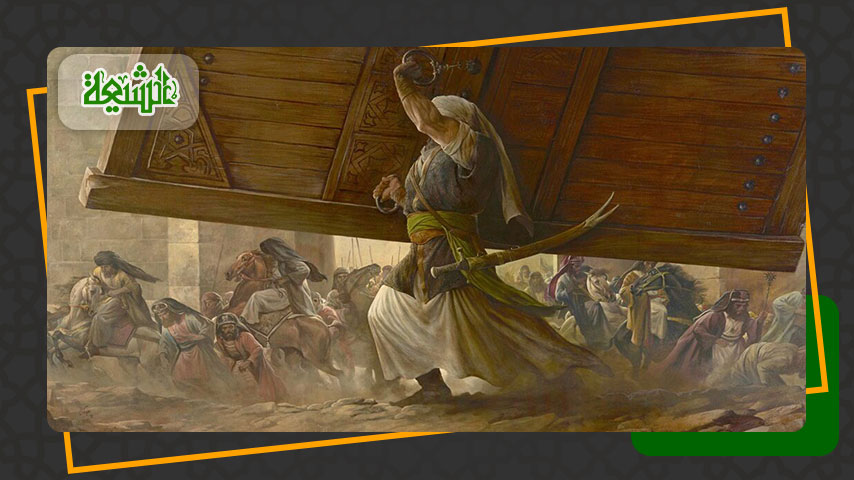
If a Muslim were devoid of the power of anger and wrath, or if they did not use it in the path of human and divine purposes, how could they stand against the enemies of truth? Imam Ali (AS) says in this regard: “He who clenches his teeth in anger for the sake of God will overcome the most obstinate of falsehood”.[1]
God holds great value for those who become angry for His sake and are enraged when they see falsehood. It is narrated that Prophet Musa (AS) said: “O Lord! Who are those of Your servants who will be shaded under Your Throne on the day when there is no shade but Yours?” God replied: “They are those who, whenever My prohibitions are violated, become angry like a wounded leopard”.[2]
The feeling of anger, like any other human feeling, attains its true worth only when it is for the sake of God. If we use this emotion for other than God, our action will certainly bring punishment.
If we look at the lives of the great religious figures, we find that they used anger only in defense of truth and justice. Imam Ali (AS) said: “The Prophet of God never became angry for worldly matters; but whenever his anger was aroused for the sake of truth, he recognized no one and nothing could restrain his anger until he had taken the right’s due”.[3]
When Abu Dharr was exiled to the barren desert of Rabadhah, Imam Ali (AS) said to him during the farewell: “O Abu Dharr! You became angry for the sake of God, so place your hope in Him for whom you were angered. These people feared you for their worldly interests, and you feared them for your religion. So, leave to them the world for which they feared you, and flee from them with your religion for which you were afraid …”.[4]
Blameworthy Anger
Anger must be expressed for God’s sake and within the limits of moderation; otherwise, it is considered reprehensible and condemned. Such anger may be directed toward a friend, family member, or anyone else, but in every case, it has been criticized by our religious leaders.
In a letter to Harith al-Hamdani, one of his companions and a great jurist, Imam Ali (AS) wrote: “Beware of anger, for it is the great army of Satan”.[5]
All human instincts can become a field for Satan’s influence, who strikes through each of them under certain conditions. Anger is one of these states through which Satan darkens human relationships. If we are not alert in controlling it, Satan will certainly achieve his evil goals.
Imam Ali (AS), in warning Harith al-Hamdani and all his followers throughout time, cautions them to be wary of Satanic whispers in social relations and not to hand over their hearts to the army of Satan.
Unjustified anger is a Satanic trait and a form of madness. Imam Ali (AS) always faced people with an open and smiling face and avoided any harshness or violence towards the people under her rule. In a letter to Abdullah ibn Abbas when appointing him governor of Basra, he wrote:
“I warn you against anger, for anger begins with madness and is one of Satan’s motives”.[6]
Thus, gentleness and avoidance of violence were among the moral and political virtues of Imam Ali (AS). He also said elsewhere: “Harshness is a kind of madness; its possessor regrets it. If he does not regret it, his madness is fixed”.[7]
A person in a state of anger is like a manifestation of hellfire, if they do not restrain themselves, the flames will spread outward, and on the Day of Judgment, they will burn with that same fire. The sound of an angry person’s breathing and groaning is the sound of hell’s fury. According to narrations, “Among the times when Satan is closest to man is when he is angry”.
Therefore, while under the influence of anger, which is within Satan’s domain, we should not make a decision or take an action, because both are satanic. We must always keep in mind this principle: In anger, no decision, no action![8]
Roots of Anger and Its Remedies
For curing anger, both scholars of ethics and psychiatrists have mentioned theoretical and practical remedies.
The theoretical remedy is to reflect upon the evils of anger, it can lead to violation of others’ honor, even to murder or the humiliation of the innocent. It gives rise to resentment, envy, and other vices, each of which is enough to destroy a person.
The practical remedy is to divert oneself at the very onset of anger; Because fire can be easily controlled in the early stages. Before the flame grows, one should distract oneself, by leaving the place, changing posture (if sitting, stand; if standing, sit), or engaging in the remembrance of God. Some scholars have even deemed the remembrance of God obligatory in times of anger.
For a deeper cure, one must search for the roots of anger and fight them. Sometimes its root lies in vanity, pride, arrogance, obstinacy, or jesting, but the main two causes are:
- Love of Self (Hubb al-Nafs): Love of self gives rise to the love of wealth, status, honor, and power, which in turn fuels the fire of anger. A person who values such things excessively becomes enraged even at the slightest threat to them and loses control of themselves.
But if their attachment to these things is weak, they remain calm and composed. The peace and serenity that come from abandoning the love of worldly power and fame prevent the soul from straying from justice, and the person endures hardships with patience. Once the love of the world is uprooted from the heart, all vices depart, and virtues take their place. - Ignorance: Another point is that a person, due to ignorance and lack of understanding, may regard anger and the corrupt behaviors that arise from it, which are among the greatest evils and vices, as virtues, and count them among his own admirable traits. Some misguided individuals consider such behavior a sign of bravery, courage, and nobility, boasting about themselves and saying, “We did such and such,” while confusing true courage, which is one of the greatest qualities of believers, with these ugly and blameworthy traits.
The Difference Between Anger and Courage
Ayatollah Makarim Shirazi writes about the difference between anger and courage: “The source of courage is the strength and calmness of the soul, moderation, faith, and indifference toward the ups and downs of worldly life. But anger arises from weakness of soul, feeble faith, imbalance of temperament, love of the world, and fear of losing worldly pleasures.
A furious person, in the height of anger, behaves like a madman, losing control like a wild beast, attacking without thought for consequences or the judgment of reason, committing ugly and shameful acts. He loses control over his tongue, hands, and limbs, and distorts his face so hideously that if a mirror were handed to him, he would feel ashamed of his appearance.
Some even become angry with inanimate things, with the air, the ground, the snow, the rain, and other natural events. If things do not go their way, they curse and destroy objects like pens, books, cups, or dishes.
But the courageous person acts oppositely in all these situations. His actions are guided by reason and composure. He becomes angry at the right time and shows forbearance at the right time. Nothing easily provokes him, and when he does get angry, he does not lose control. He takes revenge with discernment and reason, knowing from whom to take revenge, to what extent, and how, and whom to forgive and pardon. In short, he acts in a way that leaves no regret”.[9]
An angry person imagines that through anger, they have achieved dignity, but this dignity cannot be compared to the humiliation of regret and apology that follows.
Conclusion
Anger is an instinctive state that may arise from internal factors, such as distress from painful memories, or external ones, like threats and dangers. Anger may be sacred, for the sake of God, or blameworthy, for the sake of selfishness, worldly desires, or pride. It can be controlled and treated through theoretical reflection and practical effort. Its main roots are love of self and ignorance. Anger is fundamentally different from courage.
Notes
[1] . Sharif al-Radi, Nahj al-Balagha, Saying 174.
[2] . Hurr al-Amili, Wasail al-Shiah, vol.11, p.416.
[3] . Fayz Kashani, Al-Mahajjah al-Bayda, vol.5, p.303.
[4] . Sharif al-Radi, Nahj al-Balagha, Sermon 130.
[5] . Sharif al-Radi, Nahj al-Balagha, Letter 69.
[6] . Sharif al-Radi, Nahj al-Balagha, Letter 76.
[7] . Sharif al-Radi, Nahj al-Balagha, Saying 255.
[8] . Sharif al-Radi, Nahj al-Balagha, Saying 255.
[9] . Makarim Shirazi, Islamic Ethics in Nahj al-Balagha, vol.2, p.407.
References
- Fayd Kashani, Mulla Muhammad Muḥsin. Al-Mahajja al-Bayda fi Tahdhib al-Iḥya. Edited and annotated by Ali Akbar Ghafari. Qom: Islamic Publications Office, 2nd ed., 1383 Sh.
- Hurr al-Amili, Muhammad ibn al-Hasan. Tafsil Wasail al-Shia ila Tahsil Masail al-Sharia. Qom: Al al-Bayt (AS) Foundation, 1409 A.H.
- Makarem Shirazi, Naser. Islamic Ethics in Nahj al-Balagha (The Sermon of the Pious). Compiled and arranged by Ali Akbar Khadim al-Zakirin. Qom: Nasl-e Javan Publications, 1st ed., 1385 Sh.
- Sayyid al-Radi. Nahj al-Balagha. Edited by Ṣubhi Salih. Qom: Dar al-Hijra, 1414 A.H.
Source of the article | Adapted from:
Seyahat Esfandiyari, Abedin, Applied Ethics with an Emphasis on Nahj al-Balagha, Qom, Qaseem Publications. 1395 Sh.


![The Event of Ghadir and Imam al-Mahdi [afs]](https://en.al-shia.org/wp-content/uploads/2026/06/17221.jpg)