

The status of women in Islam is grounded in dignity, spiritual worth, justice, and responsibility. The Qur’an and the teachings of the Ahl al-Bayt (a.s.) emphasise honouring women, protecting their rights, and recognising their important roles in family and society.
This article examines the status of women through selected teachings and narrations associated with the Ahl al-Bayt (a.s.), with particular attention to women’s spiritual dignity, their status as daughters, wives and mothers, their intellectual and social roles, their economic rights, and the lessons that contemporary Muslim families can draw from these teachings.
The Multifaceted Status of Women in the Narrations of Ahl al-Bayt (a.s.)
The status of women in the narrations of Ahl al-Bayt is therefore multidimensional. These narrations emphasise dignity, spiritual worth, family rights, education, moral responsibility, social contribution, and protection from injustice. They reject attitudes that regard women as inferior human beings or merely as objects of economic or social value.
1. The Spiritual Status and Honour of Women
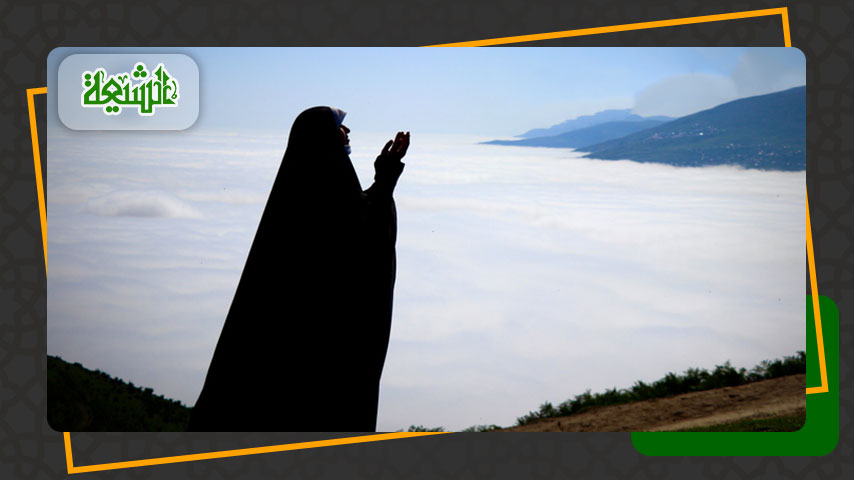
The most fundamental aspect of the status of women in the narrations of Ahl al-Bayt is their spiritual dignity. Women are not presented simply as dependent members of society. She is a servant of Allah who possesses the capacity for faith, worship, moral excellence, knowledge, and spiritual perfection.
The narrations of the Ahl al-Bayt (a.s.) also demonstrate the spiritual status of women by presenting care for daughters and female relatives as a means of attaining divine reward. Imam Ja’far al-Ṣādiq (a.s.) associated supporting daughters and sisters with entry into Paradise[1], while he (a.s.) also described such responsibility as a means of protection from the Fire[2]. Another narration portrays the birth of a daughter as an occasion for divine assistance, stating that the person who spends on her is aided by Allah[3].
These narrations show that caring for women, particularly daughters and vulnerable female relatives, is not merely a social or familial obligation; it can become an act of worship with profound spiritual consequences. Thus, the spiritual status of women is reflected not only in her own relationship with Allah but also in the spiritual significance Islam gives to honouring, supporting, and protecting her.
In this regard, the status of women is consequently connected with the moral quality of the men around them. A father cannot claim to be following the teachings of Islam while regarding the birth of a daughter as a misfortune. Likewise, a husband cannot claim to have excellent character while humiliating, abusing, or treating his wife unjustly.
Thus, the status of women cannot be reduced to their physical appearance, marital position, or economic usefulness. The spiritual dimension of womanhood is central to Islamic teaching. A woman can attain a high rank before Allah through faith and righteous action just as a man can.
2. Daughters as a Divine Blessing
One of the clearest examples of the status of women appears in the narrations concerning daughters. This teaching is particularly significant when considered against the historical practice of female infanticide and the cultural prejudice against daughters in pre-Islamic Arabia[4].
The narrations of the Ahl al-Bayt (a.s.) emphasise the importance of treating women with kindness, care, respect, and good character[5]. Although some narrations specifically discuss daughters and female relatives, they reflect a broader Islamic ethic of valuing and honouring women within the family.
Imam Ja’far al-Ṣādiq (a.s.) is reported to have said: “Daughters are a blessing and beloved by Allah, and sons are a mercy. Allah grants His mercy to whomever He wills.”[6] The description of daughters as a divine blessing has profound implications for the status of women. A daughter is not an economic burden or a social liability, but a blessing from Allah.
Another narration transmitted from Imam al-Ṣādiq (a.s.) reports that when a man is blessed with a daughter, Allah, the Mighty and Majestic, sends an angel to care for her, signifying her vulnerability and emphasising that whoever provides for her will receive divine assistance[7].
These narrations strongly emphasise the honour of daughters, the virtue of supporting them, and the significant spiritual reward associated with their care. They convey an important moral lesson for parents: the birth of a daughter should be met with gratitude rather than disappointment. Parents should provide their daughters with love, education, protection, religious guidance, and opportunities to develop their abilities and talents in accordance with Islamic values.
The status of women begins to be respected in the family from childhood. A society cannot genuinely honour women if girls are raised with the belief that they are less valuable than boys.
3. The Woman as a Wife
Marriage is another important area in which the status of women is expressed. Islamic teachings do not present marriage simply as an arrangement in which a woman becomes the property or servant of her husband. Marriage involves rights, responsibilities, companionship, affection, and mutual support.
The Ahl al-Bayt (a.s.) emphasise kindness, affection, and bringing happiness to one’s wife. Imam al-Riḍa (a.s.) narrates from the Messenger of Allah (s) that Allah, the Blessed and Exalted, is more compassionate toward females than males, and that whoever brings joy to a woman with whom he has a lawful relationship will be rewarded by Allah with joy on the Day of Resurrection[8]. This narration highlights the spiritual value of treating one’s wife with affection, consideration, and kindness and presents bringing happiness to her as a deed worthy of divine reward.
The status of women within marriage is therefore connected with dignity and security. A wife is entitled to be treated with respect rather than humiliation. Her husband has responsibilities toward her, including financial support and protection. Imam al-Ṣādiq (a.s.) is reported to have emphasised the husband’s responsibility for providing support and security for his wife[9].
4. The Woman as a Mother
Motherhood occupies a particularly honoured position in Islamic teachings. The Qur’an repeatedly reminds believers of the sacrifices of parents, especially the mother who carries a child through weakness upon weakness[10].
The Ahl al-Bayt (a.s.) also emphasise the elevated status of women in their role as mothers. In a narration transmitted from Imam al-Bāqir (a.s.), Prophet Moses (a.s.) repeatedly asks Allah for guidance concerning whom he should honour, and Allah repeatedly directs him to his mother before mentioning his father. The narration concludes by stating that the mother is entitled to two-thirds of filial kindness, while the father is entitled to one-third[11].
This emphasis reflects the exceptional position accorded to mothers and highlights the profound moral and spiritual significance of motherhood in Islamic teachings. It also demonstrates that a woman’s status is not diminished by her role within the family; rather, motherhood is presented as a position deserving of exceptional honour, care, and devotion.
The status of a woman as a mother is therefore connected with sacrifice and spiritual value. Pregnancy, childbirth, breastfeeding, and raising children involve physical, emotional, and intellectual effort. Islamic teachings call upon children to recognise these sacrifices rather than taking them for granted.
5. Women’s Right to Knowledge and Intellectual Development
The status of women in the teachings of Ahl al-Bayt also includes intellectual development. Islam does not portray women as incapable of learning or understanding religion. Knowledge is presented as an important means of spiritual development and social progress.
Imam al-Ṣādiq (a.s.) describes knowledge as the foundation of every noble state and the means of attaining every lofty rank. He further cites the Prophet (PBUHH), who states that seeking knowledge is an obligation upon every Muslim man and Muslim woman, particularly knowledge of piety and certainty[12]. By explicitly including women in this obligation, the narration demonstrates the status of women as active participants in the pursuit of knowledge and spiritual development. It affirms that women are entitled to acquire knowledge, develop their intellectual capacities, strengthen their faith, and attain higher levels of moral and spiritual excellence.
The status of woman therefore includes the right and responsibility to learn. A Muslim woman should be encouraged to study the Qur’an, Islamic beliefs, jurisprudence, ethics, history, and other beneficial fields of knowledge.
The Ahl al-Bayt tradition itself contains examples of knowledgeable women. Lady Fatimah az-Zahra (s.a.) demonstrated remarkable knowledge and eloquence, while Lady Zaynab (s.a.) displayed intellectual strength and exceptional eloquence in the aftermath of Karbala. Their lives show that Islamic spirituality and intellectual excellence are not restricted to men.
6. Women and Social Participation
The status of women in Islam extends beyond the private sphere. The Qur’an describes believing men and women as supporters and allies of one another who encourage what is right and discourage what is wrong[13].
The Ahl al-Bayt tradition similarly presents women as capable of meaningful participation in religious and social life[14]. Women’s contribution must be consistent with Islamic principles of dignity, morality, and modesty, but these principles do not require women to become socially invisible.
Lady Fatimah al-Zahra (a.s.) represents a woman who was deeply engaged with matters of truth, justice, religion, and society. In describing her political and social qualities, Sayyid Ali Khamenei has highlighted her as an outstanding model for women committed to religion and social causes[15].
Lady Zaynab (s.a.) likewise provides perhaps one of the clearest examples. After the tragedy of Karbala, she played a crucial role in preserving and communicating the message of the event. Her courage, eloquence, patience, and defence of truth demonstrate the potential of women to contribute decisively to the moral life of the Muslim community.
The status of women therefore includes responsible social participation. Muslim women can contribute through education, religious teaching, charitable activities, community service, intellectual work, and other lawful forms of social engagement.
7. Economic Rights and Financial Independence
Another important dimension of the status of women is her economic position. The Qur’an grants women recognised rights concerning wealth[16], inheritance[17], and dowry[18]. These provisions strengthen the status of women by recognising them as persons with legitimate economic interests. Financial rights provide security and reinforce personal dignity.
One of the most important principles in Islamic teachings is that a person’s property remains legally his or her property[19] unless a valid transfer of ownership takes place. Thus, a wife does not lose ownership of her wealth merely because she marries. Similarly, the husband does not become the owner of his wife’s mahr, salary, inheritance, gifts, or personal property merely by virtue of being her husband.
The status of women in Islamic teachings includes recognition of their independent economic rights, while maintaining distinct financial responsibilities within the family. These economic rights should not be understood as requiring the complete elimination of distinctions in marital financial obligations. Rather, the status of women is reflected in the principle that her lawful property remains exclusively hers, while the husband bears his own financial responsibilities toward the family within marriage.
8. Protection of Women’s Honour and Rights
The status of women also requires protection from injustice. Islamic teachings strongly condemn oppression and command believers to uphold justice[20]. Justice is likewise a general Islamic obligation, requiring believers to stand firmly for justice even when it conflicts with their own interests[21].
The teachings of the Ahl al-Bayt (a.s.) therefore present kindness and good treatment toward women as an important aspect of Islamic family life and moral conduct.
Consequently, violence, humiliation, exploitation, and deliberate deprivation of legitimate rights are incompatible with the moral spirit of these teachings. The status of women cannot be genuinely honoured in a family where a woman is constantly insulted or treated as an object without dignity.
Protecting women also requires protecting girls from abuse, forced exploitation, ignorance, and discriminatory treatment. The family is the first institution responsible for establishing this protection.
The Exemplary Women of the Ahl al-Bayt
The most convincing way to understand the status of women is not merely to examine theoretical statements but also to consider the women whom Islamic tradition presents as models of excellence.
Lady Fatimah az-Zahra (a.s.) represents a comprehensive model of womanhood. Her life combined worship, knowledge, family responsibility, patience, courage, generosity, and defence of truth[22]. Her relationship with the Prophet (PBUHH), Imam Ali (a.s.), and her children demonstrates the importance of family, while her intellectual and social contributions demonstrate that a woman’s significance is not confined to domestic life.
Lady Zaynab (s.a.) represents another dimension of the status of women. Her role after Karbala illustrates courage under extreme circumstances. She preserved the message of truth and confronted oppression with extraordinary eloquence and patience.
These examples are important because they prevent a narrow understanding of Muslim womanhood. The status of women allows her to be deeply spiritual while intellectually active, devoted to her family while contributing to society, and modest while demonstrating courage and speaking firmly against injustice.
The status of women in the Ahl al-Bayt tradition is therefore best understood through the combination of spiritual excellence, family responsibility, knowledge, courage, and service.
Lessons for Contemporary Muslim Families
The status of women in the narrations of the Ahl al-Bayt (a.s.) has important practical relevance for contemporary Muslim families. Daughters should be welcomed as blessings and raised with love, education, and confidence. Husbands should recognise that kindness, respect, financial responsibility, and emotional support are essential aspects of good character and marriage. Mothers should be honoured for their sacrifices, while children should be taught to respect and care for their parents, especially their mothers.
Women should also be encouraged to pursue beneficial knowledge and contribute positively to family and society while observing Islamic values. The examples of Lady Fatimah az-Zahra (a.s.) and Lady Zaynab (s.a.) demonstrate the capacity of women to contribute to religion, knowledge, justice, and community life. At the same time, cultural practices that contradict Islamic teachings should not be confused with Islam itself.
Ultimately, the status of women in the teachings of the Ahl al-Bayt (a.s.) is grounded in dignity, spiritual responsibility, compassion, justice, and respect. Women are presented as daughters, wives, mothers, believers, learners, educators, and contributors to society, with their rights and responsibilities protected within an Islamic moral framework.
Conclusion
The narrations of the Ahl al-Bayt (a.s.) present a comprehensive and dignified understanding of the status of women. Women are honoured as believers and spiritually responsible individuals, while their roles as daughters, wives, and mothers are given special value. Their right to knowledge, intellectual development, social participation, economic independence, and protection of their dignity and rights is also recognised within an Islamic moral framework.
The exemplary women of the Ahl al-Bayt (a.s.), particularly Lady Fatimah az-Zahra (a.s.) and Lady Zaynab (s.a.), demonstrate that the status of women encompasses spiritual excellence, knowledge, courage, family responsibility, and service to society.
These teachings provide enduring guidance for contemporary Muslim families: daughters should be valued, wives treated with kindness and respect, mothers honoured, and women supported in their legitimate pursuit of knowledge and constructive participation in society. Thus, the teachings of the Ahl al-Bayt (a.s.) affirm the dignity, rights, responsibilities, and meaningful contribution of women within family and society.
Notes:
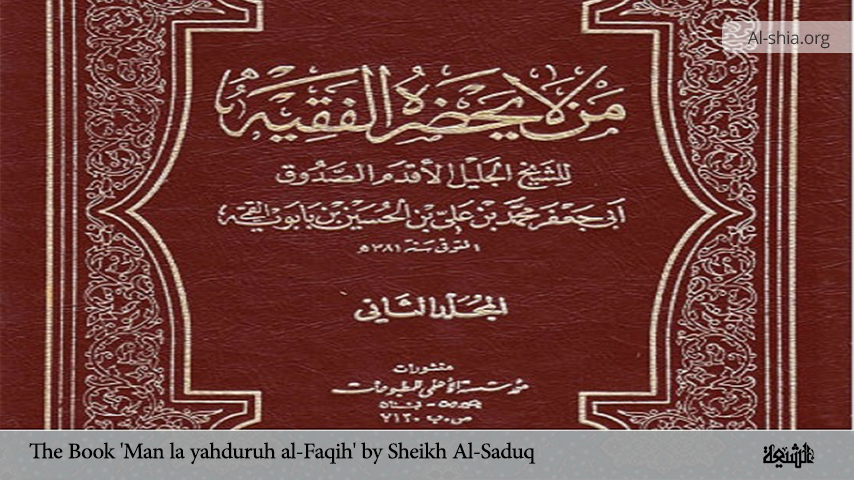
[1] . Ibn Bābawayh, Man Lā Yaḥḍuruhu al-Faqīh, vol. 3, p. 482, hadith 4698.
[2] . Ḥurr al-ʿĀmilī, Wasāʾil al-Shīʿah, vol. 21, p. 362, hadith 5.
[3] . Ibn Bābawayh, Man Lā Yaḥḍuruhu al-Faqīh, vol. 3, p. 482, hadith 4700.
[4] . The Qur’an condemns the pre-Islamic practice of burying infant girls alive, emphasising the victim’s innocence and holding the perpetrators accountable (Qur’an 81:8–9).
[5] . Ḥurr al-ʿĀmilī, Wasāʾil al-Shīʿah, vol. 21, p. 362, hadith 5; Ibn Bābawayh, Man Lā Yaḥḍuruhu al-Faqīh, vol. 3, p. 482, hadith 4698.
[6] . Majlisi, Biḥār al-Anwār, vol. 101, p. 90, hadith 3; Ibn Bābawayh, Man Lā Yaḥḍuruhu al-Faqīh, vol. 3, p. 481, hadith 4692.
[7] . Ibn Bābawayh, Man Lā Yaḥḍuruhu al-Faqīh, vol. 3, p. 482, hadith 4700.
[8] . Kulaynī, al-Kāfī, vol. 6, p. 6, hadith 7.
[9] . Ibid., vol. 5, p. 511, hadith 5.
[10] . Qur’an 31:14.
[11] . Nūrī, Mustadrak al-Wasāʾil, vol. 15, p. 181, hadith 17934.
[12] . Imam al-Ṣādiq, Miṣbāḥ al-Sharīʿah, p. 13.
[13] . Qur’an 9:71.
[14] . Ṭūsī, Tahdhīb al-Aḥkām, vol. 3, p. 333, hadith 69.
[15] . See: Khamenei, “Lady Fatima (PBUH): An Outstanding Figure in Social & Political Spheres”: https://B2n.ir/r55070
[16] . Qur’an 4:32.
[17] . Qur’an 4:7.
[18] . Qur’an 4:4.
[19] . See: Ṭabāṭabāī, Al-Mizan fi Tafsir al-Qur’an, vol. 4, pp. 337-338.
[20] . Qur’an 4:19.
[21] . Qur’an 4:135.
[22] . Majlisi, Biḥār al-Anwār, vol. 8, p. 22.
References
Holy Qur’an (English translation: Qarai, Ali Quli (2005). The Qur’an: With a Phrase-by-Phrase English Translation. 2nd ed. London: Islamic College for Advanced Studies (ICAS) Press.
- Ḥurr al-ʿĀmilī, Muḥammad ibn al-Ḥasan. (1988). Tafṣīl Wasāʾil al-Shīʿah ilā Taḥṣīl Masāʾil al-Sharīʿah. 1st ed. Qom: Muʾassasat Āl al-Bayt (a.s.).
- Ibn Bābawayh, Muḥammad ibn ʿAli. (1991). Man Lā Yaḥḍuruhu al-Faqīh. Edited by ʿAli Akbar Ghaffārī. 2nd ed. Qom: Islamic Publications Office Affiliated to Jāmiʿat al-Mudarrisīn.
- Jaʿfar ibn Muḥammad [Imam al-Ṣādiq] (1979). Miṣbāḥ al-Sharīʿah. 1st ed. Beirut: Muʾassasat al-Aʿlamī li-l-Maṭbūʿāt.
- Khamenei, Sayyed Ali. (1990). Lady Fatima (PBUH): An outstanding figure in Social & Political Spheres. Online Source: https://B2n.ir/r55070 (Accessed on October 27, 2024)
- Kulaynī, Muḥammad ibn Yaʿqūb. (1986). al-Kāfī. 4th ed. Edited by ʿAli Akbar Ghaffārī and Muḥammad Ākhūndī. Tehran: Dār al-Kutub al-Islāmiyyah.
- Majlisi, Muḥammad Bāqir. (1982). Biḥār al-Anwār. 2nd ed. Beirut: Dar Ihyaʾ al-Turath al-ʿArabi.
- Nūrī, Ḥusayn ibn Muḥammad Taqī. (1987). Mustadrak al-Wasāʾil ilā Taḥṣīl Masāʾil al-Sharīʿah. Qom: Āl al-Bayt Institute.
- Ṭabāṭabāī, Muḥammad Husayn. (1970). Al-Mizan fi Tafsir al-Qur’an. 2nd ed. Beirut: Mu’asassat al-A’lami li al-Matbou’aat.
- Ṭūsī, Muḥammad ibn al-Ḥasan. (1986). Tahdhīb al-Aḥkām. Edited by Ḥasan al-Mūsawī al-Khurasān. 4th ed. Tehran: Dār al-Kutub al-Islāmiyyah.