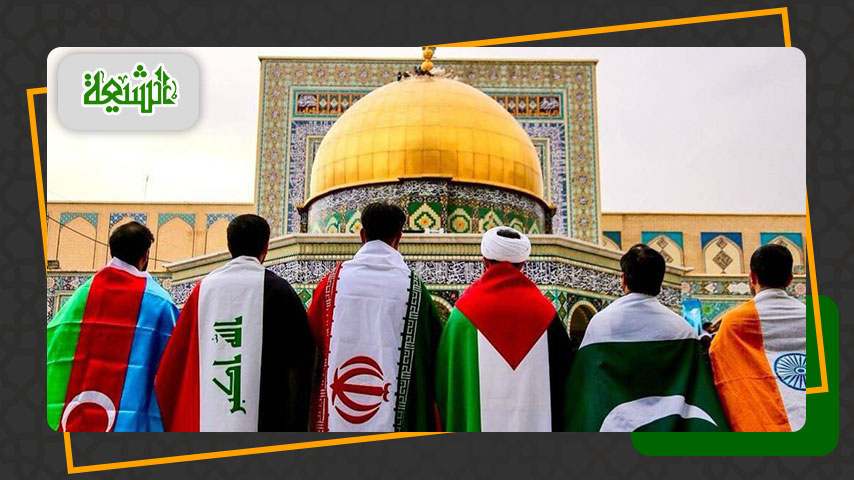


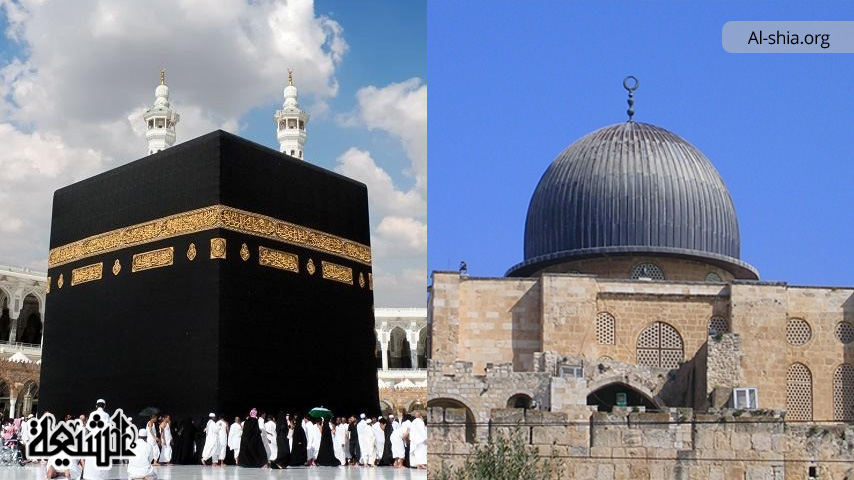

The change of Qiblah from Bayt al-Maqdis in Jerusalem toward the Kaʿbah in Makkah was a significant event in the early history of Islam and an important stage in the formation of the Muslim community. By divine command[1], Muslims were instructed to turn toward al-Masjid al-Ḥarām, making the change of Qiblah more than a change in the physical direction of prayer. It demonstrated obedience to divine revelation, strengthened Muslim religious identity, connected Islamic worship with the legacy of Prophet Ibrahim (Abraham), and tested believers’ sincerity and submission. Its lessons remain relevant to Muslims today, particularly regarding faith, unity, spiritual discipline, and willingness to follow divine guidance.
The objective of this article is to examine the historical and Qur’anic significance of the change of Qiblah and highlight its principal spiritual, communal, and practical lessons for Muslims in contemporary society.
Understanding the Qiblah and Its Importance
The word Qiblah refers to the direction towards the Kaʿbah in Mecca[2], which Muslims turn when performing prayers or slaughtering animals [3]. In Islamic worship, facing the Qiblah is not merely a matter of physical orientation. It gives the daily prayers of Muslims throughout the world a common direction and visibly expresses the unity of the Muslim community.
The Kaʿbah occupies a unique position in Islamic faith. The Qur’an identifies it as the first house established for humanity for worship and describes it as blessed and a source of guidance for the worlds[4]. Its association with Prophet Ibrahim and his son Ismail is also emphasised in the Qur’an. They raised the foundations of the House and prayed that Allah would accept their work[5].
The Qiblah therefore connects Muslim ritual prayer with the tradition of monotheism represented by Prophet Ibrahim. The physical direction is important because Allah commanded Muslims to face it, but the Kaʿbah itself is not worshipped. Muslims worship Allah alone. The building serves as a divinely designated focal point for worship and communal unity.
This distinction is important for understanding the change of Qiblah. The significance of the event does not arise from the physical properties of one location over another. Rather, its religious significance comes from divine command.
The main principle here is that we, as servants, should submit to His command, and whatever direction He appoints for prayer, that direction is sacred and respected, and prayer should be performed facing it. Without His commission, no place has excellence or preference in its own essence[6].
The First Qiblah and the Change Toward the Kaʿbah
According to historical sources, during his stay in Mecca and for a period after the Hijrah, the Prophet of Islam prayed facing Bayt al-Maqdis (Jerusalem) in accordance with God’s command[7].
The Prophet of Islam (PBUHH), under divine direction, prayed facing Jerusalem for thirteen years in Mecca after proclaiming his mission and then, also, for several months in Medina after his migration[8].
However, after a few months in Medina, the Jews began to object and ridicule the Muslims, saying, “You pray facing our qiblah, Bayt al-Maqdis; therefore, you are following us and merely imitating us, without an independent identity of your own.”[9]
The Noble Prophet was deeply distressed by these remarks. He is reported to have desired a Qiblah associated specifically with the Kaʿbah and to have looked toward the heavens while awaiting divine instruction: “We certainly see you turning your face about in the sky. We will surely turn you to a qiblah of your liking: so, turn your face towards the Holy Mosque…”[10]
In the explanation of the verse, Qaraʾatī reiterates that this verse indicates that the Prophet (PBUHH) was eagerly awaiting and longing for the revelation concerning the change of Qiblah (direction of prayer). This change of Qiblah from Bayt al-Maqdis to the Kaʿbah was a promise that God had made to His Prophet (PBUHH). However, when supplicating, the Prophet would look toward the heavens without saying anything until the verse was revealed, instructing the Noble Messenger (PBUHH) and all Muslims to turn toward al-Masjid al-Ḥarām and the Kaʿbah when performing acts of worship[11].
According to reports preserved in Islamic historical and hadith literature, the command concerning the change of Qiblah was communicated during a congregational prayer in Madinah. According to a widely transmitted account, the Prophet was performing the noon prayer when the revelation commanding the change of Qiblah toward the Kaʿbah was revealed. After completing two rakʿahs, the Holy Prophet and the congregation turned toward Makkah and completed the prayer facing the new Qiblah[12].
The mosque associated with this event became known as Masjid Dhū al-Qiblatayn (the Mosque of the Two Qiblahs)[13]. Other historical reports also describe Muslims in different mosques receiving the news during prayer and turning toward the Kaʿbah.
Meanwhile, there is disagreement among sources regarding the date of the change of Qiblah. Some sources identify 15 Sha’ban as the date of the change of Qiblah[14], while others give the middle of Rajab as the day of the change of Qiblah[15]. However, the disagreement over the precise date does not affect the central religious significance of the event.
Why Did Allah Command the Change of Qiblah?
The change of Qiblah from Bayt al-Maqdis (Jerusalem) toward the Kaʿbah was not merely a change in the physical direction of prayer. It was an event carrying profound lessons about divine wisdom, obedience, religious identity, faith, and guidance. The Qur’an presents the command within a series of verses[16] addressing the believers’ relationship with Allah and His Messenger.
- Divine Wisdom and Obedience: The first lesson of the change of Qiblah is that the direction of worship is determined by divine command rather than by the inherent excellence of a particular geographical direction. When people questioned why the Muslims had changed their former qiblah, the Qur’an responded: “Say, ‘To Allah belong the east and the west. He guides whomever He wishes to a straight path.’”[17].
According to Makārim Shīrāzī, this was a clear and decisive response to those seeking excuses: Bayt al-Maqdis, the Kaʿbah, and every place belong to God. Indeed, God has neither a house nor a physical abode. What truly matters is submission to His command. Wherever God commands people to face in prayer is sacred and honoured, and no place possesses inherent sanctity or nobility without His grace and favour [18].
Thus, the change of Qiblah teaches Muslims that obedience to Allah takes precedence over personal preference. The believer does not worship the direction itself; rather, he or she worships Allah and follows the direction He has appointed.
- Testing Obedience and Sincerity: The Qur’an explicitly connects the change of Qiblah with a test. The change of Qiblah had been established as a means of distinguishing those who followed the Messenger from those who would turn back: “We did not appoint the qiblah you were following, but that We may ascertain those who follow the Apostle from those who turn back on their heels”[19]. The verse therefore places obedience at the heart of the event.
In reality, the change of Qiblah represents different stages of testing and spiritual development, each constituting an instance of divine guidance. It is He who guides human beings toward the straight path[20].
- Establishing Muslim Religious Identity: The change of Qiblah also established a distinctive orientation for the Muslim community. The necessity of distancing the Muslims from the Jews of that time, when there was little hope of their embracing Islam, appeared unavoidable. The change of Qiblah was one manifestation of distancing and separation from the Jews[21].
The new qiblah therefore became an important symbol of the community’s independent religious identity. This did not mean rejecting the earlier prophets or the sacred history associated with Jerusalem. Rather, it established that Muslim worship is ultimately governed by the revelation given to Prophet Muhammad (PBUHH).
- Connection with Prophet Ibrahim (a.s): The Kaʿbah also connects the change of Qiblah with the Abrahamic foundation of Islamic worship. The Qur’an identifies the Sacred House as a place associated with Prophet Ibrahim (a.s.) and Prophet Ismaʿil (a.s.), who prayed for divine acceptance of their work and for guidance for their descendants[22]. The subsequent command to face al-Masjid al-Ḥarām therefore places the Muslim qiblah within this broader Abrahamic framework.
Thus, the change of Qiblah connected the Muslim community to the monotheistic legacy of Prophet Ibrahim (a.s.) while giving it a distinct religious orientation.
- Divine Guidance Rather Than Human Preference: Finally, the change of Qiblah illustrates a fundamental principle of Islamic guidance: religious obligations are determined by Allah rather than by human preference. Qur’an 2:148 directs believers away from prolonged disputes concerning directions and toward righteous action: “Everyone has a cynosure to which he turns; so, take the lead in all good works.”
Therefore, the change of Qiblah should not be understood simply as a historical alteration in the direction of prayer. It was a divinely ordained event that tested obedience, affirmed the authority of revelation, strengthened the distinct identity of the Muslim community, connected Islam with the legacy of Ibrahim (a.s.), and taught believers to respond to divine guidance with submission and action.
Major Lessons from the Change of Qiblah
The change of Qiblah from Bayt al-Maqdis to the Kaʿbah was more than a historical change in the direction of prayer. Although the historical event took place more than fourteen centuries ago, its lessons remain relevant to Muslims today. Meanwhile, the following are among the major lessons that Muslims can derive from this significant event:
- Willingness to Change When Truth Becomes Clear: The change of Qiblah demonstrates that a believer must be prepared to change direction when authentic divine guidance requires it.
This principle also applies to personal conduct. If a Muslim discovers that a habit, attitude, or practice contradicts Islamic teachings, faith requires the courage and sincerity to recognise the error and correct it.
- Never Confuse Tradition with Revelation: People naturally become attached to familiar customs and practices. Islam, however, teaches Muslims to evaluate beliefs and practices in light of revelation and sound religious knowledge.
The change of the Qiblah demonstrates that an established practice can be changed by divine command. Muslims should therefore respect inherited traditions without automatically treating every tradition as a religious obligation. Cultural customs may have value, but they should not be given the authority of revelation.
- Maintain Muslim Unity: The Qiblah provides one of the clearest symbols of Muslim unity. Wherever Muslims live, they turn toward the same sacred centre in prayer.
This shared direction should remind believers to focus on their common religious foundations and avoid allowing secondary differences to become sources of permanent hostility and division.
- Strengthen Inner Faith: The event demonstrates that religious practice is intended to cultivate submission, sincerity, and obedience to Allah. Muslims should therefore ask whether their acts of worship are having a meaningful effect on their character.
Thus, the change of Qiblah teaches Muslims to align both body and heart with Allah. The body faces the Kaʿbah, while the heart should remain devoted to Allah through faith, obedience, sincerity, and righteous action.
- Never Fear Social Pressure: The Qur’anic passage concerning the change of the Qiblah repeatedly directs Muslims not to allow the reactions of others to divert them from divine guidance. The Qur’an concludes this discussion with the expression: “So do not fear them, but fear Me.”[23]
This does not mean that Muslims should respond arrogantly or disrespectfully to others. Rather, it means that social approval should not become the ultimate standard for determining religious truth.
A Muslim may listen respectfully to criticism and engage in constructive dialogue while remaining committed to what has been established through reliable revelation and sound religious scholarship.
Conclusion
The change of the Qiblah was far more than a change in the direction of prayer. It was a significant moment in the development of the Muslim community, emphasising obedience to Allah, submission to divine guidance, and the importance of sincere faith. The movement from the first Qiblah toward the Kaʿbah established a distinctive direction for Muslim worship while reaffirming the sacred status of the House of Allah.
The change of Qiblah also carried profound spiritual and practical lessons. It taught believers to accept divine guidance even when it requires leaving behind familiar practices, to distinguish revelation from inherited customs, and to remain steadfast despite social pressure. At the same time, the Qiblah became a powerful symbol of Muslim unity, bringing believers together in a common act of worship regardless of their geographical or cultural differences.
For Muslims today, the change of Qiblah remains a reminder that genuine faith requires both outward obedience and inward transformation. Facing the Kaʿbah in prayer should encourage believers to face Allah with sincerity, strengthen their commitment to righteousness, and allow their worship to shape their character and conduct. The enduring message of this event is therefore not merely about where Muslims turn in prayer, but about whom they obey, what guides their lives, and how faithfully they translate their faith into action.
Notes:
[1] . Qur’an 2:144.
[2] . al-Sistani, Islamic Laws, p. 519 (Glossary).
[3] . Ibid., p. 149, Ruling 763.
[4] . Qur’an 3:96
[5] . Qur’an 2:127.
[6] . Faqīh Imānī, An Enlightening Commentary into the Light of the Holy Qur’an, vol. 14, p. 89.
[7] . Pishvāyī, Tārīkh Islam, p. 220.
[8] . Faqīh Imānī, An Enlightening Commentary into the Light of the Holy Qur’an, vol. 1, p. 408.
[9] . Pishvāyī, Tārīkh Islam, p. 220.
[10] . Qur’an 2:144
[11] . Qaraʾatī, Tafsīr-e Nūr, vol. 1, p. 222.
[12] . Ibn Bābawayh, Man Lā Yaḥḍuruhu al-Faqīh, vol. 1, p. 275.
[13] . Rezaei, Tafsīr-i Qurʾān-i Mehr, vol. 2, p. 29.
[14] . Ṭabarī, Tārīkh al-Ṭabarī, vol. 2, p. 416; Balādhurī, Ansāb al-Ashrāf, vol. 1, p. 246.
[15] . Ibn Saʿd, al-Ṭabaqāt al-Kubrā, vol. 1, p. 186.
[16] . Qur’an 2:142–150.
[17]. Qur’an 2:142.
[18] . Makārim Shīrāzī, Tafsīr-e Nemūneh, vol. 1, p. 481.
[19] . Qur’an 2:143.
[20] . Makārim Shīrāzī, Tafsīr-e Nemūneh, vol. 1, p. 481.
[21] . Ṣubḥānī, Jaʿfar, Furūgh-i Abadiyyat, p. 470.
[22] . Qur’an 2:125–129.
[23] . Qur’an 2:150.
References
Holy Qur’an (English translation: Qarai, Ali Quli (2005). The Qur’an: With a Phrase-by-Phrase English Translation (2nd edition). London: Islamic College for Advanced Studies (ICAS) Press.
- Balādhurī, Aḥmad ibn Yaḥyā. (1996). Ansāb al-Ashrāf. Beirut: Dār al-Fikr.
- Faqīh Imānī, Sayyid Kamal et al. (1997). An Enlightening Commentary into the Holy Qur’an. 1st ed. Translated by Sayyid Abbas Sadr-‘Ameli. Isfahan: Imam Ali Library and Research Centre.
- Ibn Bābawayh, Muḥammad ibn ʿAli. (1992). Man Lā Yaḥḍuruhu al-Faqīh. 2nd ed. Edited by ʿAli Akbar Ghaffārī. Qom: Islamic Publications Office Affiliated to Jāmiʿah-yi Mudarrisīn.
- Ibn Saʿd, Muḥammad ibn Saʿd. (1997). al-Ṭabaqāt al-Kubrā. 2nd ed. Beirut: Dār al-Kutub al-ʿIlmiyyah.
- Makārim Shīrāzī, Nāṣir, et al. (1995). Tafsīr-e Nemūneh. 10th ed. Tehran: Dār al-Kutub al-Islāmiyyah.
- Pishvāyī, Mahdi. (1390). Tārīkh Islam: Az Jāhiliyyat tā Riḥlat Payāmbar Islam (S). 16th ed. Qom: Daftar Nashr Ma‘ārif -e- Islami.
- Qaraʾatī, Muḥsin. (2009). Tafsīr-e Nūr. 1st ed. Tehran: Cultural Centre for Teachings of the Qurʾan.
- Rezaei, Muhammad Ali. (2003). Tafsīr-i Qurʾān-i Mehr. 1st ed. Qom: Pajūhish-hā-yi Tafsīr va ʿUlūm-i Qurʾan.
- Sistani, al-Sayyid Ali al-Husayni. (2023). Islamic Laws According to the Fatwas of His Eminence. 4th ed. Translated and annotated by Mohammed Ali Ismail. UK: The World Federation of KSIMC.
- Ṣubḥānī, Jaʿfar. (2006). Furūgh-i Abadiyyat. 21st ed. Qom: Bustān-i Kitāb.
- Ṭabarī, Muḥammad ibn Jarīr. (1967). Tārīkh al-Umam wa al-Mulūk. 2nd ed. Beirut: Dār al-Turāth.