

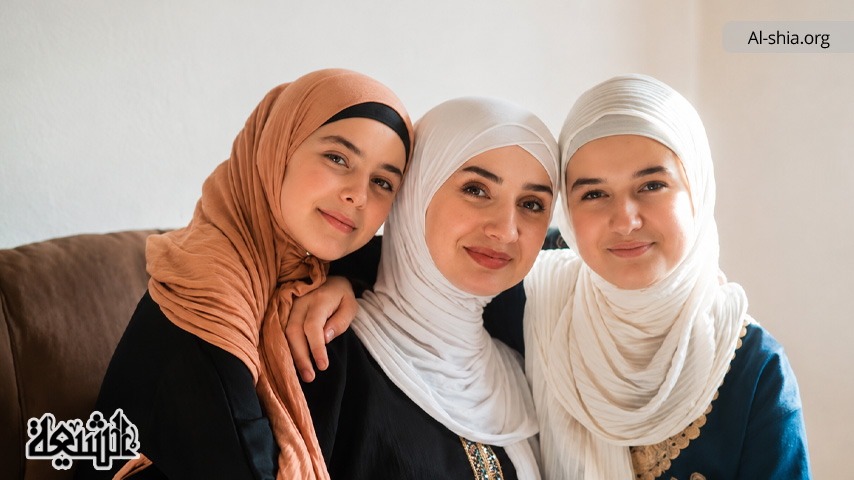

Hijab is an important aspect of Islamic modesty and religious education, but encouraging it in childhood requires more than simply asking a daughter to dress in a particular way. Accordingly, Hijab in young daughters should be encouraged through gradual education, parental example, understanding, affection, and positive reinforcement so that it develops into a meaningful religious value rather than merely an externally imposed practice.
This article aims to examine hijab in young daughters and identify appropriate family-based educational methods for fostering an understanding and gradual internalization of hijab in light of Islamic teachings.
The Philosophy of Hijab in Islam
According to Martyr Murtaḍā Muṭahharī in The Question of Hijab[1] (Masʾaleh-yi Ḥijāb), Islamic hijab should not be understood merely as a restriction on women’s clothing. Rather, it is part of a comprehensive Islamic framework for regulating relations between men and women and safeguarding individual and social well-being. Understanding this philosophy is particularly important when considering hijab in young daughters, as parents need to communicate not only the practice of hijab but also its underlying purposes and values.
Martyr Muṭahharī emphasizes that Islam does not seek to suppress sexual desire; rather, it seeks to regulate it and direct its legitimate fulfillment toward marriage. Hijab, together with lowering the gaze, modesty, and appropriate interaction between men and women, helps prevent sexual attraction from becoming unrestricted in public life. This perspective provides an important foundation for understanding hijab in young daughters as part of a broader system of Islamic moral education.
From this perspective, the philosophy of hijab can be summarized in several interconnected objectives[2]:
- Preserving psychological tranquility: Limiting unnecessary sexual stimulation can help individuals maintain greater emotional and psychological balance.
- Strengthening the family: By restricting sexual relationships outside marriage, Islam seeks to preserve the emotional bond between spouses and protect the family as a foundation of society.
- Protecting human dignity: Hijab helps prevent women from being reduced to objects of visual or sexual attraction and encourages recognition of their worth beyond physical appearance.
- Regulating sexual desire: Islam recognizes sexual desire as a natural human instinct but establishes ethical and lawful boundaries for its expression rather than seeking to eliminate it.
- Maintaining a healthy social environment: Hijab does not require women to withdraw from education, work, or social life. Rather, it establishes appropriate boundaries that help ensure that social interaction is not dominated by sexual attraction.
Thus, in Muṭahharī’s understanding, hijab is not intended to confine women or exclude them from society. Rather, it contributes to the regulation of relations between men and women, the preservation of human dignity, the strengthening of the family, and the creation of a healthier environment for social participation.
This understanding is particularly relevant to hijab for young daughters. Parents should therefore avoid presenting hijab merely as a prohibition or limitation. Instead, they can gradually explain that it forms part of a broader Islamic philosophy of modesty, dignity, self-control, family protection, and responsible participation in society. In this way, hijab in young daughters can be introduced not simply as an externally imposed rule but as a meaningful religious value that develops progressively through understanding, parental example, and appropriate education.
Methods for Internalizing Hijab in Young Daughters
For many Muslim parents, teaching young daughters about hijab raises an important question: How can hijab in young daughters be encouraged in a way that fosters genuine understanding and commitment rather than resistance? The answer goes beyond teaching a particular style of dress. It requires a broader approach based on affection, parental example, gradual habituation, explanation, encouragement, and sensitivity to a child’s developing personality.
There is an important difference between a daughter who observes hijab merely out of fear of parental disapproval and one who gradually understands its religious and personal significance. When discussing hijab in young daughters, parents should recognize that the former may comply under supervision, whereas the latter is more likely to develop a lasting commitment.
Thus, the goal of teaching hijab in young daughters should not be limited to outward conformity. Rather, it should seek gradual internalization: moving from familiarity to understanding, from understanding to practice, and ultimately from practice to conscious commitment.
Meanwhile, the following are some of the methods for internalizing hijab in young daughters:
- The Family as the Foundation of Religious Education
The family is a child’s earliest and most influential educational environment. Before young daughters can understand detailed religious teachings, they learn by observing their parents’ behavior, attitudes, and daily practices. Therefore, effective hijab in young daughters’ education should begin with parental example.
A mother who observes hijab naturally and confidently demonstrates that hijab is not merely a rule imposed on children but a meaningful religious practice. Consistency between what parents teach and what they practice strengthens the effectiveness of hijab in young daughters’ education.
The wider environment—including siblings, school, friends, neighbors, and media—also influences religious development, but parents remain central. Parents need not appear perfect; rather, their everyday conduct should reflect the values they wish to cultivate, such as modesty, dignity, and faith[3].
Finally, the emotional atmosphere of the home is essential. Hijab in young daughters is more likely to be internalized when religious guidance is provided within an environment of affection, security, respect, trust, and compassion[4]. Parents can maintain clear expectations while assuring their daughters that mistakes do not diminish their love and support.
- Begin Early, but Gradually and Age-Appropriately
Religious education is most effective when introduced early and developed gradually. In hijab in young daughters’ education, parents can make modesty a familiar and positive part of childhood without imposing adult expectations on young children.
Simple experiences—such as observing the mother’s hijab, wearing comfortable modest clothing, accompanying parents when choosing clothes, and hearing age-appropriate explanations about modesty—can gradually prepare a daughter for more explicit religious understanding as she grows.
Educational methods should correspond to the child’s developmental stage. Young children learn mainly through imitation and simple explanations; older children can understand concepts such as dignity, privacy, responsibility, and self-control; adolescents may engage with deeper questions about faith, identity, and personal responsibility.
Thus, effective hijab in young daughters’ education should follow a gradual progression: familiarity before expectation, and understanding alongside practice[5].
- Build a Positive Relationship with Hijab
Children’s emotional associations with religious practices can have a lasting influence. In hijab in young daughters’ education, parents should avoid presenting hijab primarily through anger, threats, criticism, or embarrassment, as these approaches may create negative associations.
Instead, hijab should be introduced through faith, dignity, affection, encouragement, and positive parental example. Parents can explain, in age-appropriate language, that modesty is valued in Islam and that hijab is one expression of religious identity and obedience to Allah.
Parents can also help their daughters choose modest clothing that is comfortable, appropriate, and suitable for their age. The religious significance of hijab should remain clear, but it can be communicated through positive and constructive guidance rather than fear of punishment or parental disapproval.
Ultimately, hijab in young daughters’ education should help them associate hijab with faith, meaningful religious commitment, and dignified living rather than with pressure and conflict.
- Explain the Meaning and Wisdom of Hijab
Children’s questions about hijab should be welcomed as opportunities for deeper religious education rather than treated as signs of disobedience. Effective hijab in young daughters’ education should encourage reasoning, reflection, dialogue, and age-appropriate explanations.
For younger girls, parents can explain hijab through simple concepts such as modesty, privacy, dignity, respect, and obedience to Allah. As daughters mature, discussions can expand to personal responsibility, self-control, religious identity, and the connection between outward practice and inward character. Stories and other age-appropriate educational materials can also support this process.
Importantly, hijab should not be presented merely as a matter of clothing. It is connected with ʿafāfah—modesty and chastity—as a broader quality of character expressed through speech, behavior, interactions, and self-control. Thus, hijab in young daughters’ education can contribute to wider character formation.
Parents should also be comfortable admitting when they do not know an answer and seeking it together with their daughter. This encourages intellectual honesty and reinforces the idea that religious understanding develops through lifelong learning[6].
- Cultivate Dignity, Identity, and Self-Worth
Effective hijab in young daughters’ education should strengthen a daughter’s sense of dignity, identity, and self-worth rather than make her value dependent on her appearance. Parents should avoid presenting the body as something shameful and instead emphasize modesty, responsible behavior, and respect for oneself and others.
A daughter should recognize that her worth encompasses faith, intelligence, kindness, courage, knowledge, creativity, and good character, as well as her positive contributions to family and community. Within this broader framework, hijab can be presented as one expression of Islamic values rather than the sole measure of religious commitment.
The goal of hijab in young daughters’ education is therefore to help girls develop a stable sense of identity and understanding: knowing who they are, what they believe, and why their religious practices are meaningful.
- Teach Through Stories, Examples, and Conversation
Children learn not only through formal instruction but also through stories, examples, experiences, and everyday conversations. In hijab in young daughters’ education, storytelling can effectively communicate values such as modesty, dignity, courage, responsibility, and wise decision-making in ways that engage children emotionally[7].
Parents can use Qurʾanic stories, Islamic narratives, accounts of exemplary women, and age-appropriate everyday situations[8]. Rather than simply telling a daughter what to do, parents can encourage reflection by asking questions such as, “What can we learn from this?” or “Why do you think she made that choice?”
Everyday experiences, including seeing different styles of clothing in shops or online, can likewise become opportunities for calm discussion. Parents can first listen to their daughter’s views and then explain the family’s values.
Thus, hijab in young daughters’ education becomes a natural part of family life and ongoing conversation rather than something discussed only when parents are correcting unwanted behavior.
- Encourage Rather Than Coerce
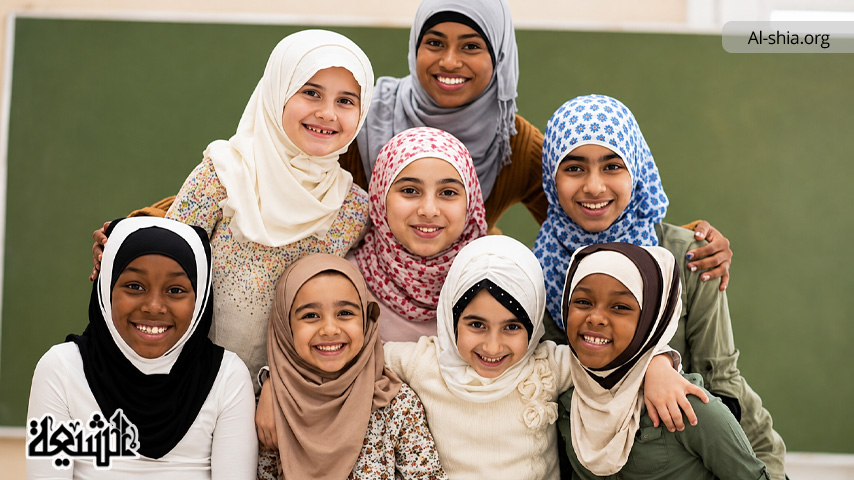
Encouragement is central to effective hijab in young daughters’ education. Parents can use gentle speech, affection, praise, and positive responses to recognize sincere effort, such as choosing modest clothing, dressing appropriately, or asking thoughtful questions about hijab[9].
Encouragement does not need to depend on material rewards. Appreciation, recognition of growing responsibility, and appropriate privileges can reinforce positive behavior. However, rewards should not become the main motivation; the long-term goal is for religious practice to develop into an internal and conscious commitment.
Parents should also distinguish guidance from coercion and humiliation. Parental authority and reasonable expectations remain important, but discipline should promote responsibility and understanding rather than communicate anger or shame.
Thus, hijab in young daughters’ education should rely primarily on encouragement, patient guidance, and positive reinforcement, helping children gradually move from externally guided behavior toward genuine internal commitment.
- Give Daughters Appropriate Choice and Responsibility
As daughters mature, hijab in young daughters’ education should increasingly involve responsibility and appropriate choice. Parents can maintain clear religious boundaries while allowing girls to make meaningful decisions within those boundaries, such as choosing suitable scarves, colors, fabrics, or styles and participating in clothing decisions.
This approach helps transform hijab from something imposed on a daughter into a practice in which she actively participates. It also encourages awareness, thoughtful decision-making, and conscious responsibility.
Responsibility should develop gradually according to age and maturity. Younger girls may need greater parental guidance, while older girls can increasingly take responsibility for selecting appropriate clothing and preparing for different situations.
Ultimately, hijab in young daughters’ education should prepare girls not merely to follow rules under supervision but to develop the understanding and responsibility needed to make appropriate decisions independently.
- Create a Supportive Social and Media Environment
A daughter’s religious development is influenced not only by her family but also by school, friends, community, educational settings, and media. Therefore, effective hijab in young daughters’ education should take these broader influences into account.
As girls grow older, peer pressure may become more significant. Parents should acknowledge these concerns and help daughters develop confidence in their values while teaching them to respect people who make different choices.
Media can likewise become an opportunity for critical thinking rather than simply a source of restriction. Parents can discuss messages about beauty, popularity, clothing, and personal value, helping daughters evaluate what they encounter thoughtfully.
Ultimately, a supportive environment does not require isolating daughters from society. Hijab in young daughters’ education should equip them with knowledge, confidence, critical thinking, and moral grounding so they can navigate social and media influences responsibly.
- What to Do When a Daughter Resists
Resistance to hijab can be challenging for parents, but effective hijab in young daughters’ education begins with understanding the reason behind the resistance. A daughter may have questions about its religious basis, feel uncomfortable, worry about peer reactions, or feel that excessive attention is being placed on her clothing.
Parents should therefore listen before lecturing. Calm questions can help identify her concerns and create an opportunity for constructive dialogue. Listening does not mean abandoning parental guidance; rather, it enables parents to respond to the actual difficulty with greater wisdom and care.
Parents should also avoid labeling a daughter as “bad,” “rebellious,” or “irreligious” because of temporary resistance. Such labels can damage trust and make future communication more difficult.
Ultimately, hijab in young daughters’ education should remain focused on patience, dialogue, understanding, appropriate guidance, and responsible parental supervision rather than relying exclusively on pressure.
- Common Mistakes Parents Should Avoid
Even well-intentioned parents can unintentionally make hijab in young daughters more difficult through inappropriate communication. The most common mistakes include:
- Constant criticism: Repeated correction can cause daughters to associate hijab with negativity.
- Public humiliation: Correcting a daughter in front of others may create embarrassment and resentment; sensitive matters are better addressed privately.
- Comparing her with other girls: Comparisons can undermine self-worth and turn religious practice into competition.
- Excessive fear: Making punishment the dominant message can overshadow love, hope, and understanding.
- Linking religious worth to appearance: Hijab should not become the sole measure of a daughter’s character or religious commitment.
- Constant lecturing: Brief, meaningful conversations are often more effective than repeated lectures.
- Expecting adult understanding: Religious guidance should correspond to a daughter’s age and developing abilities.
- Failing to model the values taught: Parents’ own conduct should reflect the religious values they expect their daughters to embrace.
Ultimately, effective hijab in young daughters’ education requires parental example, affection, encouragement, age-appropriate guidance, and a healthy emotional environment.
- From External Compliance to Internalization
The ultimate goal of hijab in young daughters’ education is not merely outward compliance but genuine internalization. Hijab and modesty should gradually become stable values rather than practices maintained only through external pressure.
This development can be understood as a gradual progression:
Familiarity → Understanding → Practice → Appreciation → Internalization
A young daughter may initially imitate her mother, later understand why her family values modesty, and gradually recognize its religious significance. With appropriate education and maturity, she can develop a conscious sense of commitment and responsibility.
Parents should therefore adopt a long-term perspective and recognize that each developmental stage presents a different educational opportunity. The ultimate aim of hijab in young daughters’ education is to help daughters embrace their religious values with understanding, confidence, and responsibility.
Conclusion
The proper way to encourage hijab in young daughters is neither neglect nor excessive pressure, but a gradual educational process that combines love with guidance, parental example with explanation, and encouragement with reasonable expectations.
The family provides the foundation. A mother’s example can make modesty familiar, gradual practice can make it natural, explanation can give it meaning, and stories, conversation, and encouragement can strengthen understanding and positive behavior. Appropriate choices and a supportive social environment can further develop confidence and responsibility.
Above all, parents should remember that a daughter is a person to be educated, not merely a behavior to be controlled. Her questions deserve thoughtful answers, her dignity deserves protection, and her developing identity deserves care.
The strongest foundation for hijab in young daughters is meaningful education rather than fear. The goal is to create an environment in which hijab is seen, explained, practiced, appreciated, and gradually internalized, leading from external practice toward conscious and lasting religious commitment.
References
- Ibrāhīmī, Mahbūbeh. (1398 SH). “Rāh-hā-yi Nahādīneh-sāzī-yi Ḥijāb va ʿAfāf dar Farzandān”. Journal of Rah-Tūsheh-yi Rāhiyān-i Nūr: Ramaḍān al-Mubārak [Special Issue for Families], pp. 48–57.
- Jaʿfariyān, Rasūl. (1380 SH). Rasāʾil-i Ḥijābiyyah. Qom: Dalīl-i Mā.
- Luqmanī, Aḥmad. (1389 SH). Chigūneh Farzandān-i Mā Bā Ḥijāb Mīshavand. Qom: Behesti Bīnish.
- Malakī Gelandūz, Parī. (2016). “Barresī-yi Shīvehā-yi Tarbiyatī va Āmūzish-hā-yi Khānuvādeh Pirāmūn-i Nahādīneh Kardan va Ḥifẓ-i Ḥijāb va ʿAfāf dar Kūdakān va Nujavānān”. Third International Conference on Modern Research in Management, Economic and Humanities, Georgia 6 June, 2016.
- Muṭahharī, Murtaḍā. (n.d). Islamic Modest Dress. Qom: Dar us Seqafe
- Ṣafāʾārā, Maryam et al. (1397 SH). “Nahādīneh-sāzī-yi Arzish-hā-yi Akhlāqī dar Kūdakān.” Mishkāt, no. 139, p. 92-112.
- Shajarian, M. (1401 AP). Philosophies of Hijab and Gender Justice. Journal of Islam and Social Studies, 10(37), pp. 123-149.
[1] . The book is translated into English under the title “Islamic Modest Dress”.
[2] . See: Muṭahharī, Islamic Modest Dress, pp 6-12.
[3] . Ibrāhīmī, Rāh-hā-yi Nahādīneh-sāzī-yi Ḥijāb va ʿAfāf dar Farzandān, p. 48.
[4] . See: Malakī Gelandūz, Barresī-yi Shīvehā-yi Tarbiyatī va Āmūzish-hā-yi Khānuvādeh Pirāmūn-i Nahādīneh Kardan va Ḥifẓ-i Ḥijāb, p. 2.
[5] . Jaʿfariyān, Rasāʾil-i Ḥijābiyyah, vol. 2, p. 840.
[6] . See: Malakī Gelandūz, Barresī-yi Shīvehā-yi Tarbiyatī va Āmūzish-hā-yi Khānuvādeh Pirāmūn-i Nahādīneh Kardan va Ḥifẓ-i Ḥijāb, p. 12.
[7] . Malakī Gelandūz, Barresī-yi Shīvehā-yi Tarbiyatī va Āmūzish-hā-yi Khānuvādeh Pirāmūn-i Nahādīneh Kardan va Ḥifẓ-i Ḥijāb, p. 2.
[8] . Ṣafāʾārā, Nahādīneh-sāzī-yi Arzish-hā-yi Akhlāqī dar Kūdakān, p. 98.
[9] . Luqmanī, Chigūneh Farzandān-i Mā Bā Ḥijāb Mīshavand, p. 48.


![The Event of Ghadir and Imam al-Mahdi [afs]](https://en.al-shia.org/wp-content/uploads/2026/06/17221.jpg)