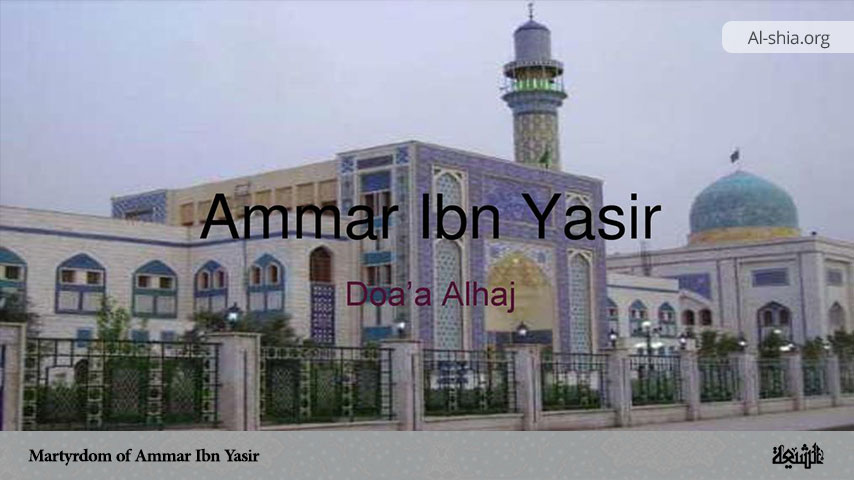


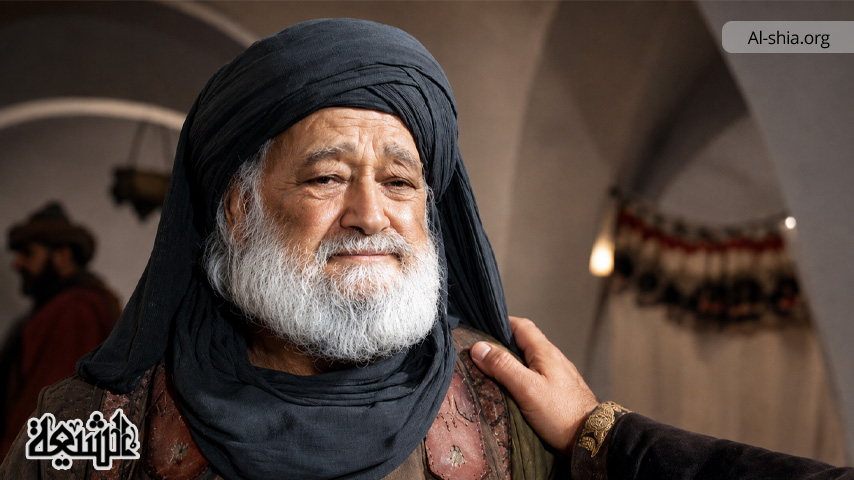

The life of Habib ibn Mazahir represents a remarkable example of faith, loyalty, knowledge, courage, and sacrifice in the history of Islam. As a distinguished companion of the Ahl al-Bayt and one of the devoted supporters of Imam al-Husain (a.s), his lifelong commitment culminated in his martyrdom at Karbala. His spiritual virtues, close association with the Imams, and steadfastness in defending truth have made him an enduring model of devotion and sacrifice.
This study aims to examine the life, virtues, role in Karbala, martyrdom, and enduring legacy of Habib ibn Mazahir based on the available historical and biographical sources.
Lineage, Early Life, and Social Standing
The full lineage of Habib ibn Mazahir is recorded as Habib ibn Muzahhar—or, in some sources, Muzahir— ibn Ri’ab ibn Ashtar ibn Hajwan ibn Faq’as ibn Tarif ibn Amr ibn Qays ibn Harith ibn Tha‘laba ibn Dudan ibn Asad. He therefore belonged to Banu Asad, an important Arab tribe whose members later played a significant role in burying the martyrs of Karbala. Early sources differ over the exact form of his father’s name. “Muzahhar,” “Muzahir,” and even “Mutahhar” appear in historical works, although later devotional usage commonly popularized the form Muzahir[1].
The exact year of Habib’s birth is not firmly established in the surviving sources. Reports that he was approximately seventy-five years old when he was martyred have led some writers to place his birth before the Hijra.
Some sources suggest that Habib ibn Mazahir was born approximately fourteen years before the Hijra and later moved with his family to Medina. However, this account should be regarded as a historical reconstruction rather than an uncontested fact. More clearly, he belonged to the older generation and was already a well-known and respected figure in Kufa by the time of Karbala[2].
There is also disagreement over whether Habib ibn Mazahir personally met Prophet Muhammad (PBUHH). Ibn Hajar al-‘Asqalani and some other writers include him among those who had been in the Prophet’s presence, while major biographical authorities such as al-Shaykh al-Tusi list Habib among the companions of Imam Ali (a.s), Imam al-Hasan (a.s), and Imam al-Husain (a.s) without counting him among the Prophet’s Companions. For this reason, it is safer to say that his status as a Companion of the Prophet is disputed, whereas his close association with the Imams is much better attested[3].
In Kufa, Habib ibn Mazahir was a respected and influential figure, particularly among Banu Asad. His reputation, tribal standing, experience, and religious credibility enabled him to influence others, which helps explain his significance as a supporter of Imam al-Husain (a.s). His later attempt to mobilize Banu Asad at Karbala reflected the established position he held within his community.
Despite his advanced age and respected social position, Habib ibn Mazahir did not choose security or self-preservation when supporting Imam al-Husain (a.s) became dangerous. Instead, he remained committed to the Imam, demonstrating that genuine loyalty requires sacrifice. His decision ultimately transformed him from a respected Kufan notable into one of the most remembered martyrs of Islamic history.
Habib ibn Mazahir and the Imams of the Ahl al-Bayt
The relationship of Habib ibn Mazahir with the Ahl al-Bayt developed across several generations, reflecting a lifelong commitment rooted in faith, knowledge, and loyalty. His companionship with Imam Ali (a.s), association with Imam al-Hasan (a.s), and steadfast support for Imam al-Husain (a.s) demonstrate the continuity of this bond and its culmination in his sacrifice at Karbala.
Association with Imam Ali (a.s)
Sources consistently place him among the companions of Imam Ali (a.s). After Imam Ali established his capital in Kufa, Habib lived there and is reported to have fought beside him in his battles. He was regarded as one of the Imam’s trusted and special companions and is associated with the group known as Shurtat al-Khamis, an elite body of devoted supporters prepared to serve Imam Ali with exceptional commitment[4].
Later Shi‘i reports also connect Habib with ‘ilm al-balaya wa-l-manaya, knowledge concerning future trials and deaths. A famous account describes a conversation between Habib ibn Mazahir and Maytham al-Tammar in which each spoke of the other’s future martyrdom. The people who overheard them reportedly dismissed the conversation, but later events were understood as confirming their words. Whatever interpretive questions surround such reports, the tradition reflects the memory of Habib as a spiritually perceptive disciple formed in the circle of Imam Ali[5] (a.s).
Association with Imam al-Hasan (a.s)
Biographical works identify Habib ibn Mazahir as one of the companions of Imam al-Hasan (a.s), although they provide limited information about his activities during that period. The attached Persian study suggests that the political circumstances following Imam al-Hasan’s peace agreement with Muʿawiya may explain his less visible public role. Nevertheless, his loyalty to the Ahl al-Bayt clearly preceded Karbala and developed over many years.
Association with Imam al-Husain (a.s)
Following Muʿawiya’s death and Yazid’s succession, Habib ibn Mazahir was among the Kufan figures associated with inviting Imam al-Husain (a.s) to Kufa. He also actively supported Muslim ibn Aqil, pledging allegiance and encouraging others to do likewise[6].
When Ubayd Allah ibn Ziyad suppressed the Kufan movement through intimidation and repression, Habib ibn Mazahir and Muslim ibn Awsaja went into hiding. After learning that Imam al-Husain (a.s) had reached Karbala, they secretly left Kufa, travelling by night and hiding by day until they reached the Imam’s camp around the seventh of Muharram[7]. His decision demonstrated that his earlier support was not merely verbal; despite the danger, he transformed his commitment into action and ultimately accepted the sacrifice required to stand with Imam al-Husain (a.s).
Habib ibn Mazahir on the Day of Ashura
After reaching Karbala, Habib ibn Mazahir immediately became one of the most active senior companions in Imam al-Husain’s camp. Seeing the overwhelming size of the opposing army, he asked the Imam for permission to approach nearby members of Banu Asad and invite them to assist the grandson of the Prophet (PBUHH). Some reportedly responded positively, but Umar ibn Sa‘d sent forces to prevent them from joining. Even at this late stage, Habib was still trying to increase the Imam’s support and reduce his isolation[8].
On the evening before Ashura, Habib ibn Mazahir also played a role in strengthening the morale of the camp. One report states that after learning of Lady Zaynab’s concern about whether the companions would remain loyal, Habib gathered the men and affirmed their determination to defend the Prophet’s family to the last drop of their blood. This was not a ceremonial declaration. Everyone in the camp understood that the surrounding army had closed the path to escape and that the next day would almost certainly bring death[9].
When the battle lines were formed on Ashura, Imam al-Husain (a.s) appointed Habib ibn Mazahir commander of the left wing, while Zuhayr ibn Qayn commanded the right. This appointment reflected the Imam’s trust in Habib’s courage, judgment, and leadership despite his advanced age.
Habib’s role extended beyond military leadership. When the opposing army mocked Imam al-Husain (a.s) and questioned the validity of his prayer, Habib firmly defended the Imam and the religious authority of the Ahl al-Bayt[10].
One of the most moving moments came when Habib ibn Mazahir stood beside the dying Muslim ibn Awsaja. After Imam al-Husain (a.s) recited Qur’an 33:23, Habib assured Muslim of Paradise. Muslim’s final request was that Habib continues defending the Imam, to which Habib pledged his commitment[11].
Before entering battle, Habib ibn Mazahir reportedly recited verses emphasizing that although the enemy was greater in number, the companions of Imam al-Husayn surpassed them in loyalty, steadfastness, conviction, and piety[12].
Habib ibn Mazahir eventually fought until he was killed. Reports state that Imam al-Husain (a.s) mourned his death and remembered his virtue and devotion to the Qur’an. His martyrdom represented the loss of not only a courageous warrior but also an experienced companion, scholar, and community leader whose life embodied steadfast loyalty to Imam al-Husayn (a.s).
The Virtues and Character of Habib ibn Mazahir
Habib ibn Mazahir was described as first and foremost a man of worship. He was known for piety, night prayer, supplication, and deep attachment to the Qur’an. Reports state that he had memorized the Qur’an and regularly spent the night in worship; some traditions even describe him as completing the entire Qur’an in a night. Whether understood literally as an exceptional devotional practice or as an expression of his intense Qur’anic life, the tradition shows how later generations remembered him: his courage on Ashura grew from years of spiritual discipline rather than sudden enthusiasm[13].
A second defining virtue of Habib ibn Mazahir was his religious knowledge. Some sources describe him as a faqih and transmitter of reports, and notes a letter attributed to Imam al-Husain (a.s) addressing him as a learned jurist. His intellectual and spiritual formation within the circle of Imam Ali further demonstrates that his loyalty to the Ahl al-Bayt was grounded in religious understanding rather than blind attachment[14].
A third characteristic was his insight and foresight. Having witnessed decades of political change, Habib ibn Mazahir understood how quickly public support could collapse under pressure and did not confuse political power with moral legitimacy. His decision to leave Kufa under surveillance and join the outnumbered Imam al-Husain (a.s) demonstrated his ability to look beyond immediate considerations of safety and success.
Courage was another defining virtue of Habib ibn Mazahir. His appointment as commander of the left wing shows that his bravery was recognized before his martyrdom. He was willing to confront opponents, speak openly, and resist pressure despite his advanced age. His courage was therefore not limited to the battlefield but also encompassed his refusal to abandon Imam al-Husayn (a.s) for personal safety[15].
Habib ibn Mazahir also demonstrated concern for others. In Kufa, he supported Muslim ibn Aqil; at Karbala, he attempted to mobilize Banu Asad; and beside Muslim ibn Awsaja, he offered comfort at the moment of his companion’s death. These actions show that he understood loyalty as a responsibility to strengthen and encourage others around the Imam.
Above all, Habib ibn Mazahir was characterized by consistency. His loyalty endured even when political circumstances changed, supporters disappeared, and danger became overwhelming. His enduring legacy therefore lies not merely in the values he professed but in his willingness to allow those values to determine his actions at the decisive moment.
The Legacy of Habib ibn Mazahir
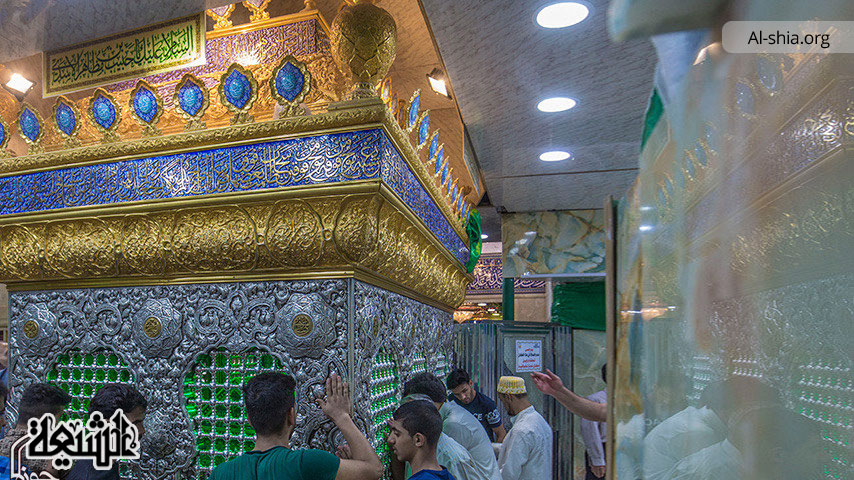
The legacy of Habib ibn Mazahir begins with his place among the martyrs of Karbala. After the battle, Banu Asad took part in burying the dead. Because Habib was one of their elders and respected figures, reports state that he was buried separately near Imam al-Husayn (a.s). His grave was later incorporated into the shrine complex and became one of the recognized places visited by pilgrims[16].
His name also entered the devotional memory of Ashura. Habib ibn Mazahir is mentioned in Ziyara texts connected with Imam al-Husain (a.s), including texts associated with the middle of Sha‘ban. This means that his memory was not preserved only by historians who recorded the battle; it became part of the religious practice through which believers remember the Imam and those who stood with him[17].
For later generations, Habib represents several forms of faithfulness at once. He is remembered as an elderly believer who did not treat age as retirement from moral responsibility; as a respected man who did not let status bind him to comfort; as a learned man whose knowledge produced action; and as a companion whose loyalty survived political intimidation. His story therefore speaks not only to warriors or scholars but to anyone confronted with the distance between conviction and action.
The legacy of Habib ibn Mazahir also helps explain why Karbala is remembered through individuals as well as through the central figure of Imam al-Husain (a.s). The companions show how the Imam’s cause was understood and embodied by ordinary human beings who could choose, fear, sacrifice, and remain steadfast. Their greatness does not diminish the Imam’s position; rather, their choices reveal the transforming power of loyalty to him.
Another important dimension of Habib’s example is the relationship between age and responsibility. Karbala did not find him at the beginning of adulthood, searching for a cause through which to prove himself. It found him after decades of experience, when a person might reasonably seek quiet, family security, and relief from public struggle.
Yet Habib treated experience as a reason for responsibility, not less. He had witnessed the careers of earlier leaders, the conflicts of Kufa, the pressures placed on the followers of the Ahl al-Bayt, and the fragility of political promises. That history could have made him cynical. Instead, it seems to have sharpened his judgment. His choice therefore carries special force: Habib ibn Mazahir did not act because he knew little about danger, but because he understood danger and still chose loyalty.
Conclusion
Habib ibn Mazahir stands as a compelling example of lifelong loyalty in the history of Karbala. His commitment developed over decades through his association with Imam Ali (a.s), Imam al-Hasan (a.s), and Imam al-Husain (a.s), as well as through religious knowledge, worship, and his respected position in Kufa. When political circumstances changed, and fear replaced support, he remained steadfast and refused to compromise his principles.
On Ashura, Habib ibn Mazahir placed his faith, knowledge, experience, courage, and leadership at the service of Imam al-Husain (a.s). He sought to strengthen the Imam’s supporters, encouraged others to join him, defended the Imam, commanded part of his army, comforted his dying companion, and ultimately sacrificed his life.
The legacy of Habib ibn Mazahir extends beyond the battlefield. His life demonstrates that true loyalty is tested when it becomes costly, that knowledge should produce moral clarity, and that spiritual devotion should inspire courage and responsibility. His remembrance in Ziyara literature and his proximity to the shrine of Imam al-Husain symbolize the enduring significance of his steadfastness. More than thirteen centuries after Karbala, Habib ibn Mazahir remains an example of one who recognized the truth, remained faithful when others withdrew, and carried his commitment to its ultimate consequence.
Notes:
[1] . Amin, A‘yan al-Shi‘a, vol. 4, p. 553; Ṭabari, Tārīkh al-Umam wa-l-Muluk, vol. 5, pp. 352, 355, 416; Baladhuri, Ansab al-Ashrāf, vol. 2, pp. 462, 478, 480.
[2] . Amin, A‘yan al-Shi‘a, vol. 4, p. 554; Mas‘ūdi, Marzban-i Khurshid 2: Se Rafiq, p. 23; Nazimzadeh Qummi, Ashab-i Imam Husayn az Madina ta Karbala, pp. 354–355.
[3] . Ibn Hajar al-‘Asqalani, Al-Iṣaba fi Tamyiz al-Ṣahāba, vol. 2, p. 142; Ṭūsi, Rijāl al-Ṭūsi, pp. 60, 93, 100; Amin, A‘yan al-Shi‘a, vol. 4, p. 554.
[4] . Samawi, Ibṣar al-‘Ayn fi Anṣār al-Husayn, p. 127; Mufīd, Al-Ikhtiṣāṣ, pp. 2–7.
[5] . Samawi, Ibṣar al-‘Ayn fi Anṣār al-Husayn, p. 127.
[6] . Mufīd, Al-Irshād, p. 378; Amin, A‘yan al-Shi‘a, vol. 4, p. 554; Ṭabari, Tārīkh al-Umam wa-l-Muluk, vol. 5, p. 355.
[7] . Samawi, Ibṣar al-‘Ayn fi Anṣār al-Husayn, p. 128.
[8] . Amin, A‘yan al-Shi‘a vol. 4, p. 554.
[9] . A Group of Authors, Mawsu‘at Kalimat al-Imam al-Husayn (a.s), pp. 407–408.
[10] . Mufīd, Al-Irshād, p. 450; Qummi, Nafas al-Mahmum, p. 124.
[11] . Qur’an 33:23; Ibn Ṭāwūs, Iqbāl al-A‘māl, p. 133.
[12] . Samawi, Ibṣar al-‘Ayn fi Anṣār al-Husayn, p. 133.
[13] . Qummi, Nafas al-Mahmum, p. 124; Kashifi, Rawdat al-Shuhada, p. 384.
[14] . Aḥmadi Miyanji, Makātib al-A’imma, vol. 3, p. 145.
[15] . Ibn Shahr Ashub al-Mazandarani, Manāqib Al Abi Talib, vol. 4, p. 188; Aqa-Tehrani, Yaran-i Shiday-i Husayn ibn Ali, p. 178.
[16] . Qa’idan, ‘Atabat-i ‘Aliyat-i Iraq, p. 122.
[17] . Majlisi, Biḥār al-Anwār, vol. 45, p. 71; vol. 98, p. 27; Ibn Ṭāwūs, Iqbāl al-A‘māl, p. 229.
References
- A Group of Authors. (1374 SH). Mawsu‘at Kalimat al-Imam al-Husayn (a.s). Qom: Dar al-Ma‘ruf.
- Aḥmadi Miyanji, Ali. (1426 AH). Makātib al-A’imma. Qom: Dar al-Hadith.
- Amin, Sayyid Muḥsin. (1986). A‘yan al-Shi‘a. Beirut: Dar al-Ta‘aruf li-l-Matbu‘at.
- Aqa-Tehrani, Murtada. (1385 SH). Yaran-i Shiday-i Husayn ibn Ali. Qom: Baqiyat.
- Baladhuri, Aḥmad ibn Yahya. (2000). Ansab al-Ashrāf. Edited by Maḥmūd Firdus al-‘Azm. Damascus: n.p.
- Ibn Hajar al-‘Asqalani. (1415 AH). Al-Iṣaba fi Tamyiz al-Ṣahāba. Edited by ‘Adil Ahmad ‘Abd al-Mawjud and ‘Ali Muḥammad Mu‘awwad. Beirut: Dar al-Kutub al-‘Ilmiyya.
- Ibn Shahr Ashub al-Mazandarani, Muḥammad ibn Ali. (1379 SH). Manāqib Al Abi Talib. Qom: Nashr-i Allama.
- Ibn Ṭāwūs, Ali ibn Musa. (1996). Iqbāl al-A‘māl. Beirut: Mu’assasat al-A‘lami li-l-Matbu‘at.
- Kashifi, Husayn Wa‘iz. (1358 SH). Rawdat al-Shuhada. Tehran: Kitabfurushi-yi Islamiyya.
- Majlisi, Muḥammad Baqir. (1403 AH). Biḥār al-Anwār. Beirut: Mu’assasat al-Wafa’.
- Mas‘ūdi, Majid. (1385 SH). Marzban-i Khurshid 2: Se Rafiq. Qom: Dalil-i Ma.
- Mufīd, Muḥammad ibn Muḥammad. (1380 SH). Al-Irshād fi Ma‘rifat Hujaj Allah ‘ala al-‘Ibad. Tehran: Islamiyya.
- Mufīd, Muḥammad ibn Muḥammad. (n.d). Al-Ikhtiṣāṣ. Qom: n.p.
- Nazimzadeh Qummi, Sayyid Asghar. (1392 SH). Ashab-i Imam Husayn az Madina ta Karbala. Qom: Bustan-i Kitab.
- Qa’idan, Asghar. (1387 SH). ‘Atabat-i ‘Aliyat-i Iraq. Tehran: Mash‘ar.
- Qummi, ‘Abbas. (n.d). Nafas al-Mahmum. Qom: n.p.
- Samawi, Muḥammad ibn Ṭāhir. (1381 SH). Ibṣar al-‘Ayn fi Anṣār al-Husayn. Translated into Persian by ‘Abbas Jalali. Qom: Intisharat-i Za’ir.
- Ṭabari, Muḥammad ibn Jarīr. (1408 AH). Tārīkh al-Umam wa-l-Muluk. 2nd ed. Beirut: Dar al-Kutub al-‘Ilmiyya.
- Ṭūsi, Muḥammad ibn al-Ḥasan. (n.d). Rijāl al-Ṭūsi. Qom: n.p.


![The Event of Ghadir and Imam al-Mahdi [afs]](https://en.al-shia.org/wp-content/uploads/2026/06/17221.jpg)