

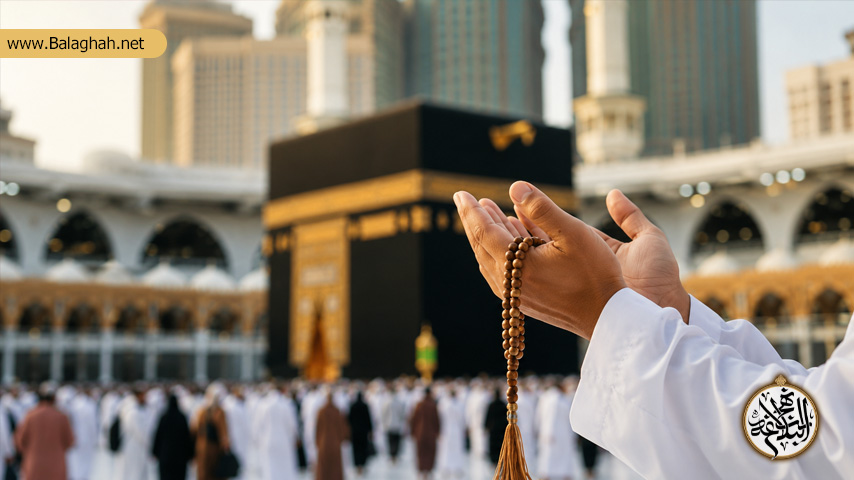

For every believer, a covenant is more than a promise—it is a commitment that shapes one’s faith, character, and actions. Throughout the Qur’an, Allah reminds believers to honour their covenants[1] and remain faithful to the responsibilities they willingly accept. Among the most meaningful expressions of this commitment in the teachings of the Ahl al-Bayt (a.s.) is Duaʾ al-ʿAhd, a beautiful supplication that renews the believer’s pledge of loyalty to Imam al-Mahdi (may Allah hasten his reappearance). It serves as a daily reminder that awaiting the promised saviour is not a passive state but a lifelong commitment to faith, justice, and moral excellence.
This article explores the meaning of the covenant found in Duaʾ al-ʿAhd, the commitments it places upon believers, and the practical lessons it offers for everyday life. By understanding and living this covenant, every Muslim can strengthen their relationship with Imam al-Mahdi and become better prepared to answer his call when Allah’s promise is fulfilled.
An Overview of Duaʾ al-ʿAhd
Duaʾ al-ʿAhd, literally meaning “The Supplication of the Covenant,” is one of the most cherished prayers in the Shia tradition. It is a heartfelt appeal to Allah through which believers renew their pledge of loyalty and devotion to Imam al-Mahdi (ajfs). More than a collection of beautiful words, this supplication is a daily declaration that a believer remains committed to Allah’s final Proof and is ready to support his mission whenever Allah grants him permission to reappear.
Duaʾ al-ʿAhd is a well-known supplication narrated from Imam Jaʿfar al-Ṣādiq (a.s.), who encouraged the faithful to recite it every morning. He said: “Imam al-Ṣādiq (a) said, “Anyone who recites this supplication for forty [successive] mornings will be among the companions of the Upriser (a). If he dies before the Imam’s (a) reappearance, God Almighty will resurrect him to fight alongside the Imam (a). For every word of the supplication, one thousand rewards will be recorded for him, and one thousand of his bad deeds will be wiped out.”[2]
This narration highlights the profound spiritual significance of Duaʾ al-ʿAhd. Beyond its promised rewards, it serves as a daily renewal of the believer’s covenant with Allah, strengthening faith, commitment to righteousness, and readiness to uphold truth and justice under the leadership of Imam al-Mahdi (ajfs). Its daily recitation reaffirms allegiance to the Imam, steadfastness during the Occultation, and the resolve to live as a sincere supporter of his cause.
This supplication (Duaʾ al-ʿAhd) has been transmitted and preserved by a number of prominent Shia scholars. Sayyid Ibn Ṭāwūs mentions it in Miṣbāḥ al-Zāʾir, Ibn al-Mashhadī in al-Mazār al-Kabīr[3], al-Kafʿamī in al-Miṣbāḥ[4] and al-Balad al-Amīn[5], and ʿAllāmah al-Majlisī in Biḥār al-Anwār[6] and Zād al-Maʿād[7].
The inclusion of this supplication in the works of distinguished scholars such as Sayyid Ibn Ṭāwūs, al-Kafʿamī, and ʿAllāmah al-Majlisī reflects the importance and credibility they attributed to it. Moreover, the themes and teachings expressed in Duaʾ al-ʿAhd are consistent with those found in other Islamic supplications, further demonstrating its accordance with established Shia teachings concerning Imam al-Mahdi (a.s.) and the believer’s responsibility during the period of occultation.
The opening words of the supplication (Duaʾ al-ʿAhd) glorify Allah and affirm His eternal sovereignty before invoking blessings upon the Prophet Muḥammad (PBUHH) and his purified household. This establishes that the covenant with Imam al-Mahdi (a.s.) is rooted in sincere faith in Allah and love for His Messenger and the Ahl al-Bayt (a.s.). Thus, loyalty to the Imam is an extension of loyalty to Allah and His Messenger.
Ultimately, Duaʾ al-ʿAhd teaches that awaiting Imam al-Mahdi (ajfs) is an active state of spiritual preparation. It cultivates hope without complacency, devotion without passivity, and commitment without hesitation. As believers renew this covenant each day, they are reminded that every act of obedience to Allah and every effort to uphold truth brings them closer to fulfilling the pledge they have made to the Imam.
Understanding the Meaning of the Covenant
The central theme of Duaʾ al-ʿAhd is the renewal of a covenant with Imam al-Mahdi (ajfs). To appreciate the depth of this supplication, it is important to understand what a covenant means in Islam and why believers are encouraged to renew it every day.
The Arabic word ʿahd refers to a covenant, compact, convention, pact, treaty, agreement[8]. In the Qur’an, Allah repeatedly reminds believers that fulfilling their covenants is a sign of true faith and integrity. He says: “O you who believe! Fulfil your covenants.”[9] Likewise, He says: “And fulfil the covenant, for surely the covenant will be questioned about.”[10]
These verses emphasize the obligation to honour every covenant and promise, reminding believers that they will be held accountable for their commitments. Islamic traditions further indicate that among the important covenants is love, devotion, and obedience to Imam ʿAli (a.s.) and the Ahl al-Bayt[11] (a.s.). Thus, the covenant with Imam al-Mahdi (a.s.) as in Duaʾ al-ʿAhd reflects a continuation of this commitment to the divinely guided leadership of the Ahl al-Bayt (a.s.).
Closely related to ʿahd is the concept of bayʿah, or a pledge of allegiance. Throughout Islamic history, believers gave their bayʿah to the Prophet Muḥammad (ajfs) as a public expression of faith, obedience, and loyalty. The Qur’an describes this pledge in profound terms: “Indeed those who swear allegiance to you, swear allegiance only to Allah: the hand of Allah is above their hands.”[12]
Although Imam al-Mahdi is in the period of Occultation, Duaʾ al-ʿAhd allows believers to renew their spiritual bayʿah every morning. It reminds them that their allegiance to the Imam is not suspended because of his absence. Rather, it remains a living commitment that shapes their beliefs, morals, and daily conduct.
The use of three related expressions (ʿahd, ʿaqd, and bayʿah) in the supplication (Duaʾ al-ʿAhd) is significant. It emphasizes that the believer’s relationship with Imam al-Mahdi is not temporary or conditional. It is a conscious, lifelong commitment that remains binding regardless of changing circumstances or the length of the Occultation.
The teachings of the Ahl al-Bayt (a.s.) further highlight the importance of remaining steadfast during the Imam’s absence. Imam Jaʿfar al-Ṣādiq (a.s) said: “Blessed are the followers of our Qāʾim who await his reappearance during his occultation and obey him after his reappearance. They are the friends of Allah, upon whom there shall be no fear, nor shall they grieve.”[13]
This narration teaches that the true test of faith is not simply believing in Imam al-Mahdi, but remaining steadfast in that belief despite the challenges of the Occultation. Renewing the covenant each morning as in Duaʾ al-ʿAhd strengthens this perseverance and keeps the believer spiritually connected to the Imam.
Ultimately, the covenant of Duaʾ al-ʿAhd is a commitment to live according to the values that Imam al-Mahdi will establish throughout the world—faith, justice, compassion, truthfulness, and obedience to Allah. Every recitation reminds believers that they are not merely waiting for the Imam’s appearance; they are preparing themselves to become worthy of standing among his sincere supporters when Allah’s promise is fulfilled.
The Main Commitments Made in Duʿaʾ al-ʿAhd
Duaʾ al-ʿAhd is much more than a supplication for blessings. It is a declaration of commitment that calls believers to live according to the principles of Islam and prepare themselves for the mission of Imam al-Mahdi (ajfs). Every morning, the believer renews a series of promises that should shape both faith and conduct. These commitments are not symbolic; they are practical responsibilities that define what it means to be among those who truly await the Imam.
- Renewing Allegiance Every Day: At the heart of the supplication (Duaʾ al-ʿAhd) is the daily renewal of allegiance to Imam al-Mahdi: “O Allah, I renew for him, on this morning and throughout all the days of my life, a covenant, a contract, and a pledge of allegiance upon my neck. I shall never depart from it or abandon it.”
This declaration reflects the Qur’anic principle that believers must remain faithful to their promises[14]. Renewing this pledge each morning reminds believers that loyalty is a lifelong commitment, requiring continual renewal through sincere faith, righteous actions, and devotion to Imam al-Mahdi (a.s.).
- Remaining Steadfast During the Occultation: One of the greatest challenges for believers is remaining steadfast during the prolonged Occultation. Duʿaʾ al-ʿAhd teaches that true loyalty does not depend on physically seeing the Imam but on unwavering faith in Allah’s promise.
Imam Jaʿfar al-Ṣādiq (a.s) described those who remain firm during the Occultation as the most sincere followers, saying that they are blessed because they believe in the unseen and await the appearance of the Qāʾim with certainty. Their steadfastness demonstrates trust in Allah and confidence that His promise will certainly come to pass.
- Preparing to Support the Imam: The supplication does not simply ask to witness the reappearance of Imam al-Mahdi. Rather, it asks Allah to make the believer one of his helpers: “O Allah, make me among his helpers, his supporters, those who defend him, those who hasten to fulfil his commands, those who protect him, and those who attain martyrdom before him.”[15]
This request teaches that awaiting the Imam is an active responsibility. It requires developing qualities such as faith, courage, justice, sincerity, and sacrifice.
- Living a Life of Obedience: True allegiance to Imam al-Mahdi cannot be separated from obedience to Allah. The Imam is the divinely appointed guide who leads people to the path of Allah; therefore, following him begins with fulfilling Allah’s commands today.
According to numerous narrations transmitted from the Ahl al-Bayt (a.s.), the divinely appointed Imams are the true Ulū al-Amr, whose obedience is inseparable from obedience to Allah and His Messenger. As Imam al-Bāqir (a.s.) stated: “He meant us in particular, and He commanded all believers, until the Day of Resurrection, to obey us”[16].
- Hoping to Be Among His Companions: One of the most inspiring themes of Duaʾ al-ʿAhd is the desire to be counted among the companions of Imam al-Mahdi. The supplication nurtures hope that Allah will grant believers the honour of participating in the establishment of justice on earth.
This hope inspires believers to improve themselves continually, knowing that sincere repentance, righteous deeds, and perseverance can make them worthy of the Imam’s companionship.
- Living the Covenant Every Day: The covenant made in Duaʾ al-ʿAhd is not confined to the few minutes spent reciting the supplication each morning. Its true value lies in allowing its words to shape the believer’s character, choices, and relationships throughout the day. A sincere covenant with Imam al-Mahdi (may Allah hasten his reappearance) is fulfilled not only by the tongue but also by the heart and by one’s actions.
- Fulfilling Religious Obligations and Avoiding Sin: Loyalty to the Imam is inseparable from obedience to Allah. It is inconsistent to claim allegiance to Imam al-Mahdi while neglecting obligatory prayers, violating the rights of others, or persisting in sinful behaviour. The strongest evidence of sincere allegiance is a life of obedience.
Imam Jaʿfar al-Ṣādiq (a.s.) emphasized this principle: “Whoever wishes to be among the companions of the Qāʾim should await him and, while awaiting him, act with piety and virtuous character.”[17]
This narration makes it clear that waiting for Imam al-Mahdi is inseparable from living a life of righteousness and moral discipline.
- Upholding Justice and Serving Others: One of the defining characteristics of the government of Imam al-Mahdi will be universal justice[18]. Those who hope to support him should therefore become advocates of justice in their own families, workplaces, communities, and societies.
Allah commands: “Indeed Allah enjoins justice and kindness, and generosity towards relatives, and He forbids indecency, wrongdoing, and aggression…”[19]
Justice is not limited to courts or governments. It includes honesty in business, fairness in dealing with others, protecting the weak, fulfilling trusts, and refusing to participate in oppression or corruption.
- Praying for the Imam and His Reappearance: An important part of living the covenant is remembering Imam al-Mahdi in one’s daily prayers. Supplicating for his safety and asking Allah to hasten his reappearance keeps the believer spiritually connected to the Imam and strengthens hope in Allah’s promise.
As we read in a letter (Tawqīʿ) issued by the blessed presence of Imam al-Mahdi (a.s.): “And increase your supplications for the hastening of the reappearance, for indeed, therein lies your relief.”[20]
The hadith emphasizes that praying for the hastening of Imam al-Mahdi’s (a.s.) reappearance is an active expression of loyalty and readiness. In Duaʾ al-ʿAhd, this prayer renews the believer’s commitment to remain faithful to the Imam, prepare spiritually and morally, and uphold truth and justice in anticipation of his reappearance.
- Becoming a Source of Hope and Good Character: The followers of Imam al-Mahdi should reflect the values for which he will stand. Honesty, humility, patience, compassion, generosity, forgiveness, and respect for others are all qualities that prepare believers for his universal mission.
Imam Jaʿfar al-Ṣādiq (a.s.) advised his followers: “Be an adornment for us and do not be a cause of disgrace to us.”[21]
This timeless advice reminds believers that their words and actions influence how others perceive the teachings of the Ahl al-Bayt. Living with integrity and noble character is therefore one of the greatest ways to honour the covenant made in Duaʾ al-ʿAhd.
Ultimately, living the covenant every day as in Duʿaʾ al-ʿAhd means allowing every prayer, every act of worship, every honest deed, and every service to others to become part of one’s preparation for Imam al-Mahdi. When believers strive to embody the values of justice, mercy, knowledge, and piety, they do more than await the Imam—they actively participate in preparing themselves and their communities for the day when Allah’s promise of universal justice is fulfilled.
Conclusion
Duaʾ al-ʿAhd is more than a daily supplication; it is a renewal of the believer’s covenant with Allah through steadfast allegiance to Imam al-Mahdi (may Allah hasten his reappearance). It teaches that awaiting the Imam is an active commitment expressed through faith, righteous deeds, moral integrity, and service to others rather than mere words or expectation.
By reciting and living this covenant, believers strengthen their relationship with Allah, prepare themselves to support Imam al-Mahdi, and contribute to the values of justice, compassion, and truth that he will establish. The true spirit of Duaʾ al-ʿAhd is therefore found not only in its recitation but in faithfully embodying its message every day until Allah’s promise is fulfilled.
Notes:
[1] . Qur’an 5:1; Qur’an 16:91.
[2] . Majlisī. Biḥār al-anwār, vol. 83, p. 284.
[3] . Ibn al-Mashhadī. al-Mazār al-kabīr, pp. 663-666.
[4] . Kafʿamī. al-Miṣbāḥ, pp. 550-552.
[5] . Kafʿamī. al-Balad al-amīn, p. 83.
[6] . Majlisī. Biḥār al-anwār, vol. 83, p. 284.
[7] . Majlisī. Zād al-maʿād, p. 542.
[8] . Baalbaki. Al-Mawrid, p. 785.
[9] . Qur’an 5:1
[10] . Qur’an 17:34.
[11] . See: Faqih Imani. An Enlightening Commentary into the Light of the Holy Qur’an vol. 8, p. 699.
[12] . Qur’an 48:10.
[13] . Majlisī. Biḥār al-anwār, vol. 52, p. 150.
[14] . Qur’an 33:23.
[15] . Majlisī, Biḥār al-anwār, vol. 83, p. 285.
[16] . Huwayzi. Tafsīr Nūr al-Thaqalayn, vol. 1, p. 497.
[17] . Nuʿmānī. Kitāb al-Ghaybah, p. 200.
[18] . Saduq. Kamal al-Din wa Tamam al-Ni’mah, pp. vol. 1, p. 277
[19] . Qur’an 16:90
[20] . Irbali, Ali ibn Isa. Kashf al-Ghummah, vol. 2, p. 531.
[21] . Al-Kulaynī, Al-Kāfī, vol. 2, p. 77.
References
Holy Qur’an (with the English translation: Qarai, Ali Quli (2005). The Qur’an: With a Phrase-by-Phrase English Translation (2nd edition). London: Islamic College for Advanced Studies (ICAS) Press.
- Baalbaki, Rohi. (2010). Al-Mawrid: A Modern Arabic-English Dictionary. 19th edition. Beirut: Dar El-Ilm Lil-Malayin.
- Ibn al-Mashhadī, Muḥammad ibn Jaʿfar. (1419 AH). Al-Mazār al-kabīr. Qom: Jamiʿat al-Mudarrisīn.
- Irbali, Ali ibn Isa. (1961). Kashf al-Ghummah fi Ma`rifah al-A’immah. 1st edition. Tabriz: Bani Hashemi.
- Kafʿamī, Ibrāhīm ibn ʿAli. (1405 AH). Al-Miṣbāḥ fī al-Adʿīyya wa l-Ṣalawāt wa l-Zīyārāt. Qom: Dār al-Raḍī.
- Kafʿamī, Ibrāhīm ibn ʿAli. (1418 AH). Al-Balad al-Amīn wa l-dirʿ al-Ḥaṣīn. Beirut: Muʾassisat al-Aʿlamī li-l-Maṭbūʿāt.
- Kulaynī, Muḥammad ibn Yaʿqūb. (1986). Al-Kāfī. 4th edition. Tehran: Dār al-Kutub al-Islāmiyyah.
- Majlisī, Muḥammad Bāqir. (1403 AH). Biḥār al-anwār al-jāmiʿa li-durar akhbār al-aʾimmat al-aṭhār. Beirut: Dār Iḥyāʾ al-Turāth al-ʿArabī.
- Majlisī, Muḥammad Bāqir. (1423 AH). Zād al-maʿād. Beirut: ʿAlāʾ al-Dīn Aʿlamī.
- Nuʿmānī, Muḥammad ibn Ibrāhīm. (1976). Kitāb al-Ghaybah. Edited by ʿAlī Akbar al-Ghaffārī. Tehran: Ṣadūq Publications.
- Ṣadūq, Muḥammad ibn ʿAlī ibn Bābawayh. (1984). Kamāl al-Dīn wa Tamām al-Niʿmah. Qom: Islamic Publications Office.



![The Event of Ghadir and Imam al-Mahdi [afs]](https://en.al-shia.org/wp-content/uploads/2026/06/17221.jpg)