
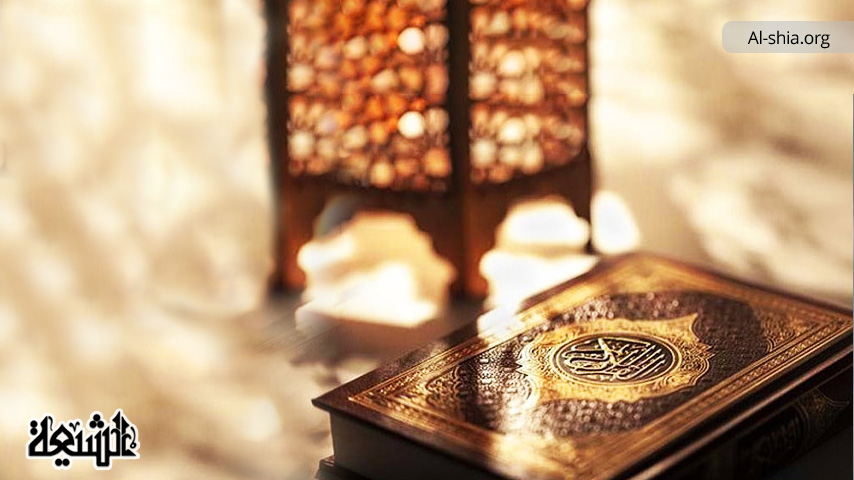

The Holy Prophet (PBUHH) was endowed with a miracle of a fundamentally different nature—one that transcends the limitations of the material world and endures for all eternity. This miracle is the Holy Qur’an, a text that stands not merely as a source of spiritual guidance, but as a definitive testament to its divine origin.
The Holy Qur’an is regarded as the greatest miracle of the Holy Prophet (PBUHH) and the foremost proof of his prophethood[1]. Muslim scholars have identified several aspects of its miraculous nature, including its unparalleled eloquence, profound scientific and intellectual insights, accurate accounts of unseen realities, and complete freedom from contradiction. Moreover, the Qur’an itself affirms its miraculous character by repeatedly challenging its opponents to produce a text comparable to it[2].
This article examines the Holy Qur’an as the everlasting miracle of the Holy Prophet Muhammad (PBUHH), highlighting its unique linguistic, scientific, historical, and legislative dimensions that affirm its divine origin and enduring relevance across all generations.
Miraculous Nature of the Holy Qur’an and Its Significance
A miracle is an extraordinary act that occurs contrary to the ordinary course of nature and is performed by prophets (a) with God’s permission as proof of their prophethood[3] Such acts are beyond the capability of ordinary human beings. To serve as valid evidence of prophethood[4], a miracle must be accompanied by taḥaddī (a challenge to others to produce its like), remain unmatched by any opponent, and be incapable of being overcome or refuted[5].
The Holy Qur’an is the everlasting miracle of the Holy Prophet (PBUHH). Its miraculous nature is manifested through extraordinary and inimitable features in its language, meanings, structure, and other dimensions, which place it beyond the capacity of human beings to replicate. Since no one has been able to produce anything comparable to it, the Holy Qur’an is regarded not as the word of a human being, but as the revealed word of God.
Al-Shaykh al-Tusi regarded the Holy Qur’an as one of the greatest and most renowned miracles of the Holy Prophet[6] (PBUHH). Likewise, the Sunni scholar Abu Bakr al-Baqillānī (d. 403/1013) emphasized the significance of the Qur’an’s miraculous nature, arguing that although the Prophet was granted other miracles, the primary proof of his prophethood is the Qur’an itself. Unlike his other miracles, which occurred under specific circumstances and were witnessed by a limited number of people, the Qur’an has remained publicly accessible to all generations, and its existence has never been disputed[7].
The Qur’anic challenge (taḥaddī) is presented at three levels. First, it challenges all humanity and the jinn to produce an entire book comparable to the Qur’an[8]. Second, it challenges its opponents to produce ten suras like it[9]. Finally, it challenges them to bring even a single sura comparable to it[10]. This challenge is not merely to imitate the Qur’an’s wording, which would amount to plagiarism, but to produce discourse equal to it in eloquence, meaning, depth, and originality.
Despite the progressive reduction in the scope of the challenge, no one has succeeded in meeting it, a fact that Muslims regard as compelling evidence of the Qur’an’s miraculous and divine origin. Beyond its linguistic challenge, the Holy Qur’an also invites scrutiny of its intellectual and epistemic claims by challenging people to produce knowledge comparable to its own, identify contradictions within its text[11], or disclose unseen realities similar to those revealed therein[12].
Dimensions of the Holy Qur’an’s Miraculous Nature
Muslim scholars have presented various perspectives on what constitutes the miraculous nature of the Qur’an. Most of the views cited by al-Suyuti, a prominent Sunni scholar of Qur’anic studies, in al-Itqān focus on its literary inimitability. Each of these interpretations explains the Qur’an’s literary miracle from a distinct angle[13]. However, Muslim scholars maintain that the Qur’an’s miraculousness is not limited to its literary excellence. For instance, Allamah Ṭabāṭabāʾī, a renowned Qur’anic commentator, argues that its miraculous dimensions, in addition to eloquence, include the breadth of its knowledge, the unlettered (ummī) status of the Prophet (PBUHH), reports of the unseen, and the absence of any contradiction within the Qur’an[14].
Meanwhile, some miraculous aspects of the Qur’an, according to Muslim scholars, are as follows:
-
Linguistic and Literary Excellence
The miraculous nature of the Holy Qur’an is most prominently reflected in its linguistic and literary excellence, particularly in the context of seventh-century Arabia, where eloquence and poetry represented the highest form of cultural pride[15]. The Arabs of that period did not distinguish themselves through material or technological advancement but through mastery of language, with poetry occupying a central place in their social and intellectual life. It was in this context that the Prophet Muhammad (PBUHH) entered this intellectual and literary arena with a “weapon” that astonished all masters of language and left them in awe[16].
The literary miracle of the Holy Qur’an refers to the presence of distinctive textual characteristics that no human being is capable of producing[17]. These features include the precise and context-appropriate use of words, a unique stylistic form that is neither conventional poetry nor ordinary prose, as well as the inherent eloquence of its expressions and the harmonious, pleasing rhythm of its language[18].
This distinctive excellence is classically described by Muslim scholars as balāghah (eloquence), whereby every word is precisely placed, and any alteration would diminish both meaning and stylistic coherence. The Holy Qur’an issues a challenge in Surah Hūd (11:13) to produce ten surahs like it, yet even the foremost masters of Arabic were unable to meet it, which Muslim scholars regard as evidence of its literary inimitability in both form and profound emotional and spiritual impact beyond human speech.
-
Scientific and Historical Insights
It is truly fascinating to realize that the Holy Qur’an is not just a spiritual guide; it also acts as a book of signs that invites us to look at the world around us. In the past century, the scientific miracle of the Qur’an has attracted significant attention among Qur’anic scholars worldwide.
The scientific miracle of the Holy Qur’an is a concept that seeks to demonstrate the Qur’an’s miraculous nature by aligning certain Qur’anic statements with findings in empirical sciences. According to this view, the Qur’an contains references to natural and scientific facts that were unknown at the time of its revelation. Since such knowledge was beyond the scope of human understanding in that historical context, the Holy Qur’an is regarded as a miracle of Prophet Muhammad (PBUHH) and as a divinely revealed book from God[19].
Many scientific meanings have been attributed by Qur’anic exegetes to the Holy Qur’an as examples of its scientific miracles. These include references to the orbit and rotation of the Earth, the origin of life from water, the Earth’s gravitational force, the classification of all plants and animals into male and female, and the motion of celestial bodies along specific orbits. However, there is disagreement among Qur’anic exegetes regarding the interpretation and applicability of these claims[20].
On the historical level, the Holy Qur’an functions as a corrective lens for accounts of the past, not merely recounting narratives for reflection but also rectifying distortions that had entered earlier traditions. For example, concerning Jesus (peace be upon him), the Qur’an clarifies his true status to remove theological confusion[21]. By reaffirming the pure monotheistic message of Jesus and correcting earlier interpretations, the Holy Qur’an presents a coherent historical and theological perspective, free from contradictions. This harmony with both historical understanding and revealed truth is considered by many scholars as an additional dimension of its miraculous nature.
-
Legislative Miracle
The legislative miracle represents one dimension of the Holy Qur’an’s miraculous nature, manifested in its comprehensive and balanced system of laws that govern human life. Unlike human legal systems, which are typically limited to material or social considerations, the Holy Qur’an integrates both the spiritual and material dimensions of human existence in a unified framework. This harmony with human nature (fiṭrah) and its capacity to guide individuals toward both worldly well-being and spiritual fulfillment is regarded by Muslim scholars as evidence of its divine origin and a distinct aspect of its miraculous character[22].
Conclusion
The Holy Qur’an stands as the everlasting miracle of the Holy Prophet (PBUHH), distinguished by its multifaceted and enduring nature. Its miraculous character is not confined to a single aspect but is rather manifested through its linguistic and literary excellence, which remains unparalleled in eloquence and expression; its scientific and historical insights, which reflect profound truths beyond the knowledge of its time; and its legislative framework, which offers a comprehensive and balanced system of guidance aligned with both human nature and the spiritual and material dimensions of life. Together, these dimensions demonstrate the Qur’an’s unique and inimitable nature, affirming its status as a divine revelation and a continuous proof of the prophethood of Muhammad (PBUHH) that transcends time and remains relevant to all generations.
Notes
[1] . Muṭahharī. (1384 SH). Majmūʿa āthār, vol. 2, p. 211; Bāqilānī. (1421 AH). Iʿjāz al-Qurʾān, p. 9.
[2] . See: Qur’an 17:88; 28:49; 52:34; Qur’an 11:13; Qur’an 2:23; 10:38.
[3] . Mufīd. (1413 AH). ‘al-Nukat al-iʿtiqādīyya’, p. 35.
[4] . Muʾaddab. (1379 SH). Iʿjāz-i Qurʾān dar Naẓar-i Ahl Bayt Iṣmat, p. 17.
[5] . Mufīd. (1413 AH). ‘al-Nukat al-iʿtiqādīyya’, pp. 126-129.
[6] . Ṭūsī. (n.d). al-Tibyān, vol. 1, p. 3.
[7] . Bāqilānī. (1421 AH). Iʿjāz al-Qurʾān, p. 9.
[8] . Qur’an 17:88; 28:49; 52:34.
[9] . Qur’an 11:13
[10] . Qur’an 2:23; 10:38.
[11] . Qur’an 4:82.
[12] . Qur’an 11:49.
[13] . Suyūṭī. (1421 AH). al-Itqān, vol. 2, p. 242.
[14] . Ṭabāṭabāʾī. (1390 AH). al-Mīzān, vol. 1, p. 62-68.
[15] . Pīshvāyī. (1390 SH). Tārikh-e Islam, p. 60.
[16] . Javan Arasteh. (1380 SH). Darsnameh-e ‘Ulūm- e Qur’ani, p. 350.
[17] . Subḥānī. (1412 AH). al-Ilāhīyāt, vol. 3, p. 243.
[18] . Maʿrifat. (1388 SH). al-Tamhīd, vol. 5, p. 16-17.
[19] . Burūmand. (1381 SH). Barresī va Naqd-i Tawjīh-i ʿIlmī-yi Qurʾān, p. 76-77.
[20] . Maʿārif. (1385 SH). Jāyigāh-i Iʿjāz-i ʿIlmī-yi Qurʾān dar Tafsīr-i Novīn, p. 87.
[21] . Qur’an 4:171.
[22] . Maʿrifat. (1388 SH). al-Tamhīd, vol. 6, pp. 216-217.
References
Holy Qur’an (with the English translation: Qarai, Ali Quli (2005). The Qur’an: With a Phrase-by-Phrase English Translation (2nd edition). London: Islamic College for Advanced Studies (ICAS) Press.
- Bāqilānī, Muḥammad ibn Ṭayyib. (1421 AH). Iʿjāz al-Qurʾān. Beirut: Dār al-Kutub al-ʿIlmīyya.
- Burūmand, Muḥammad Ḥusayn. (1381 Sh). “Barresī va Naqd-i Tawjīh-i ʿIlmī-yi Qurʾān.” Maqālāt va Barresīhā 71:75-94.
- Javan Arasteh, Hussein. (1380 SH). Darsnameh-e ‘Ulūm- e Qur’ani (6th edition). Qom: Bustan- e Kitab- e Qom.
- Maʿārif, Majīd. (1385 SH). “Jāygāh-i Iʿjāz-i ʿIlmī-yi Qurʾān dar Tafsīr-i Nowīn.” Saḥifa-yi Mubīn 37:82-92.
- Maʿrifat, Muḥammad Hādī. (1388 SH). Al-Tamhīd fī ʿUlūm al-Qurʾān. Qom: Muʾassisa-yi Islāmī-yi al-Tamhīd.
- Muʾaddab, Sayyid Reza. (1379 Sh). Iʿjāz-i Qurʾān dar Naẓar-i Ahl Bayt Iṣmat va Bīst nafar az ʿUlamā-yi buzurg-i Islām. Qom: Aḥsan al-Ḥadīth.
- Mufīd, Muḥammad ibn Muḥammad. (1413 AH). Al-Nukat al-Iʿtiqādīyya. Qom: al-Muʾtamar al-ʿĀlamī.
- Muṭahharī, Murtaḍā. (1384 Sh). Majmūʿa Ᾱthār. Tehran: Ṣadrā.
- Pīshvāyī, Mehdi. (1390 SH). Tārikh-e Islam: Az Jāhiliyyah tā Riḥlat Payāmbar-e Islam (16th edition). Qom: Daftar Nashr Ma‘ārif.
- Subḥānī, Jaʿfar. (1412 AH). Al-Ilāhīyāt ʿalā hudā al-Kitāb wa al-Sunnat wa al-ʿAql (3rd edition). Qom: Markaz al-Alāmī li-Dirāsāt al-Islāmiyya.
- Suyūṭī, ʿAbd al-Raḥmān b. Abī Bakr. (1421 AH). Al-Itqān fī ʿUlūm al-Qurʾān. Beirut: Dār al-Kutub al-ʿIlmiyya.
- Ṭabāṭabāʾī, Sayyid Muḥammad Ḥusayn. (1390 AH). Al-Mīzān fī Tafsīr al-Qurʾān. Beirut: Muʾassisat al-Aʿlamī li-l-Maṭbūʿāt.
- Ṭūsī, Muḥammad ibn al-Ḥasan. (n.d). Al-Tibyān fī Tafsīr al-Qurʾān. Beirut: Dār Iḥyāʾ al-Turāth al-ʿArabī.



![The Event of Ghadir and Imam al-Mahdi [afs]](https://en.al-shia.org/wp-content/uploads/2026/06/17221.jpg)