

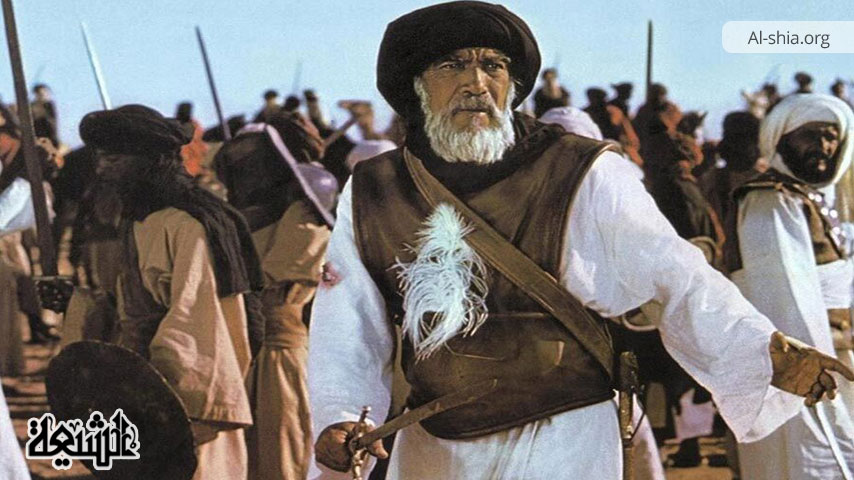

Hazrat Hamza (AS), the noble uncle of the Prophet Muhammad (PBUH), is famously known as “Asad Allah” (The Lion of God). One way to understand the characteristics and virtues of the companions of the Prophet is by examining the verses of the Quran that were revealed concerning them. By studying the content of some of these verses, we can gain insight into the traits and virtues of Hazrat Hamza (AS), the Master of Martyrs (AS).
Piety (Taqwa)
One verse that confirms the attribute of “taqwa” (piety) for Hazrat Hamza (AS) and includes him among the righteous is verse 15 of Surah Al-Imran (Quran 3). Haskani mentions in his account of the verse’s revelation that it was revealed regarding Ali ibn Abi Talib (AS), Hazrat Hamza (AS), and Ubaydah ibn Harith.[1]
According to Haskani’s narration, Hazrat Hamza (AS) belongs to the group of pious individuals whose inherent quality of taqwa allows them to be associated with the characteristics of the righteous described in the Quran, including verses 15 and 16 of Surah Al-Imran (Quran 3) and the opening verses of Surah Al-Baqarah (Quran 2).
Success and Salvation (Falah and Righteous Outcome)
Another verse revealed regarding Hazrat Hamza (AS) that indicates his success and salvation is verse 200 of Surah Al-Imran (Quran 3). Allah says: “O you who believe! Be steadfast in the face of difficulties and desires, remain firm against the enemies, guard your boundaries, and fear Allah, so that you may prosper.”
Al-Kalbi narrates from Abi Salih that Ibn Abbas, in explaining this verse, said: (Iṣbirū) means to be patient with oneself, (Ṣābirū) means to be patient against the enemy, and (Rābiṭū) means to strive in the way of Allah. The phrase “And fear Allah, perhaps you will succeed” was revealed concerning the Prophet (S), Imam Ali (AS), and Hazrat Hamza (AS), who possessed such qualities.[2]
Martyrdom (Shahada)
In the Quran, the term “shahid” is not used to specifically mean one who is killed in the way of Allah. Rather, the Quran uses the expression “killed in the way of Allah”, such as in the verse: “Do not consider those who are killed in the way of Allah as dead”.[3] However, according to some traditions, the term shahid is generally applied to someone who struggles in the path of Allah and is killed.
Hazrat Hamza (AS) is mentioned as an example of “the martyrs”[4] in the verse: “And whoever obeys Allah and the Messenger, they are with those upon whom Allah has bestowed favor among the prophets, the truthful, the martyrs, and the righteous. Excellent companions are these”.[5]
According to Sheikh Tusi’s narration from Anas ibn Malik, the Prophet (S), explaining verse 69 of Surah An-Nisa (Quran 4), said: “Among the prophets upon whom Allah bestowed favor, I am the first in prophethood and the last in my mission. Among the truthful is Ali ibn Abi Talib (AS), who was the first to confirm my prophethood. Among the martyrs are Hazrat Hamza (AS) and Ja’far al-Tayyar, and among the righteous are my daughter Fatimah (AS) and her two sons, Hasan and Husayn (AS), who are the leaders of the youth of Paradise”.[6]
Faith in Allah’s Verses
One verse that testifies to Hazrat Hamza’s true faith is verse 54 of Surah Al-An’am (Quran 6): “When those who believe in Our verses come to you, say: ‘Peace be upon you. Your Lord has decreed mercy upon Himself, that whoever among you does evil in ignorance and then repents afterward and corrects it, indeed, He is Forgiving and Merciful”.[7] According to narrations, this verse was revealed concerning Ali ibn Abi Talib (AS), Hazrat Hamza (AS), Jafar, and Zaid.[8]
Anas ibn Malik said that a group of companions approached the Prophet (S) saying: “We have fallen into many sins.” The Prophet (S) remained silent, and this verse was revealed. Ata reported that the group included companions such as Hazrat Hamza (AS), Jafar, Musab ibn Umair, Ammar, and others, regarding whom this verse was revealed.[9]
The Companions of Al-Araf
Another verse mentioning Hazrat Hamza (AS) is verse 46 of Surah Al-Araf (Quran 7). “Araf” is the plural of urf, meaning the crest of a rooster, the mane of a horse, the upper part of anything, or high lands filled with sand.[10] In the Quran, it is also described as a wall between Paradise and Hell.[11]
Ibn Abbas explained that Araf is a high place on the Sirat (bridge over Hell), where Imam Ali (AS), Hazrat Hamza (AS), Jafar al-Tayyar, and Abbas stand. They recognize their friends, who have radiant faces, and their enemies, who have dark faces.[12]
Hazrat Hamza (AS) as a Guardian of Masjid al-Haram
Verse 34 of Surah Al-Anfal (Quran 8) is another verse associated with Hazrat Hamza (AS) in narration: “Why should Allah not punish them while they prevent others from praying in the Sacred Mosque? Their guardianship is only for the pious, but most of them do not know”.[13]
Guardianship of Masjid al-Haram was a prestigious role, and the disbelievers of Mecca considered themselves more deserving than the guardians. Allah refuted this and said that the true guardians of the Mosque are the pious. Ibn Abbas narrates that the phrase “they were not its guardians” refers to the Meccan disbelievers. The real guardians are the righteous, such as Imam Ali (AS), Hazrat Hamza (AS), Jafar, and Aqil.[14]
Purity of Heart from Malice and Envy
One of the greatest challenges in life, leading to social conflicts and harming spiritual peace, is malice and envy.[15] Allah describes the residents of Paradise: “And We removed from their hearts any rancor, and they lie on facing couches”.[16] According to narrations, this verse refers to the noble individuals Imam Ali (AS), Hazrat Hamza (AS), Jafar al-Tayyar, Aqil, Abu Dharr, Salman al-Farsi, Ammar Yasir, Muqaddad, Hasan, and Husayn (AS), from whom Allah removed grudges and envy.[17]
The Friends of Allah (Awliya Allah)
A narration from the Prophet (S) mentions that among Allah’s servants are those whom even the prophets envy. They love one another without worldly possessions, their faces shine with light, they are fearless when others are afraid, and they are not saddened when others are distressed. The Prophet identified them as Imam Ali (AS), Hazrat Hamza (AS), Jafar, and Aqil, citing the verse: “Indeed, the friends of Allah, no fear will be upon them, nor will they grieve”.[18]
Defender of the Prophet (S), Fighter in the Way of Allah
Striving in the way of Allah and fighting the Prophet’s enemies is a distinctive virtue of Hazrat Hamza (AS). Verse 19 of Surah Al-Hajj (Quran 22) reflects this.
Fays ibn Ubada narrates from Abu Dharr that the verse: “These two disputants disputed concerning their Lord” was revealed regarding the opponents in the Battle of Badr. Imam Ali (AS), Hazrat Hamza (AS), and Ubaydah confronted the pagans, resulting in three enemy leaders being killed by these champions: Hazrat Hamza (AS) killed Utbah ibn Rabiah, Imam Ali killed Walid ibn Utbah, and Ubaydah killed Shaybah ibn Rabiah.[19]
Receiving the Blessings of Paradise
Verses 23 and 24 of Surah Al-Hajj (Quran 22) also mention Hazrat Hamza (AS) in their contexts. Ibn Abbas explains that “those who believed” refers to Imam Ali, Hazrat Hamza (AS), and Ubaydah, who risked their lives at Badr defending Islam. Allah granted them rewards in recognition of their efforts.[20]
Good Promise from Allah
Regarding the verse: “Then whoever We promised a good promise, he will meet it; as for those We granted the enjoyment of worldly life …”,[21] it is mentioned that the first part refers to Imam Ali (AS) and Hazrat Hamza (AS), and the second part refers to Abu Jahl.
Aban ibn Taghlib asked Mujahid about this verse, who replied that it was revealed concerning Imam Ali (AS) and Hazrat Hamza (AS), who were continually under Allah’s favor, while the second part referred to Abu Jahl.[22]
Faithfulness to Allah’s Covenant
Another verse revealed concerning Hamzah, the Master of Martyrs (AS), is verse 23 of Surah al-Ahzab. The word “nadhb”, which is pronounced like “fals”, means a vow, covenant, or pledge that must be fulfilled. The expression “qada fulanun nahbahu” means “he fulfilled his vow”.[23]
Regarding the reason for the revelation of this noble verse, Imam Ali (AS) said: “My uncle Hamzah, my brother Jafar, my cousin ‘Ubaydah, and I made a covenant that we would remain faithful to God and His Messenger (peace be upon him). Among us, Hamzah, Jafar al-Tayyar, and Ubaydah attained martyrdom, and I remain among those who await it”.[24]
In the interpretation of this verse, it is also mentioned that one of the truthful believers who remained steadfast in fulfilling his covenant with God and His Messenger was Hamzah (AS).[25]
Not fleeing from the battlefield was the covenant they upheld firmly. They never abandoned the field of combat until they reached the meeting with God (liqa Allah). This virtue was proven by Hamzah’s martyrdom in the Battle of Uhud.
Honesty and Truthfulness
Hazrat Hamza (AS) is a clear example of the verse in Surah Al-Hujurat (Quran 49), verse 15, which affirms the honesty of believers. Ibn Abbas narrates that the verse was revealed regarding Imam Ali (AS), Hazrat Hamza (AS), and Jafar, who fought for Allah without doubt in their faith, and Allah confirmed their truthfulness and loyalty.[26]
The phrase “they strive with their wealth and selves in the way of Allah” refers to believers putting their full effort into obligatory financial duties such as zakat and other forms of charity, as well as physical acts of worship like prayer, fasting, and pilgrimage.[27]
Hazrat Hamza’s life and bravery at Badr and Uhud testify that he never wavered in faith, and he sacrificed both wealth and life, earning Allah’s recognition for truthfulness in words and deeds.
Firm Foundation (Bunyan Marsus)
The Companions of the Prophet (S) were eager to know which deeds held the greatest value in the sight of God so that they might strive to attain them. In response, God revealed verse 4 of Surah al-Saff (Quran 61).[28] This verse was revealed concerning Imam Ali (AS), Hazrat Hamzah (AS), ‘Ubaydah ibn al-Harith, Sahl ibn Hunayf, and Harith ibn Abi Dujanah al-Ansari.[29]
The word “saff” is a verbal noun with the meaning of an active participle, signifying placing things in a straight line, as when several people or trees are arranged in one row.[30] The phrase “bunyan marsus” refers to a solidly constructed structure, as though it were built from lead and molten metal.[31]
The Holy Quran compares the believers who stand firm in battle and do not separate from one another to a solid structure made of lead, and declares that such people are beloved by God. Thus, what truly matters in warfare is struggling in God’s path with complete unity and cohesion, like a wall of iron, one of the most crucial factors in achieving victory.
In fact, the Quran likens the enemies to a destructive flood that can only be restrained by a steel barrier. The components of a massive structure or dam can only be effective when no gaps or divisions exist among them, when they stand as one unified entity. The Quran beautifully expresses this profound truth through the phrase “bunyan marsus” (a solid structure).[32]
Radiance of the Face on the Day of Judgment
Anas ibn Malik asked the Prophet (S) about verses 38–39 of Surah Abasa (Quran 80): “Faces, that Day, will be radiant”. The Prophet explained that radiant faces belong to the descendants of Abdul-Muttalib, including himself, Imam Ali (AS), Hazrat Hamza (AS), Jafar, Hasan, Husayn, and Fatimah (AS), who will rise on the Day of Judgment with faces shining like the sun.[33]
Those devoted to ablution, night prayers, and striving in Allah’s way are recognized by the radiance of their faces. Hazrat Hamza (AS), due to his worship and defense of the Prophet, will be distinguished by this radiance.[34]
Conclusion
This descriptive and analytical article, based on the revelation context of around twenty verses, identifies sixteen traits and virtues of Hazrat Hamza (AS). These include faith, piety, martyrdom, eligibility to supervise Masjid al-Haram, purity of heart from malice and envy, faithfulness to covenants, defending the Prophet, steadfastness in truth, striving in the way of Allah, being a friend of Allah, honesty, and radiant appearance on the Day of Judgment.
Notes
[1] . Hasakani, Shawahed al-Tanzil, vol.1, p.151.
[2] . Hasakani, Shawahed al-Tanzil, vol.1, p. 174, 180.
[3] . Al. Imran:169.
[4] . Hasakani, Shawahed al-Tanzil, vol.1, p.197.
[5] . Al-Nisa:69.
[6] . Qummi al-Mashhadi, Kanz al-Daqaiq wa Bahr al-Gharaib, vol.3, p. 462; Al-Bahrani, Al-Burhan fi Tafsir al-Quran, vol.2, p.125.
[7] . Al-Anam:54.
[8] . Furat al-Kufi, Tafsir al-Furat, vol.1, p.134; Haskani, Shawahid al-Tanzil, vol.1, p.361.
[9] . TabrisI, Majma al-BayAn fI TafsIr al-Quran, vol.8, p.108.
[10] . Ibn Manzur, Lisan al-Arab, vol.9, p.241.
[11] . Jawhari, Al-Sihah fi al-Lughah, vol.4, p.1401.
[12] . Thalabi, Al-Kashf wa al-Bayan, vol.4, p.236.
[13] . Al-Anfal:34.
[14] . Haskani, Shawahid al-Tanzil, vol.1, p.283.
[15] . Makarem Shirazi, Tafsir-e Nemuneh, vol.2, p.47.
[16] . Al-Hijr:47.
[17] . Haskani, Shawahid al-Tanzil, vol.1, p.1313; Bahrani, Al-Burhan, vol.3, p.373.
[18] . Al-Yunus:62–63; Marashi, Sharh Ihqaq al-Haqq, vol.1, p.325.
[19] . Bahrani, Al-Burhan, vol.3, p.862; Haskani, Shawahid al-Tanzil, vol.1, p.516; Suyuti, Al-Durr al-Manthur, vol.4, p.348; Wahidi, Asbab al-Nuzul, p.317; Tabrisi, Majma al-Bayan, vol.7, p.123.
[20] . Furat al-Kufi, Tafsir al-Furat, p.273; Qummi al-Mashhadi, Kanz al-Daqaiq, vol.9, p.68.
[21] . Al-Qasas:61.
[22] . Wahidi, Asbab al-Nuzul, vol.1, p.349; Haskani, Shawahid al-Tanzil, vol.1, p.563; Qummi al-Mashhadi, Kanz al-Daqaiq, vol. 10.
[23] . Raghib al-Isfahani, Al-Mufradat fi Gharib al-Quran, p.793.
[24] . Bahrani, Al-Burhan, vol.4, p.429.
[25] . Qummi, Tafsir al-Qummi, vol.10, p.307; Haskani, Shawahid al-Tanzil, vol.20, p.6.
[26] . Haskani, Shawahid al-Tanzil, vol.2, p.259
[27] . Tabatabai, Al-Mizan fi Tafsir al-Quran, vol.18, pp. 492, 494.
[28] . Muhaqqiq al-Hilli, Sharai al-Islam, vol.1, p.807.
[29] . Bahrani, Al-Burhan, vol.5, p.263; Al-Qummi al-Mashhadi, Kanz al-Daqaiq, vol.13, p.221; Al-Furat al-Kufi, Tafsir al-Furat, vol.1, p.481.
[30] . Raghib al-Isfahani, Al-Mufradat, p.486.
[31] . Raghib al-Isfahani, Al-Mufradat, p.335.
[32] . Makarem Shirazi, Tafsir-e Nemuneh, vol.24, p. 65.
[33] . Haskani, Shawahid al-Tanzil, vol.2, p.423; Al-Kashani, Tafsir al-Safi, vol.10, p.157.
[34] . Al-Rahman:31.
References
- The Holy Quran
- Makarem Shirazi, Naser; Tafsir Nemooneh, Dar al-Kutub al-Islamiyyah, Tehran, 10th Edition, 1371 SH.
- Marashi, Shahab al-Din; Mawsuat al-Imamah fi Nusus Ahl al-Sunnah, Ayatollah Marashi Najafi Library, 1385 SH.
- Suyuti, Abdul Rahman ibn Abi Bakr; Al-Durr al-Manthur fi al-Tafsir bil-Mathur, Public Library of Grand Ayatollah Marashi Najafi, Qom, 1404 AH.
- Qurtubi, Muhammad ibn Ahmad; Al-Jami li Ahkam al-Quran, Naser Khosrow, Tehran, 1364 SH.
- Wahidi, Ali ibn Ahmad; Asbab Nuzul al-Quran, Dar al-Kutub al-Ilmiyyah, Muhammad Ali Baydoun Publications, Beirut, 1411 AH.
- Ibn Abi Hatim, Abdul Rahman ibn Muhammad; Tafsir al-Quran al-Azim Ibn Abi Hatim, Nizar Mustafa al-Baz Library, Riyadh, 1419 AH.
- Raghib Isfahani, Husayn ibn Muhammad; Mufradat Alfaz al-Quran, Dar al-Shamiya, Beirut, 1412 AH.
- Qomi, Ali ibn Ibrahim; Tafsir al-Qomi, Dar al-Kitab, Qom, 3rd Edition, 1363 SH.
- Tabatabai, Muhammad Husayn; Al-Mizan fi Tafsir al-Quran, Al-Alami Publications, Beirut, 2nd Edition, 1390 AH.
- Moqi, Muhammad Baqir; Nemooneh Bayan fi Shan Nuzul al-Ayat al-Islamiyyah, Tehran, 4th Edition, 1361 SH.
- Hasakani, Ubaydullah ibn Abdullah; Shawahed al-Tanzil li Qawaid al-Tafdeel, Ministry of Culture and Islamic Guidance, Printing and Publishing Institute,1411 AH.
- Kashani, Fath Allah ibn Shukr Allah; Zubdat al-Tafasir, Islamic Ma’arif Foundation, Qom, 1423 AH.
- Qomi Mashhadi, Muhammad ibn Muhammad Reza; Tafsir Kanz al-Daqaiq wa Bahr al-Gharaib, Ministry of Culture and Islamic Guidance, Organization of Printing and Publishing, Tehran, 1368 SH.
- Bahrani, Hashim ibn Sulayman; Al-Burhan fi Tafsir al-Quran, Al-Batha Institute, Department of Islamic Studies, Qom, 1415 AH.
- Kufi Furat, Ibn Ibrahim; Tafsir Furat al-Kufi, Ministry of Culture and Islamic Guidance, Printing and Publishing Institute, Tehran, 1410 AH.
- Tabarsi, Fazl ibn Hasan; Majma al-Bayan fi Tafsir al-Quran, Naser Khosrow, Tehran, 3rd Edition, 1372 SH.
- Ibn Manzur, Muhammad ibn Mukram; Lisan al-Arab, Beirut, 1414 AH.
- Jawhari, Ismail ibn Hammad; Al-Sihah, edited by Attar Ahmad Abdul Ghafur, Dar al-Ilm al-Malayin, Beirut, 1376 AH.
- Thalabi, Ahmad ibn Muhammad; Al-Kashf wa al-Bayan, Dar Ihya al-Turath al-Arabi, Beirut, 1422 AH.
Source of the article | Adapted from:
Ummani, Madinah, The Virtues of Hazrat Hamza (AS) Based on the Context of Quranic Revelation”, Historical Studies of the Islamic Ummah, Autumn and Winter 2021, Issue 8, pp. 127–153.