



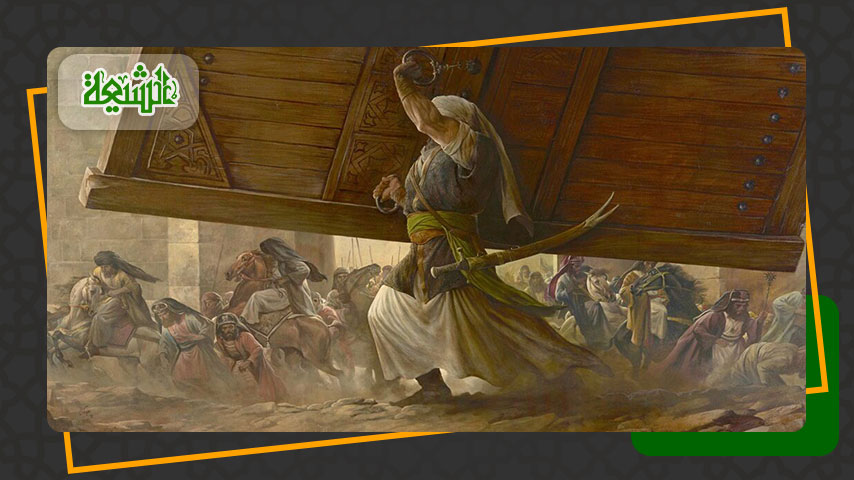
Throughout history, many rulers, in order to attain power, have made false and impractical promises to the people to secure their votes. However, Imam Ali (AS), during the council of six, when Abd al-Rahman ibn Awf asked him to pledge allegiance on the condition that he would act according to the Book of God, the Sunnah of the Prophet, and the method of the two Shaykhs (Abu Bakr and Umar), never made false promises to gain power.
Rather, he stated clearly that he would act based on the Book of God, the Sunnah of the Prophet, and his own independent judgment (Ijtihad). Not only did he refrain from making false promises, but he also did not resort to so-called expedient lies in order to attract opponents.
In contrast, Uthman accepted this proposal through false promises and thus attained power. However, after assuming authority, he not only failed to act according to the way of the Prophet (PBUH), but was also unable to implement the practices of Abu Bakr and Umar.[1]
This article examines the nature, causes, and consequences of false promises and their various dimensions in individual and social life.
The Nature of Lies and False Promises
Lying is the source of all evils and uglinesses and is considered one of the major sins. As Imam Hasan al-Askari (AS) states: “All evils have been placed in a house, and the key to it is lying”.[2]
A false promise is the expression of a commitment or pledge that the speaker has no intention of fulfilling or knows that he is incapable of fulfilling. At times, false promises are made with the intention of deceiving and misleading the audience in order to gain personal or group interests. In such cases, the speaker knowingly lies and abuses the trust of others.
In some instances, however, false promises arise from excessive optimism, lack of awareness of existing conditions and limitations, or external pressures. In these cases, the speaker may not intend to deceive but, due to a lack of realism, makes a promise that cannot be fulfilled.
In all cases, the outcome is the same: the creation of disappointment, distrust, and anger in the individual or individuals who have been deceived.
Causes and Motivations of Lies and False Promises
Imam Ali (AS), in a letter written when appointing Malik al-Ashtar as governor of Egypt, states: “Never remind the people of the services you have rendered to them, nor consider what you have done to be great, nor make promises to them and then break them”.[3]
The causes and motivations behind false promises made by officials are diverse and complex. Some of the most important ones are as follows:
1. Fear of Losing Position
In some cases, false promises stem from fear of losing status, power, or interests. A person who fears losing his position may employ any means to preserve it, including lying or making false promises. Muawiyah, in order to consolidate his position and authority, used policies of bribery and false promises to silence or win over many of his opponents.
During his treaty with Imam Hasan (AS), he promised to refrain from cursing Imam Ali (AS), not to appoint a successor, to protect the lives and property of the Shia, and to refrain from harming them.
However, Muawiyah not only failed to fulfill these false promises but even intensified the persecution of the followers of Imam Ali (AS),[4] and executed many Shia, including Hujr ibn Adi, for refusing to curse Imam Ali (AS).[5]
2. Worldliness
In some cases, false promises arise from excessive attachment to worldly gains. Imam Ali (AS) considers love of wealth and status to be the reason for Amr ibn al-As’s lying: “He constantly lies; he makes promises and then breaks them”.[6]
Worldly individuals like Amr ibn al-As had no hesitation in resorting to lies and slander in order to attain their base worldly life. Whenever it was to his benefit, he made promises, and whenever it was to his detriment, he broke them.[7]
At the time of his death, he expressed deep regret, stating that due to his love of the world and pursuit of lowly ambitions, he had sold his religion for the world of Muawiyah.
3. Escaping Public Pressure
In some cases, false promises are made as a result of pressure from public opinion. A person under intense social pressure may resort to false promises in order to escape that pressure.
Al-Mamun al-Abbasi, in order to win public opinion, suppress the uprisings of the Alawites, remove Imam Rida (AS) from the political scene, and legitimize his own rule, offered the position of crown prince to Imam Rida (AS).
Al-Mamun’s motivation in granting the heirship was primarily to gain political benefits and relieve public pressure from opponents, rather than genuine respect for the position of the Imamate. He sought to exploit the Imam’s influence and status for his own purposes.
4. Deceiving the People
One of the causes of false promises is deceiving people in order to achieve personal ambitions and desires. Satan, in order to accomplish his goal regarding Prophet Adam, namely, leading him astray, resorted to deception and falsely swore that he was a sincere advisor, thereby deceiving them.[8]
Imam Ali (AS) states: “Beware of befriending a liar, for he is like a mirage: he makes what is distant appear near to you and what is near appear distant”.[9]
At times, the conditions for success in achieving a goal are present; yet the liar, through lies and false promises, presents its realization as impossible, causing opportunities to be lost.
At other times, a person faces tasks for which the necessary conditions are not yet in place, and entering them will result in failure; nevertheless, the liar makes such promises and assurances that it appears as though success will be achieved the very next day.
Imam Ali (AS): The Embodiment of Truthfulness
When the people pledged allegiance to Imam Ali (AS) after the killing of Uthman,[10] he openly and courageously declared that he would never lie in the pursuit of the caliphate, nor would he deviate from the path of truth.
With complete clarity, he stated matters that could potentially lead to opposition,[11] and from the very beginning of his caliphate, he not only refrained from making false promises, but also refused to tell expedient lies in order to win over opponents.
Some worldly-minded politicians conceal their true plans for governance and, through deception and empty allurements, draw people into pledging allegiance; or during elections, they resort to every possible means to secure victory, which leads them to make false promises to the public.
Imam Ali (AS) never engaged in such deceptive practices. In his first sermon after the people of Medina pledged allegiance to him, he declared: “I take responsibility for what I say and guarantee the truthfulness of my words”.[12]
In one of his sermons delivered after the Battle of Siffin, Imam Ali (AS) describes the deceitful politics of Muawiyah as follows: “By God! Muawiyah is not more politically astute than I am. However, Muawiyah is deceitful and criminal. Were deception not reprehensible, I would be the most astute of people; but every act of deception is a sin, and every sin is a form of disbelief and denial”.[13]
This represents the political philosophy of Imam Ali (AS) and all his followers: that politics founded upon lies and deception is unethical and inhumane.
Truthfulness in all matters, especially in speech, is a human and moral value. Its absence, which manifests as lying, can cause serious harm in all areas, particularly in social and political life, by undermining public trust.
In this regard, false and hollow promises made by political officials can be especially dangerous, as they destroy public confidence, weaken legitimacy, and erode social acceptance.
The Harmful Effects of Lies and False Promises by Officials
According to Islamic teachings, lying produces harmful consequences that everyone, especially political authorities, must avoid, so that neither they nor society fall victim to the many problems and damages caused by lies and false promises. Among the most significant harmful effects of lies and false promises by societal officials are the following:
1. Innovation in Religion and Loss of Trust in Islam
Islam is a complete religion[14] that guarantees happiness in both this world and the Hereafter. Any form of lying or false promises can strike at the foundations of Islam and lead people away from the path of guidance.
Lying about Islamic teachings can result in religious innovation (bidah), presenting non-Islamic ideas as Islam itself. God says in the Quran:
وَ لا تَقُولُوا لِما تَصِفُ أَلْسِنَتُكُمُ الْكَذِبَ هذا حَلالٌ وَ هذا حَرامٌ لِتَفْتَرُوا عَلَى اللَّهِ الْكَذِبَ
“And do not say, concerning the falsehood your tongues utter, This is lawful and that is unlawful, so as to fabricate lies against God”.[15]
Such behavior can also cause people to lose trust in the very foundations of religion, because lies and false promises made by officials are often presented as truthful and Islamic.
In reality, these claims have no connection to Islam; rather, officials attribute them to religion in order to secure their own power and wealth, or they promote false claims that lack any scholarly or evidentiary basis and cannot be implemented in practice. As a result, people become disillusioned with religion and religious authorities, losing trust in both.
2. Disgrace and Humiliation
Those who make false promises isolate themselves socially. People eventually perceive them like charcoal that remains blackened even after snow has fallen. Although liars may temporarily present themselves as honorable in order to gain social acceptance, their true nature is eventually revealed, and they are exposed as disgraced in both this world and the Hereafter.
وَيَوْمَ الْقِيَامَةِ تَرَى الَّذِينَ كَذَبُوا عَلَى اللَّهِ وُجُوهُهُمْ مُسْوَدَّةٌ
“And on the Day of Resurrection you will see those who lied about God with their faces darkened”.[16]
3. Loss and Ruin
Lying and false promises lead to loss and ruin for both individuals and society. According to the Quran, the first person harmed by lying is the liar himself:
وَإِنْ يَكُ كَاذِبًا فَعَلَيْهِ كَذِبُهُ
“And if he is a liar, then his lie will fall back upon him”.[17]
There is no doubt that false promises not only destroy people’s trust in the liar but also cause widespread disappointment, leading people to lose hope, especially when the liar holds a position of authority. Through lies and false promises, such individuals suffer great material and spiritual losses by forfeiting the trust of others.
4. Injustice and Oppression
One who lies and makes false promises not only betrays the people but also betrays himself and fails to uphold justice toward his own soul. For this reason, the Quran describes such individuals as oppressors:
فَمَنِ افْتَرَى عَلَى اللَّهِ الْكَذِبَ مِنْ بَعْدِ ذَلِكَ فَأُولَئِكَ هُمُ الظَّالِمُونَ
“Then whoever fabricates lies against God after that, such people are the wrongdoers”.[18]
وَمَنْ أَظْلَمُ مِمَّنِ افْتَرَى عَلَى اللَّهِ كَذِبًا أَوْ كَذَّبَ بِآيَاتِهِ إِنَّهُ لَا يُفْلِحُ الظَّالِمُونَ
“And who is more unjust than one who fabricates a lie against God or denies His signs? Indeed, the wrongdoers will never succeed”.[19]
Therefore, no expectation of justice or justice-seeking can be placed upon such individuals, nor can one hope that they will restore people’s rights or work toward establishing justice. An oppressor never seeks justice and has no attachment to it.
5. Evasion of Truth
A liar has no connection with truth, for lying is the opposite of truth. Consequently, liars take positions against truth through their words and false promises, avoid the truth, and never rise to uphold it. Instead, they follow falsehood and have no willingness to listen to or establish truth:
يَسْمَعُ آيَاتِ اللَّهِ تُتْلَى عَلَيْهِ ثُمَّ يُصِرُّ مُسْتَكْبِرًا كَأَنْ لَمْ يَسْمَعْهَا
“He hears the verses of God recited to him, then persists arrogantly as though he had not heard them”.[20]
6. Hypocrisy
Those who lie and make false promises under various pretexts, if they are not already afflicted with hypocrisy, will inevitably become so. The signs of hypocrisy can be observed in such individuals, making them clear examples of hypocrites:
فَأَعْقَبَهُمْ نِفَاقًا فِي قُلُوبِهِمْ إِلَى يَوْمِ يَلْقَوْنَهُ بِمَا أَخْلَفُوا اللَّهَ مَا وَعَدُوهُ وَبِمَا كَانُوا يَكْذِبُونَ
“So He caused hypocrisy to take root in their hearts until the Day they meet Him, because they broke their promise to God and because they used to lie”.[21]
Conclusion
False promises made by officials constitute a destructive and multifaceted phenomenon that can severely damage trust, relationships, and moral values within society. Confronting this phenomenon requires conscious and continuous efforts by individuals and institutions alike.
By raising awareness, promoting truthfulness and accountability, strengthening oversight and responsibility, and reinforcing legal frameworks, it is possible to build a healthier society founded on trust and honesty, one in which promises are not tools of deception and exploitation, but the cornerstone of human and social relationships.
Notes
[1] . Kulayni, Al-Kafi, vol.8, p.24.
[2] . Majlisi, Bihar al-Anwar, vol.72, p.263; Mohammadi Reyshahri, Mizan al-Hikmah, Hadith no.17410.
[3] . Sharif al-Radhi, Nahj al-Balagha, Letter 53.
[4] . Masudi, Muruj al-Dhahab, vol.3, p.189.
[5] . Ibn Sad, Al-Tabaqat, vol.6, p.219.
[6] . Sharif al-Radi, Nahj al-Balaghah, Sermon 84.
[7] . Makarem Shirazi, The Message of Imam Amir al-Muminin (AS), vol.3, p.461.
[8] . Al-Araf:21
[9] . Sharif al-Radi, Nahj al-Balaghah, Wisdom 38.
[10] . Sharif al-Radi, Nahj al-Balaghah, Sermon 92.
[11] . Sharif al-Radi, Nahj al-Balaghah, Sermon 16.
[12] . Sharif al-Radi, Nahj al-Balaghah, Sermon 16.
[13] . Sharif al-Radi, Nahj al-Balaghah, Sermon 200.
[14] . Al-Maidah:3.
[15] . Al-Nahl:116.
[16] . Al-Zumar:60.
[17] . Al-Ghafir:28.
[18] . Al-Imran:94.
[19] . Al-Anam:21.
[20] . Al-Jathiyah:8.
[21] . Al-Tawbah:77.
References
- The Holy Quran.
- Ibn Sad, Muhammad, Al-Tabaqat al-Kubra, Beirut, Dar al-Kutub al-Ilmiyyah, 1410 AH.
- Kulayni, Muhammad ibn Yaqub, Al-Kafi, edited and verified by Ali Akbar Ghaffari and Mohammad Akhoundi, Tehran, Dar al-Kutub al-Islamiyyah, 1407 AH, 4th edition.
- Majlis, Muhammad Baqir, Bihar al-Anwar, Beirut, Muassasat al-Wafa, 1404 AH.
- Makarem Shirazi, Naser, The Message of Imam Amir al-Muminin (AS), Dar al-Kutub al-Islamiyyah, Tehran, 1386 AH, 1st edition.
- Masudi, Ali ibn Husayn, Muruj al-Dhahab wa Maadin al-Jawhar, Dar al-Hijrah, Qom, 1409 A.H.
- Mohammadi Reyshahri, Mohammad, Mizan al-Hikmah, Dar al-Hadith Publications, 1384 AH.
- Sharif al-Radi. Nahj al-Balagha. Arranged by Subhi al-Salih. Qom: Dar al-Hijra, 1414 AH.






![The Event of Ghadir and Imam al-Mahdi [afs]](https://en.al-shia.org/wp-content/uploads/2026/06/17221.jpg)